




























Wouter Beneke
Marketing Lead at XMPRO
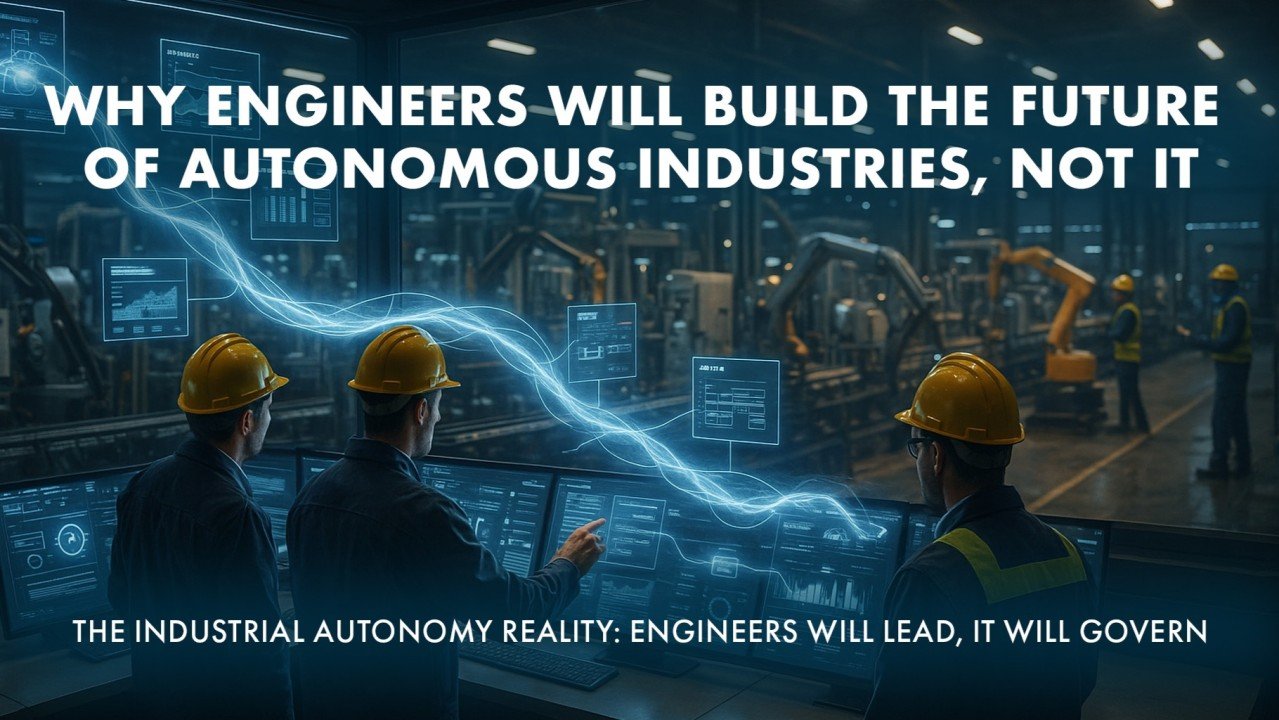
The Industrial Autonomy Reality: Engineers Will Lead, IT Will Govern
Over the next decade, the future of industrial autonomy won't be programmed in IT labs, it will be engineered on the plant floor. Your engineers, not IT, will define your competitive edge in autonomous operations.
This article shows why the next wave of autonomous industrial systems will be built by engineers, the operational advantages this delivers, and how IT's role shifts from builder to governance authority.
Engineer-Led Transformation in Action – A Case Study
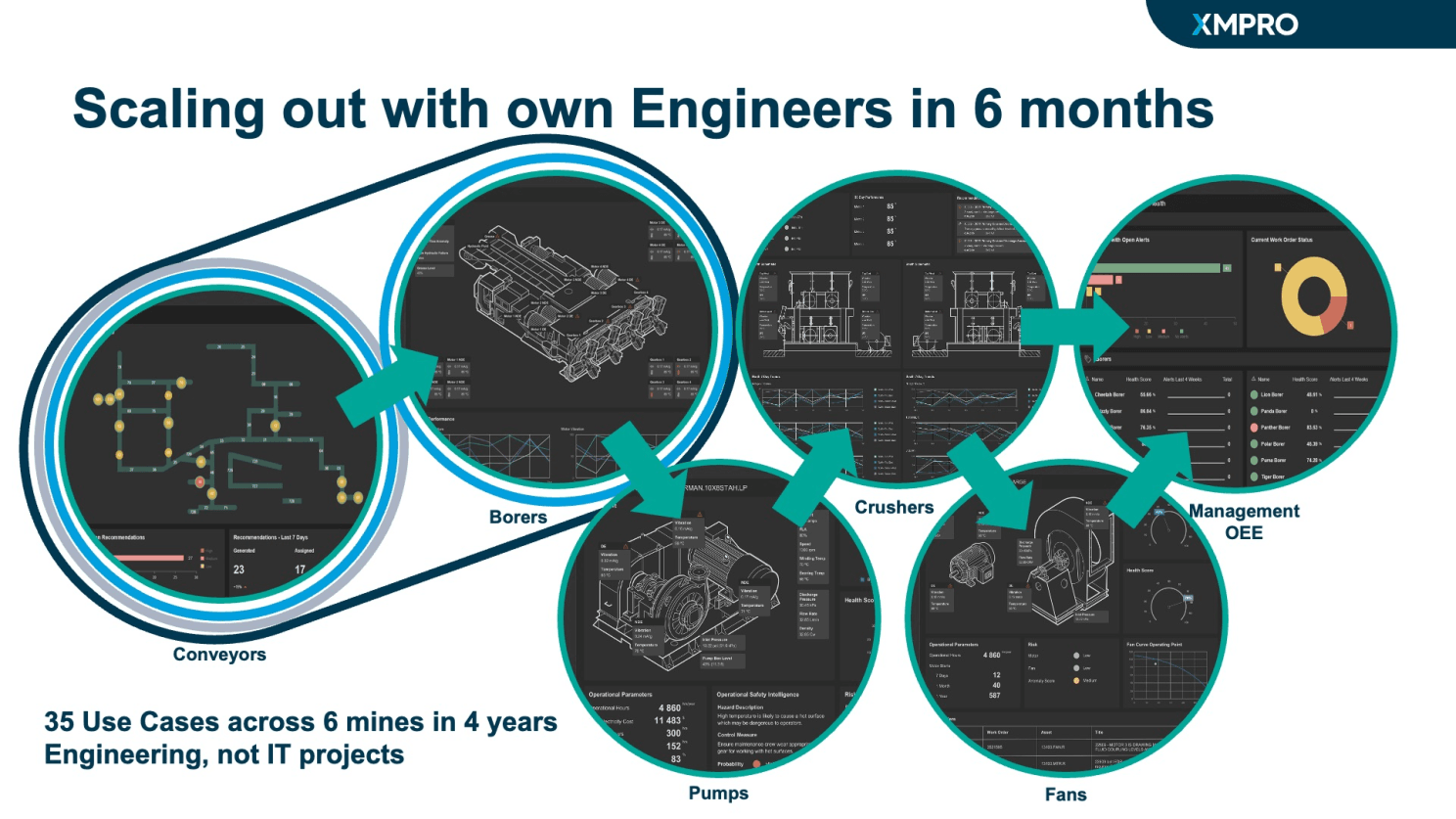
Engineers at one of the world's leading mining companies deployed predictive maintenance across 50+ miles of underground conveyors in just 30 days, delivering $10 million in annual product tonnage savings and an 80% reduction in critical failures. Using drag-and-drop composition tools, site engineers conceived, designed, and deployed 35 operational solutions across six sites in under four years... averaging nearly nine successful transformation projects a year, all led by engineering teams, not IT.
These results highlight what’s possible when engineers are empowered to lead transformation projects within governance guardrails... on the flipside, many traditional enterprise AI projects remain trapped in 18-month development cycles and pilot purgatory.
The most transformative advances in autonomous systems for heavy industries originate from people closest to the assets: engineers and operational specialists who understand machinery, workflows, and the balance between efficiency and safety.
The future belongs to organizations that recognize engineers as cognitive orchestrators, not just operators.
Important note: IT’s role remains essential as the governance and enablement backbone of autonomy, ensuring security, compliance, interoperability, data infrastructure, and long-term scalability. Engineers design and refine the autonomous logic, while IT ensures those solutions operate securely and reliably at enterprise scale.
Why pace matters more now than ever before: Global competitors are outpacing Western industrial autonomy

In the last 12 months, China deployed 84% more autonomous mining trucks, and now leads globally in industrial automation, with a robot density of 470 units per 10,000 workers... surpassing Germany’s 429.
While Western companies debate governance frameworks, competitors are embedding operational advantages measured in millions of dollars and thousands of hours of prevented downtime.
In this race to build autonomous industries, engineers hold the competitive advantage - if organizations enable them to lead the charge.
The Four Skills That Make Engineers Essential For Autonomous Operations
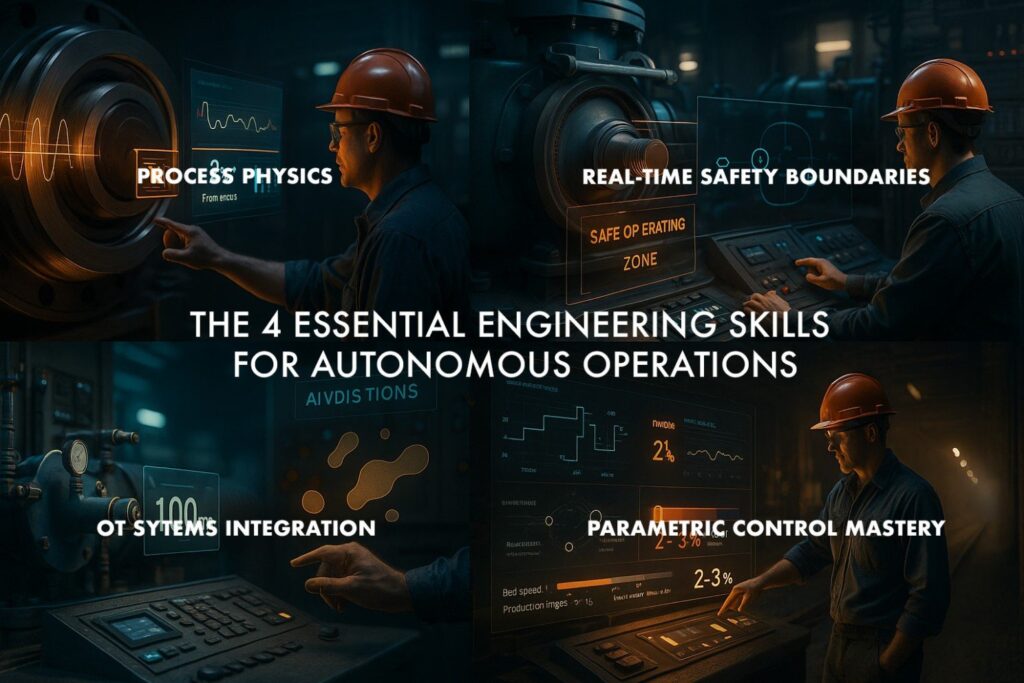
1. Process Physics – Turning Data into Physical Truth An engineer knows that when bearing temperature rises 15°F while vibration increases 2.3 mm/sec, it’s not an “interesting data variation”, it’s the onset of mechanical failure. They understand metallurgical limits, thermal expansion rates, and stress propagation patterns that define what is physically possible versus merely statistically probable. Why it matters for autonomy: Without physics-informed judgment, autonomous systems risk chasing false positives or missing early warning signs entirely. Without it: AI may optimize for a pattern in the data while the equipment is quietly heading toward catastrophic failure.
2. Real-Time Safety Boundaries – Knowing Exactly How Far to Push When pressure drops 2% and flow rate jumps 8%, an engineer instantly recognizes the signature of impending pump cavitation and knows precisely which parameters can be adjusted without triggering cascade failures. This judgment comes from years of operating within the real-world limits of interconnected assets. Why it matters for autonomy: Autonomous systems need human-defined guardrails to ensure optimization never compromises safety. Without it: A system might squeeze out marginal efficiency gains while unknowingly accelerating equipment damage or triggering costly shutdowns.
3. Systems Integration Reality – Bridging AI Ambition with Industrial Constraints Engineers know SCADA systems operate at 100 ms response times, PLCs run deterministic cycles, and industrial networks can’t handle probabilistic recommendations in mission-critical loops. They understand the difference between “technically possible” and “operationally feasible” under production constraints. Why it matters for autonomy: This knowledge ensures AI integrates cleanly into the infrastructure that already runs the plant, without disrupting reliability or safety. Without it: Autonomous projects stall or fail in production because the control layer can’t execute the AI’s recommendations in time or within spec.
4. Parametric Control Mastery – Adapting Autonomy Across the Asset Lifecycle As a conveyor belt ages, optimal speed should drop by 2–3% per year due to bearing wear and belt stretch. An engineer instinctively adjusts control parameters based on asset condition, environmental factors, and production targets, a skill refined over decades. Why it matters for autonomy: Engineers ensure AI systems don’t just work when new, but continue to operate optimally as assets age and conditions shift. Without it: Over time, autonomous performance drifts, eroding ROI and creating hidden inefficiencies that compound across the operation.
Bottom line: These four skills are the bridge between AI-driven autonomy and industrial reality. Autonomous transformation succeeds only when the people who understand the physical, operational, and lifecycle constraints of the plant are the ones designing the systems that run it.
Enabling engineers to build autonomous operations: Decision Intelligence as a Layer
Here's what most AI vendors get wrong: They want to replace proven industrial control systems with probabilistic AI. Engineers know this is dangerous.
The Reality: DCS and SCADA systems represent billions in investment, decades of safety certification, and deterministic control logic that keeps people alive. These systems will, and must, remain the authoritative execution layer in industrial operations.
The Breakthrough: Autonomous intelligence operates as a decision layer above existing control infrastructure:
┌─────────────────────────────────────────────┐
│  DECISION INTELLIGENCE LAYER                │
│  • Observe: Monitor real-time data          │
│  • Optimize: Simulate scenarios             │
│  • Orchestrate: Validate recommendations    │
└─────────────────────────────────────────────┘
                        ↓
┌─────────────────────────────────────────────┐
│  PROVEN CONTROL SYSTEMS (DCS/SCADA)         │
│  • Deterministic execution                  │
│  • Safety-certified operations              │
│  • Mission-critical reliability             │
└─────────────────────────────────────────────┘
Architectural Comparison:

Why This Architecture Wins: Engineers can deploy autonomous intelligence without gambling on mission-critical infrastructure. Start with decision support, progress toward automation... all within proven safety boundaries.
Ensuring Engineers Are Building True Autonomy: Why Sequential Multi-Agent Systems Fail in Safety-Critical Environments
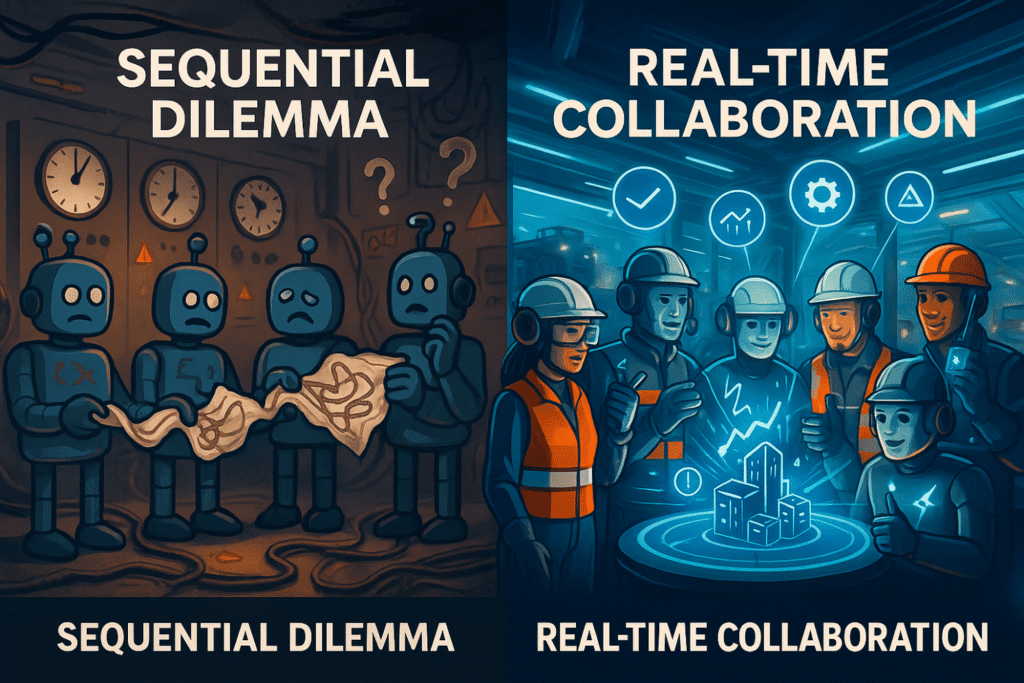
Decision Intelligence only delivers safe autonomy when the underlying architecture is built for the realities of industrial control, and that reality is best understood by engineers, not IT departments.
Here’s the uncomfortable truth: Most current Agentic AI “multi-agent” systems today are not true collaborative architectures. They are sequential task chains... agent A hands work to agent B, which passes to agent C. This design collapses under the speed, precision, and safety constraints of industrial environments.
The Determinism Requirement LLM-driven agents produce different outputs for identical inputs. That’s acceptable for drafting emails; it’s unacceptable for controlling assets. If an engineer’s safety model says “increase pressure by 15 PSI” under certain conditions, the recommendation must be identical every time. Safety-critical control requires deterministic logic, something engineers already design for every day.
The Safety Logic Gap Sequential AI lacks embedded industrial safety rules. It doesn’t inherently know that a 3% throughput gain might exceed metallurgical limits or breach environmental permits. Engineers carry this knowledge because they’ve spent years working inside those constraints, and they know how to encode them into control logic.
Real-World Tests Across Industries
- Mining – If haul truck #47 develops a hydraulic fault, multiple agents must coordinate instantly: truck, crusher, maintenance, dispatch, weather, and fuel management agents must work in parallel to avoid downtime.
- Manufacturing – When welding robot #3 detects metal thickness variation, quality agents must coordinate with parts supply, line speed, and upstream stamping in real time to stop defects without halting production.
- Oil & Gas – When offshore platform sensors show pressure anomalies, safety agents must work with production, weather, and emergency response agents simultaneously to evaluate shutdown scenarios while sustaining safe operations.
Sequential Logic vs. Industrial Reality
- Sequential AI: Alert → Analyze → Reschedule → Adjust
- Industrial Operations: All relevant agents act in parallel, share validated data, and reach consensus inside proven safety boundaries.
Why This Matters for Engineers Engineers instinctively reject sequential AI because they understand cascade failure risk. IT teams may see “workflow automation,” but engineers see potential disasters. Building autonomy that works in the real world means embedding engineering judgment, safety logic, and deterministic control from day one, not bolting it on after a failure. That’s why over 60% of IT-led AI projects stall: architecture that ignores engineering realities will always break under operational stress.
IT as the Governance Backbone of Industrial Autonomy

The Decision Intelligence Layer can only deliver safe, reliable autonomy if it runs on an architecture that enforces trust, security, and compliance at scale. That’s where IT moves from an enabling function to the governance backbone of autonomous operations.
In safety-critical industries, the autonomy pipeline doesn’t end at an engineer’s decision model. Every action must pass through a framework that ensures:
- Security and Cyber Resilience – Autonomous systems are prime targets. IT hardens every layer against breaches, prevents rogue agent behavior, and ensures data sovereignty.
- Enterprise Integration – Operational decisions are only as good as the systems they connect to. IT ensures those integrations are robust, tested, and sustainable across ERP, MES, SCADA, and field systems.
- Regulatory Compliance – From environmental permits to export controls, IT keeps autonomous operations inside the law, continuously, not just at deployment.
- Architectural Stewardship – As autonomy evolves to Agentic and Multi-Agent Generative Systems, IT becomes the custodian of the architecture that determines whether those systems are scalable, interoperable, and safe.
In practice, this means engineers define what actions will achieve the operational intent, while IT ensures how those actions are executed securely, predictably, and within proven guardrails.
The partnership isn’t optional. Without IT governance, even the most advanced engineer-built autonomy will stall at scale, undermined by cyber risks, integration failures, or compliance gaps. With it, engineers can build true autonomy on a foundation that will stand up to the speed, complexity, and accountability demands of industrial environments.
The Choice: Lead or Lag behind
The Competitive Reality Check:
While your organization debates AI governance frameworks, competitors are embedding operational advantages that compound relentlessly. Once a rival achieves a major throughput gain across multiple sites, that advantage multiplies quarter after quarter. You can't claw back millions in cumulative savings, thousands of hours of prevented downtime, or the operational agility that comes from autonomous systems learning and improving continuously.
Organizations Enabling Engineer-Led AI:
- Deploy solutions in 30-60 days versus 18-month IT projects
- Achieve measurable operational improvements that compound over time
- Build adaptive systems that get smarter with each operational cycle
- Convert retiring expertise into autonomous systems that work 24/7
The Timeline: Industrial transformation happens in quarters, not years. The organizations that enable engineer-led autonomy now will define the competitive landscape for the next decade.
In Autonomous industry, code alone won't win. Your engineers will.
Sources:
- McKinsey Global Institute (2024): mckinsey.com/mgi/our-research/ai-industrial-applications
- XMPro Industrial AI Research (2024): xmpro.com/mags-the-killer-app-for-generative-ai-in-industrial-applications
- China Industrial AI Market (2025): finance.yahoo.com/news/china-emerges-global-leader-autonomous-133147144.html
- Amiko Consulting Manufacturing AI Report (2025): amiko.consulting/manufacturing-ai-revolution-next-generation-technologies
- U.S. Bureau of Labor Statistics (2024): bls.gov/emp/tables/employment-projections-program.htm
- XMPro Customer Success Data (2024-2025): xmpro.com/case-studies