


























Pieter Van Schalkwyk
CEO at XMPRO
LNS Research just published an analysis that should be on every industrial executive's radar: their Industrial Productivity Index reveals a fundamental challenge that incremental improvements cannot solve.
As Vivek Murugesan and the LNS team have documented, the numbers tell a story that most of us already feel: front-line worker tenure has collapsed from decades to just a few years (what Allison Kuhn calls "The Great Goodbye"). Asset and process complexity continues to grow. Supply chains optimized for efficiency have proven fragile. And AI is forcing a complete rethink of operating models.
What strikes me most is not the diagnosis (we've all sensed this shift), but what it means for how we must respond.
Why How You Measure Determines What You See
LNS measures productivity as the ratio of outputs delivered to inputs consumed across the entire value chain. Not just labor productivity, but everything: energy, materials, assets, logistics, and labor working together to deliver value to customers.
This framing matters because it exposes why traditional approaches fall short. When you optimize one input in isolation (say, labor efficiency), you often shift costs to other inputs (higher energy use, increased maintenance burden, or supply chain friction). The productivity ratio stays flat or declines even as individual metrics improve.
This is why digitizing existing processes rarely delivers transformational results. You're optimizing a system that was designed for a different era.
What This Means for Agentic Operations
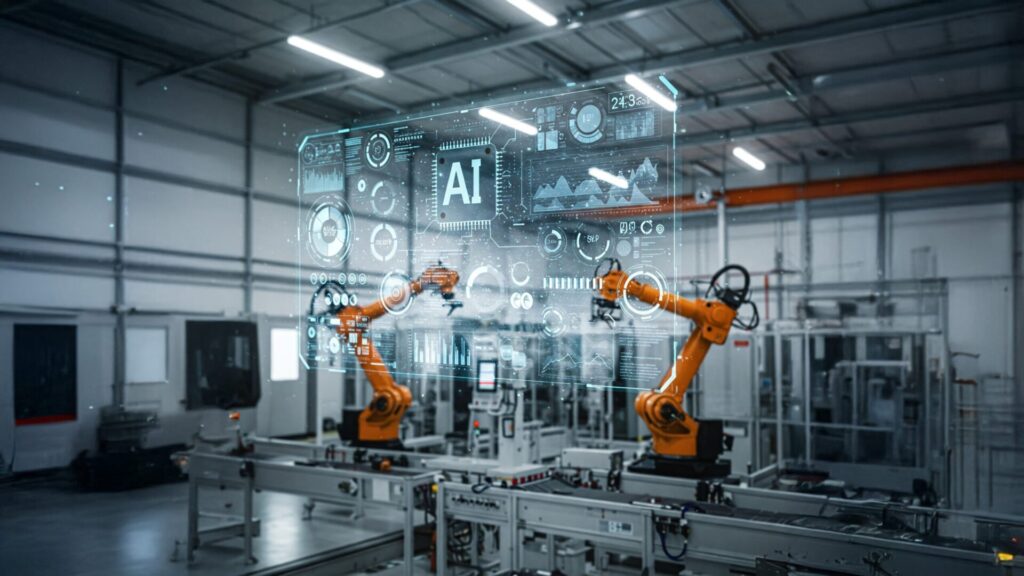
The LNS research validates why we've been focused on what we call Agentic Operations: using coordinated AI agents to autonomously manage the full cycle of industrial decision-making.
Think about it through the productivity ratio lens:
On the input side, AI agents enable continuous, coordinated optimization:
- Energy and resources: Real-time optimization that adapts to changing conditions, not static schedules set by engineers months ago
- Asset health: Predicting maintenance needs before failures consume resources and cascade into production losses
- Supply networks: Coordinating with suppliers as partners rather than adversaries (LNS's research confirms collaborative supply chains consistently outperform competitive ones)
On the output side, AI agents protect throughput through faster-than-human response:
- Availability: Preventing unplanned downtime before it destroys production schedules
- Quality: Maintaining consistency even as workforce experience declines and tribal knowledge walks out the door
- Responsiveness: Adapting to demand changes faster than human-only decision cycles allow
The key insight from LNS? The most productive companies don't just digitize existing processes. They fundamentally reimagine how they operate. They "make things different."
From Measurement to Action
LNS has given us a rigorous way to measure the problem. Now we need solutions that match the scale of the challenge.
At XMPro, our approach rests on three principles:
- Progressive intelligence: Start with visibility, add AI recommendations, achieve autonomous operations where it makes sense. Not everything needs full autonomy, but the option should exist where the productivity math supports it.
- Proven decision science: Industrial operations are safety-critical. We use utility theory and causal reasoning, not just pattern matching. When AI agents make decisions that affect physical equipment and human safety, the reasoning must be explainable and defensible.
- Quantified business value: Every deployment should be measured against the productivity ratio. If AI agents aren't improving outputs relative to inputs, they're not earning their place.
The Window for Action Is Narrow
LNS notes that early movers stand to gain disproportionate advantage in what is becoming a winner-take-all environment.
I believe this is correct. The companies that figure out how to deploy AI agents for operational effectiveness (not just office efficiency) will define the next era of industrial competition.
The productivity crisis is real. So is the opportunity.
What's your organization doing to address the industrial productivity challenge? I'd welcome hearing how others are thinking about this.
Thanks to Vivek Murugesan and Allison Kuhn at LNS Research for the framework that makes these conversations possible.
Pieter van Schalkwyk is the CEO of XMPro, specializing in industrial AI agent orchestration and governance. Drawing on 30+ years of experience in industrial automation, he helps organizations implement practical AI solutions that deliver measurable business outcomes while ensuring responsible AI deployment at scale.
About XMPro: We help industrial companies automate complex operational decisions. Our cognitive agents learn from your experts and keep improving, ensuring consistent operations even as your workforce changes.
Our GitHub Repo has more technical information. You can also contact me or Gavin Green for more information.
Read more on MAGS at The Digital Engineer
#IndustrialAI #Manufacturing #Productivity #AgenticAI #DigitalTransformation #Operations