



























Wouter Beneke
Marketing Lead at XMPRO
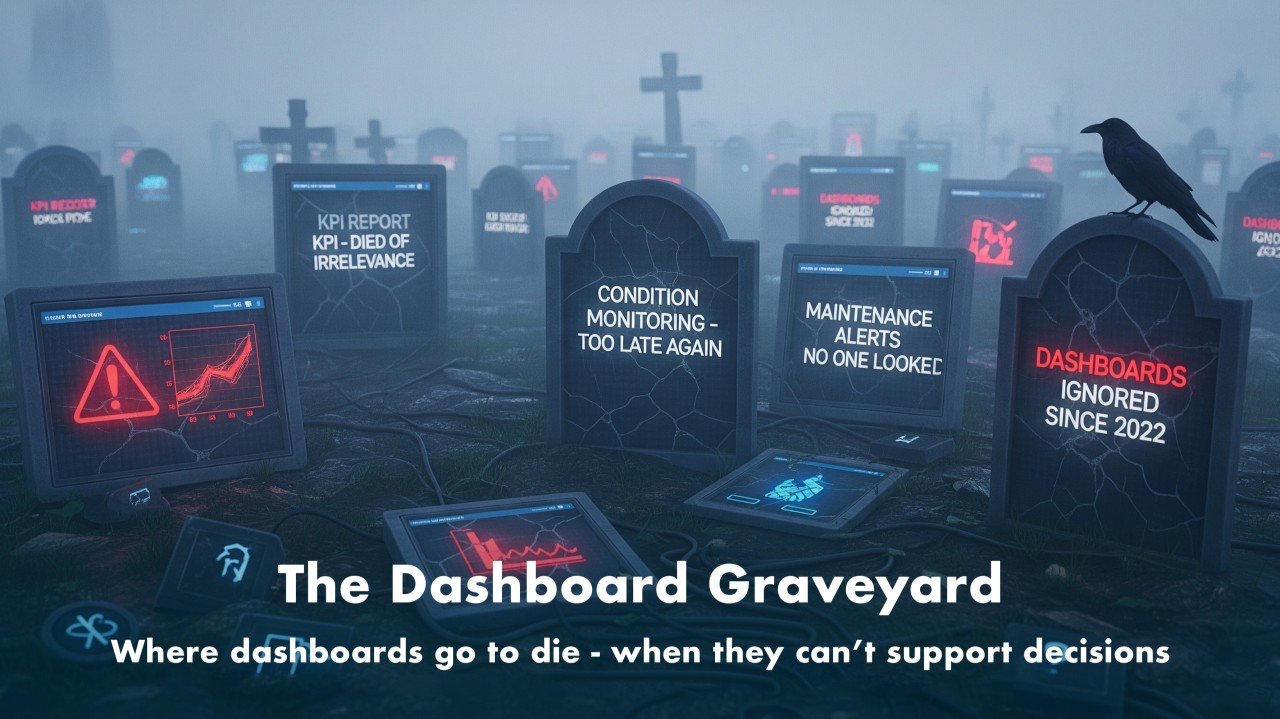
Dashboards are dying... ignored, overwhelming, or irrelevant. And without Decision Intelligence, they end up here...
"This article expands on the core theme from our recent post on The Dashboard Graveyard - why dashboards fail and how leading organizations are moving beyond them to decision-centric operations."
🪦 The Dashboard Graveyard
- KPI Report ... Died of Irrelevance
- Maintenance Alerts ... Ignored Until Too Late
- Condition Monitoring ... No Action Taken
These dashboards didn't fail because of bad data. They failed because they didn't support decisions.
In asset-intensive operations, visibility isn't the problem...decision velocity is.
What You'll Discover in This Article:
- Why more than 68% of industrial alarms go ignored and how this creates a $20B annual drain on productivity
- The three stages of Decision Intelligence that transform passive monitoring into active decision-making
- How AI Advisors and Multi-Agent Systems reduce operator cognitive load while also improving response times.
- Real-world case studies include $8M value creation in 6 months (Oil & Gas), and 80% downtime reduction (Mining).
- A practical framework for moving from dashboard-centric to decision-centric operations, starting in just 30 days
Whether you manage operations, implement digital transformation, or lead industrial AI initiatives, this article provides a proven roadmap to escape the dashboard graveyard and build intelligent operations that drive competitive advantage.
The Shift Is Already Happening
The shift is already underway. Gartner predicts that "by 2027, 50% of business decisions will be augmented or automated by AI agents."¹ The days of relying on static dashboards to drive complex operational decisions are numbered.
In an era of rapidly increasing complexity, across manufacturing, energy, mining, and logistics, leaders are recognizing a core truth: the speed and quality of decision-making is becoming the primary driver of operational performance. This is why Rita Sallam, Gartner Distinguished VP Analyst and one of the foremost authorities on analytics and AI strategy, calls Decision Intelligence "the AI-enabled future of strategic operations."²
David Pidsley from Gartner, Senior Director Analyst and co-author of the 2024 Gartner Market Guide for Decision Intelligence Platforms, adds another crucial insight: "By 2028, 25% of CDAO vision statements will become 'decision-centric,' surpassing 'data-driven' slogans."³
At XMPro, we see this shift playing out across our customer base. Organizations are moving beyond dashboards toward intelligent, transparent AI-driven systems that can orchestrate decisions at machine speed while keeping humans firmly in the loop. To accelerate this transition, XMPro works closely with ecosystem partners such as Dell Technologies AI Factory, enabling clients to deploy Decision Intelligence and agentic AI on trusted, scalable platforms - from industrial edge to cloud. This partnership ensures that XMPro’s solutions operate seamlessly in complex, regulated environments where operational integrity and governance are paramount.

The Hidden Cost of Dashboard Overload
Why are traditional dashboards failing? It starts with the sheer cognitive burden they impose, and the business impact is staggering.
Walk into many control rooms today and you'll find operators surrounded by screens: SCADA alarms, historian trends, IoT dashboards, ERP reports, each generating streams of data, but rarely in concert. As XMPro's Wouter Beneke describes it: "Dozens of screens, each shouting for attention... none of it coordinated, much of it noise."⁴
The numbers tell a stark story:
- Operators now face over 1,000 daily alarms per operator (compared to 60-100 historically)⁵
- 68-99% of alarms in industrial settings do not require intervention⁶
- Teams need 19 different tools on average to respond to a single threat incident⁷
- Every redundant alert causes a 30% attention drop⁸
Michael Carroll, an industrial transformation leader, observes that the unchecked accumulation of complexity in industrial systems has outpaced human capacity to manage it. He notes that the proliferation of dashboards and data streams, each championed by different functional silos, has led to a deluge of information that fosters paralysis rather than clarity. This cognitive overload results in decision latency and operational risks, as humans are not equipped to process hundreds of simultaneous signals in real time.⁹
The consequences cascade through operations:
- Increased downtime: Delayed responses mean unplanned outages. When operators miss critical signals in the noise, a 10-minute fix becomes a 4-hour shutdown costing millions
- Missed maintenance signals: Early warning signs lost in noise lead to catastrophic failures costing 3-5x more than preventive maintenance
- Safety risks: Alarm fatigue has been identified as a contributing factor in major industrial incidents. The UK's Health and Safety Executive identified poor alarm management as a contributing factor in major incidents including Milford Haven, Texas City, and Buncefield
- Talent attrition: The best operators burn out and leave. One major refiner reported 40% turnover in control room staff, taking decades of expertise with them
According to the Abnormal Situation Management Consortium, poor alarm management is one of the leading causes of unplanned downtime, contributing to over $20B in lost production every year. Results of studies by the ASM Consortium documented in 1995 concluded that better handling of abnormal situations in the U.S. petrochemical industry alone could save up to $10 billion per year, a figure that has been repeatedly quoted but remains unaddressed at many facilities.
Cassie Kozyrkov, former Chief Decision Scientist at Google and one of the pioneers of Decision Intelligence as a discipline, puts it perfectly: "Dashboards are great for informing you what you already know and how you got here – but they are not designed for data discovery and to help you make sense of where you want to go next."¹⁰

The Decision Intelligence Imperative
To address this, industrial leaders are turning to Decision Intelligence (DI). This is not a new visualization layer, it's a fundamental shift in how decisions are made and executed across operations.
Gartner reports that 42% of enterprises are prioritizing DI in the next two years.¹¹ Rita Sallam, whose research shapes how thousands of organizations approach analytics and AI, frames DI as the convergence of AI, analytics, and decision flows to drive "more accurate, transparent, compliant and adaptive decisions."¹²
The Digital Twin Consortium, the authoritative cross-industry body setting standards for digital twin implementation with members including Microsoft, GE, and Siemens, reinforces this shift, defining the role of Digital Twins as systems that "use real-time and historical data to represent the past and present while simulating potential futures to drive optimal decision-making and action."¹³
For asset-intensive industries, this evolution is critical. The complexity, speed, and stakes of operations demand decision velocity and decision quality far beyond what traditional dashboards can provide.
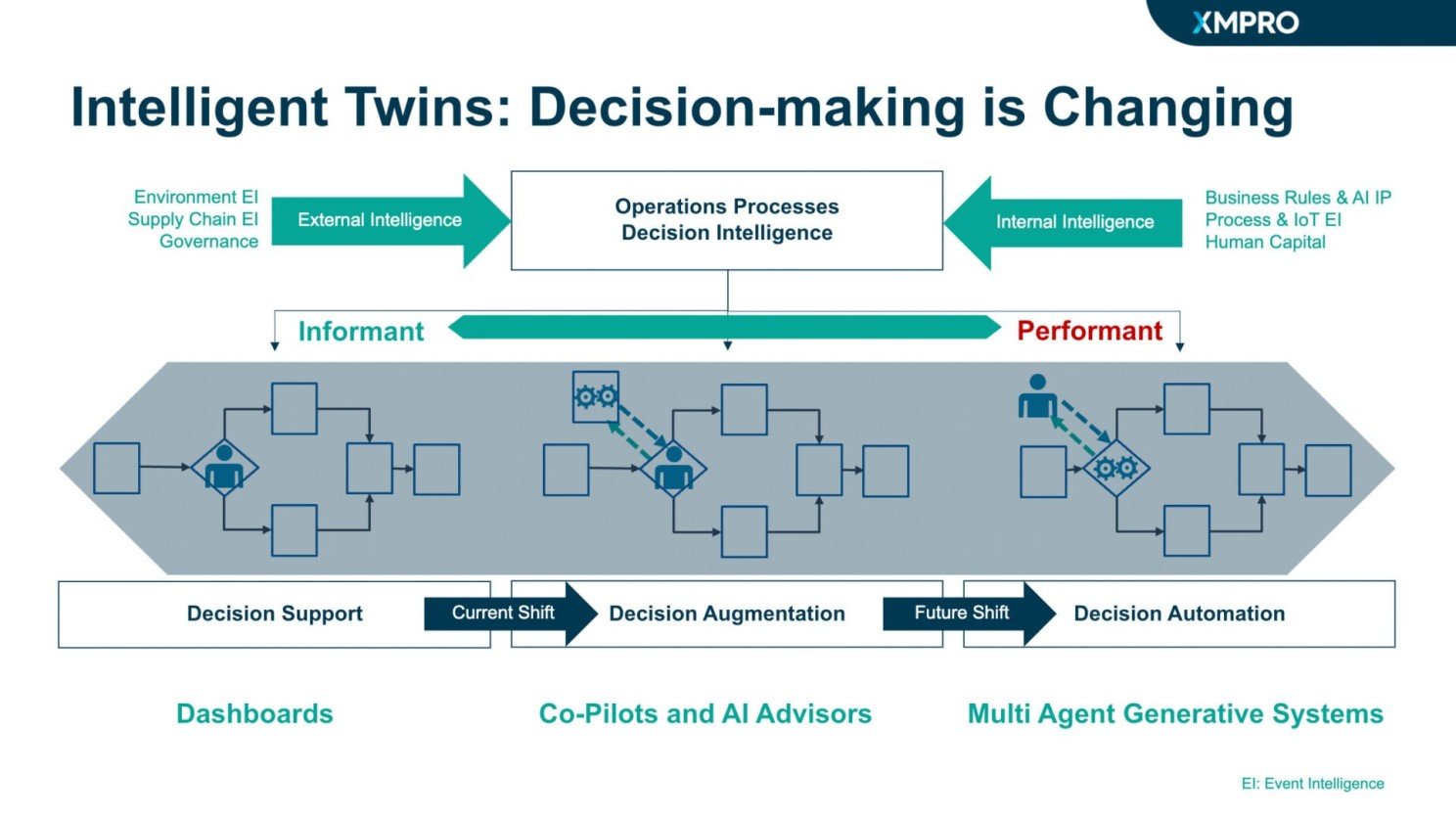
How Industrial Leaders Move Beyond Dashboards: XMPro’s 3-Stage Decision Intelligence Continuum
At XMPro, we help organizations operationalize this shift through our Decision Intelligence Continuum - a practical framework for moving from dashboard-centric to decision-centric operations.
Designed for the realities of industrial environments (not adapted from IT platforms), the Continuum progresses through three stages:
- Decision Support
- Decision Augmentation
- Decision Automation
Each stage builds on the last, enabling progressively higher levels of intelligence and trusted action.
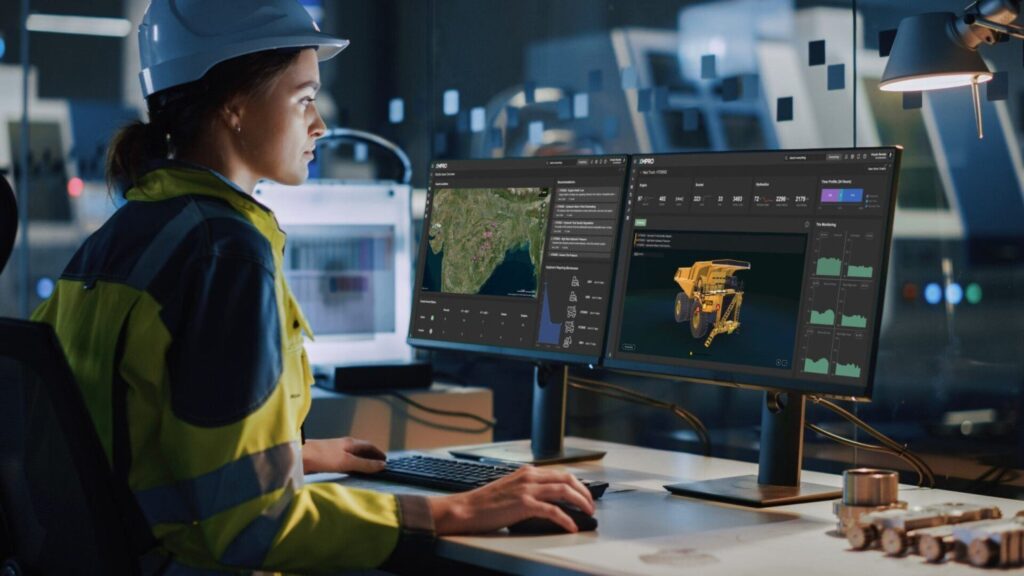
Decision Support: The Foundation of Decision Intelligence
The first and most critical step in moving beyond the dashboard graveyard is establishing a robust Decision Support layer. It is the foundation of XMPro’s Decision Intelligence Continuum.
Without this layer, higher levels of intelligence falter. AI Advisors and autonomous agents cannot operate safely or effectively on noisy, unstructured, or siloed data. Decision Support is where XMPro systematically transforms operational data into clean, contextualized, triaged, and explainable intelligence. This builds the trust and traceability required for intelligent decision-making at scale.
Decision Support provides structured intelligence that enables both human operators and automated systems to make timely, accurate, and trusted decisions. It transforms raw data into actionable insights, prioritizes what matters most, and presents this intelligence in a way that supports operational goals and governance requirements. In short, it filters noise and drives focused action.
Through orchestrated data pipelines, the XMPro Data Stream Designer fuses, transforms, and contextualizes real-time data from across OT, IT, and ET systems. Composite AI reasoning is applied in-stream, enriching raw signals with operational context and expert knowledge.
The XMPro Recommendation Manager then triggers, prioritizes, and routes actionable recommendations. Instead of overwhelming engineers with thousands of alarms, Decision Support ensures they receive a focused stream of the five to ten most important recommendations first. This accelerates decision velocity, reduces cognitive overload, and improves operational outcomes.
Read the Deep Dive Article on Decision Support here -->
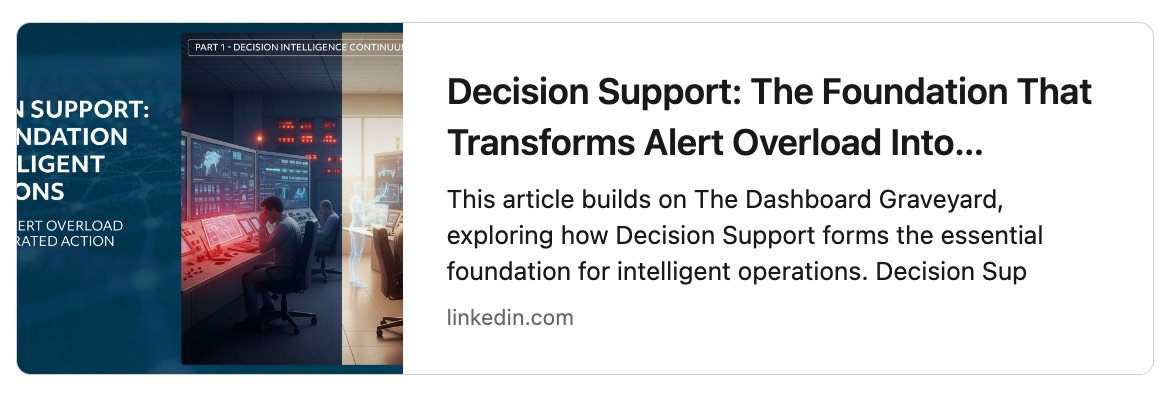
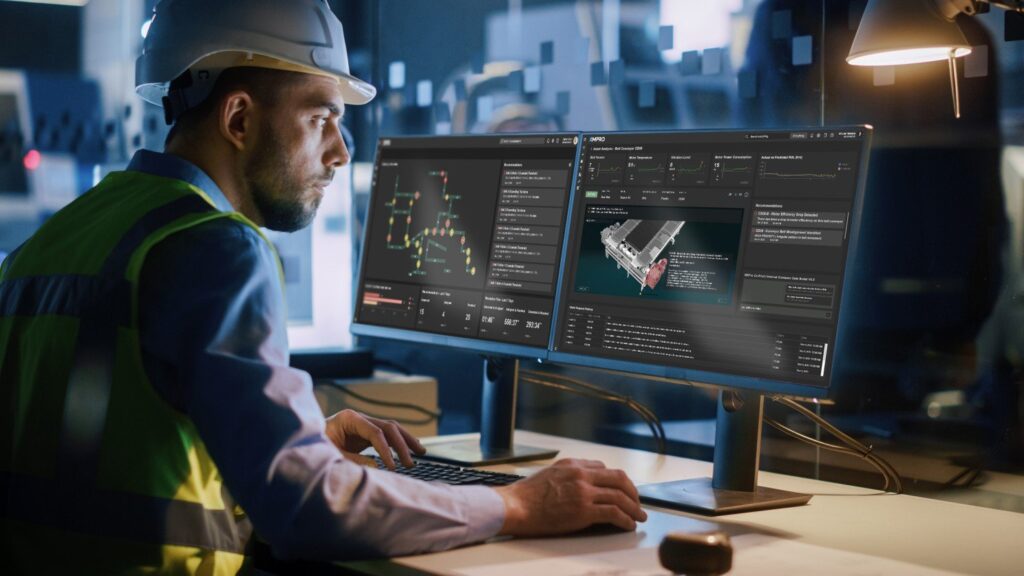
Real-world example: At the world’s largest potash mining company, XMPro’s Decision Support layer was deployed across 50 miles of underground conveyors:
- $10 million in savings every year through improved decision intelligence
- 30% reduction in unplanned conveyor downtime
- 9,000 tons of production saved every month
- 95% reduction in false alarms
- Initial solution composed and deployed in just 30 days
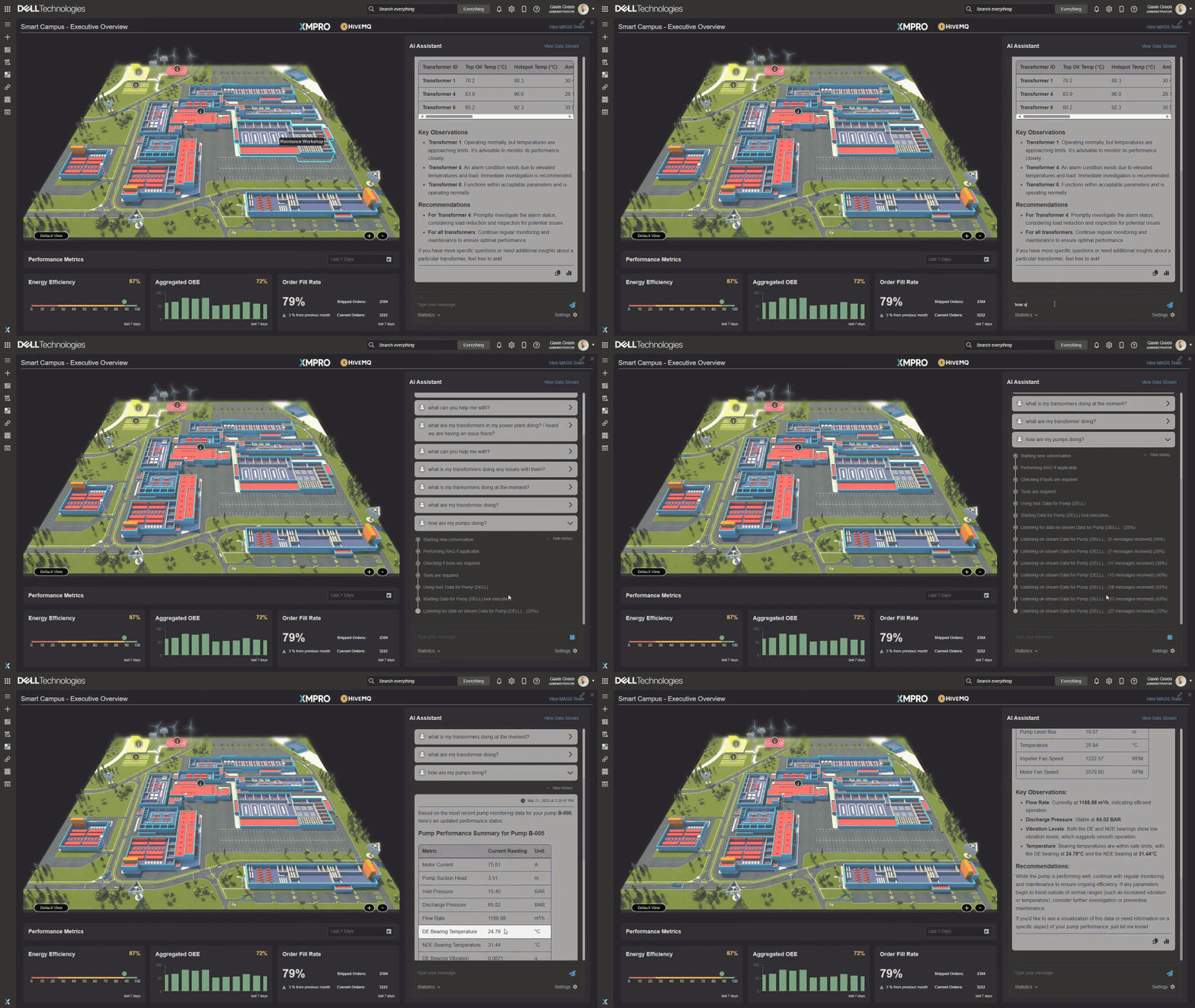
Decision Augmentation: Amplifying Human Expertise with Trusted AI Assistants & Advisors
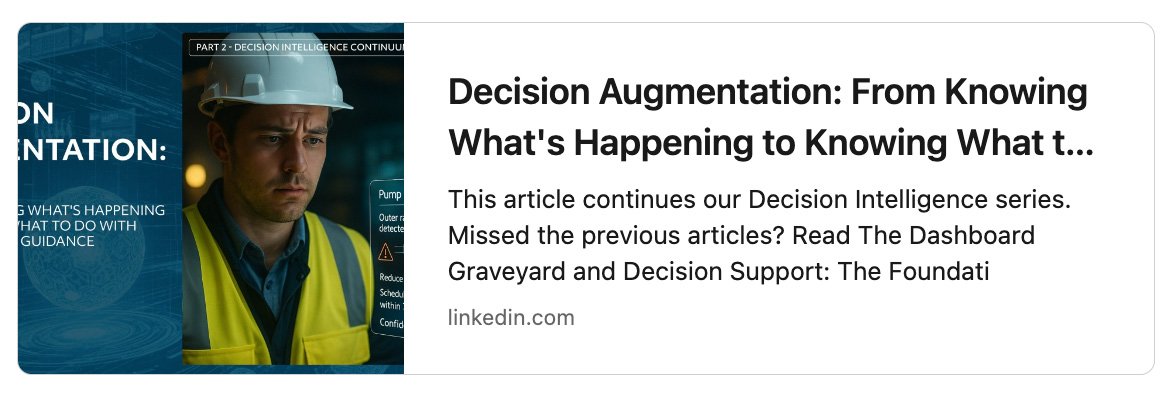
With a strong Decision Support foundation in place, the next stage of the continuum is Decision Augmentation. This stage enables trusted AI Advisors and Assistants to support human decision-makers in real time.
Decision Augmentation provides intelligent support for decisions that still require human judgment, context, or approval. AI Advisors continuously analyze live operations to generate prescriptive recommendations, while AI Assistants provide explainable, conversational guidance to operators and engineers. The goal is to reduce cognitive overload, improve decision quality, and accelerate action.
A key differentiator is how XMPro truth-grounds these AI Advisors and Assistants. They reason over live Digital Twins continuously updated by XMPro’s Data Stream Designer and apply Composite AI. This combines physics-based models, rules-based logic, symbolic AI, machine learning, and expert knowledge, ensuring that all AI outputs remain accurate, explainable, and aligned to the physical and operational realities of the environment.
The XMPro Recommendation Manager ensures that AI outputs are prioritized, routed to the right people or systems, and fully explainable. This helps operators focus on the AI recommendations that matter most, with a clear understanding of why they were made and what actions to take.
AI Advisors and Assistants can be deployed flexibly across edge and cloud environments, enabling real-time intelligence even in remote or bandwidth-constrained operations. This capability was demonstrated in XMPro’s joint showcase with Dell Technologies at HANNOVER MESSE 2025
Read the Deep Dive Article on Decision Augmentation here -->

Decision Automation: Scaling Industrial Intelligence Beyond Human Capacity
This is a high-level summary of XMPro’s Decision Automation approach. A detailed deep dive article on this stage of the Decision Intelligence Continuum will be published soon, and will be linked here once available.
The path from augmented to automated decisions is no longer optional. It is a necessity.
Industrial operations today generate volumes of data and operational complexity that far exceed human cognitive capacity. At the same time, many organizations face a widening skills gap, as experienced SMEs retire and fewer qualified replacements enter the workforce. Traditional automation approaches, based on fixed rules and narrow AI models, cannot manage this complexity safely or intelligently.
Decision Automation enables trusted autonomous agents to continuously observe, reason, and act across complex industrial systems. It allows organizations to scale decision intelligence far beyond what human teams can manage, while maintaining governance, transparency, and operational alignment.
Pieter van Schalkwyk, CEO of XMPro and recognized thought leader in industrial AI with over 30 years of experience in process automation, explains: "The critical difference lies in what these systems optimize. Traditional automation focuses on process efficiency: doing the same tasks faster. Multi-Agent Generative Systems focus on decision intelligence: determining the right actions based on current conditions, historical data, and defined objectives. The real power comes not from automating existing tasks faster, but from enabling entirely new classes of decisions and optimizations that were previously impossible."¹⁵
XMPro’s Multi-Agent Generative Systems (MAGS) deliver this capability by deploying collaborative teams of autonomous agents that continuously observe, reflect, plan, and act in real time. These agents reason over live Digital Twins, truth-grounded through Composite AI. This ensures their actions are explainable, aligned with operational realities, and governed through strict safety and compliance boundaries.
Agents also continuously learn and adapt through experience, enabling them to handle novel scenarios and evolving operational challenges over time.
XMPro supports bounded and graduated autonomy, allowing organizations to safely expand agent authority from generating recommendations to executing fully autonomous optimization where appropriate.
MAGS can be deployed flexibly across edge and cloud environments, enabling real-time autonomous decision-making even in remote or bandwidth-constrained operations.
This stage of the continuum closes the loop from data to trusted, intelligent action at scale.
We will explore XMPro’s architecture and best practices for Decision Automation in an upcoming deep dive article.
Together, these three stages give organizations a practical path to move from dashboard-centric to decision-centric operations - starting with the highest-impact areas first.
The beauty of the Decision Intelligence Continuum is that organizations can start anywhere. Many XMPro clients begin with Decision Support to gain trusted visibility, then add Decision Augmentation for critical assets, and implement Decision Automation where it delivers the greatest value. No rip-and-replace is required. XMPro’s composable architecture enhances existing systems and enables solutions to be deployed up to 80 percent faster than traditional approaches.
From Dashboards to Intelligent Supervisory Views
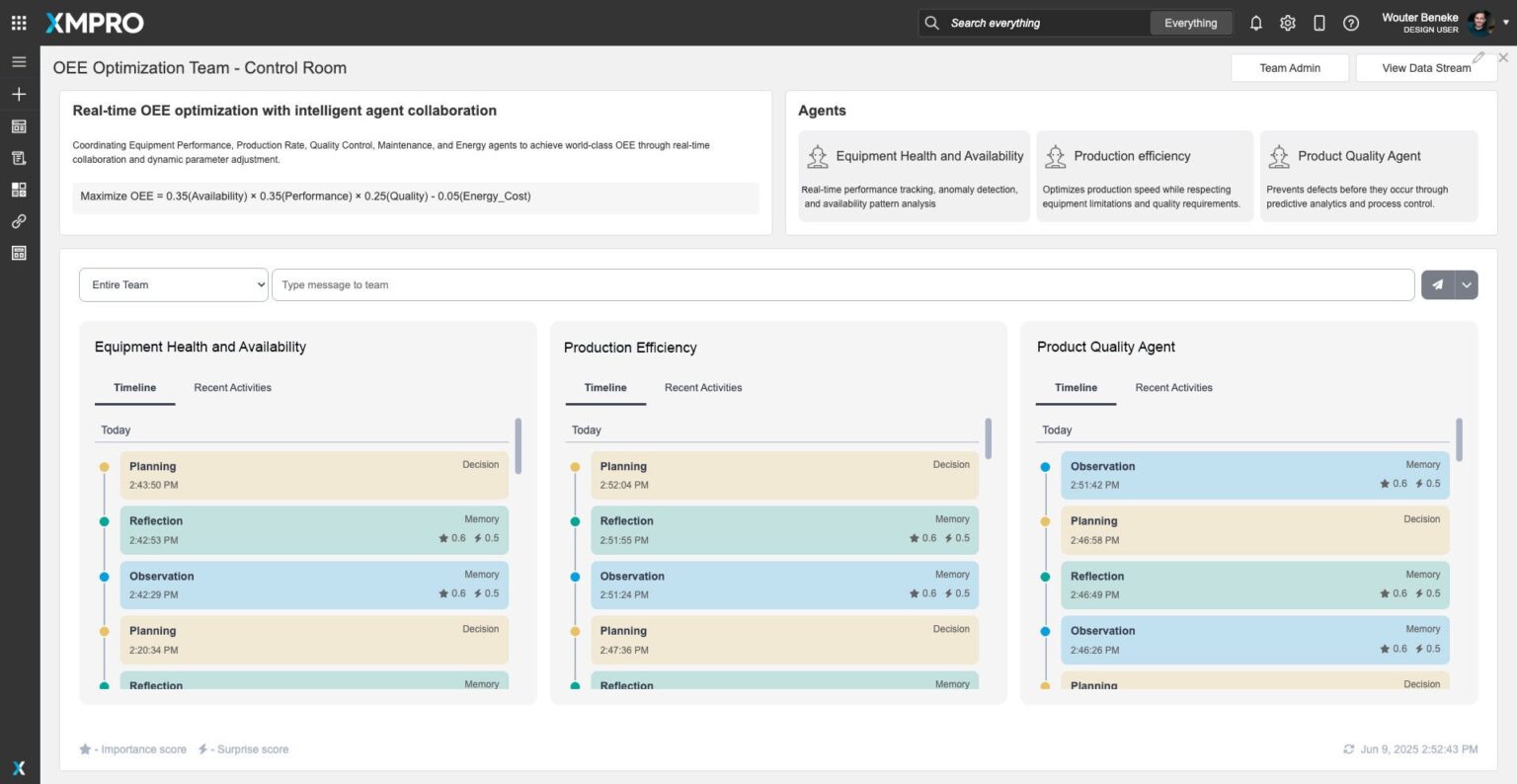
As organizations progress along the Decision Intelligence Continuum, the role of dashboards fundamentally evolves. Supervisory views are no longer just another interface. They become a governance mechanism for industrial AI. Think of them as the control tower for autonomous operations. Every AI decision flows through traceable pathways, every action requires appropriate authorization, and every outcome feeds into continuous improvement.
Unlike dashboards that merely display data, intelligent supervisory views enforce operational boundaries, maintain compliance checkpoints, and provide the oversight that makes autonomous operations trustworthy. They show:
- What agents are doing and why they're doing it
- Where human intervention is needed with clear escalation
- Decision transparency with confidence levels and alternatives considered
- Performance metrics including decision velocity and value generated
Michael Carroll, whose analysis of "Agent Washing" sparked industry-wide discussion about distinguishing genuine AI capabilities from rebranded automation, emphasizes that true AI agents must meet a high bar:
"For an AI to qualify as a true agent, it must... learn, predict, and [reason to] decide... Without these capabilities, a so-called 'agent' is just a glorified assistant."¹⁶
That is precisely why intelligent supervisory views are so important. They give organizations the ability to govern AI agent behavior transparently, ensuring that every decision aligns with operational intent and safety standards.
Carroll’s warning about 'agent washing' is an important one, and it’s why XMPro designs its Multi-Agent Generative Systems to meet strict standards of agency, reasoning, and explainability. When implemented correctly, true agentic intelligence doesn’t just automate tasks, it transforms how operations are governed and decisions are made at scale.
The result? Operators are no longer overwhelmed by raw data. Instead, they receive prioritized insights and transparent explanations of AI-driven actions.
Supervisory views are not just a governance interface, they are the foundation for building the kind of trusted operational intelligence Pieter van Schalkwyk describes:
"Better decision intelligence with intelligent digital twins is 'kinda like' DCS for automation and control. They form the basis for a new strategic capability to manage operations faster, better, more cost-effectively, safely, and responsibly."¹⁷
Aligning with the Digital Twin Consortium Vision
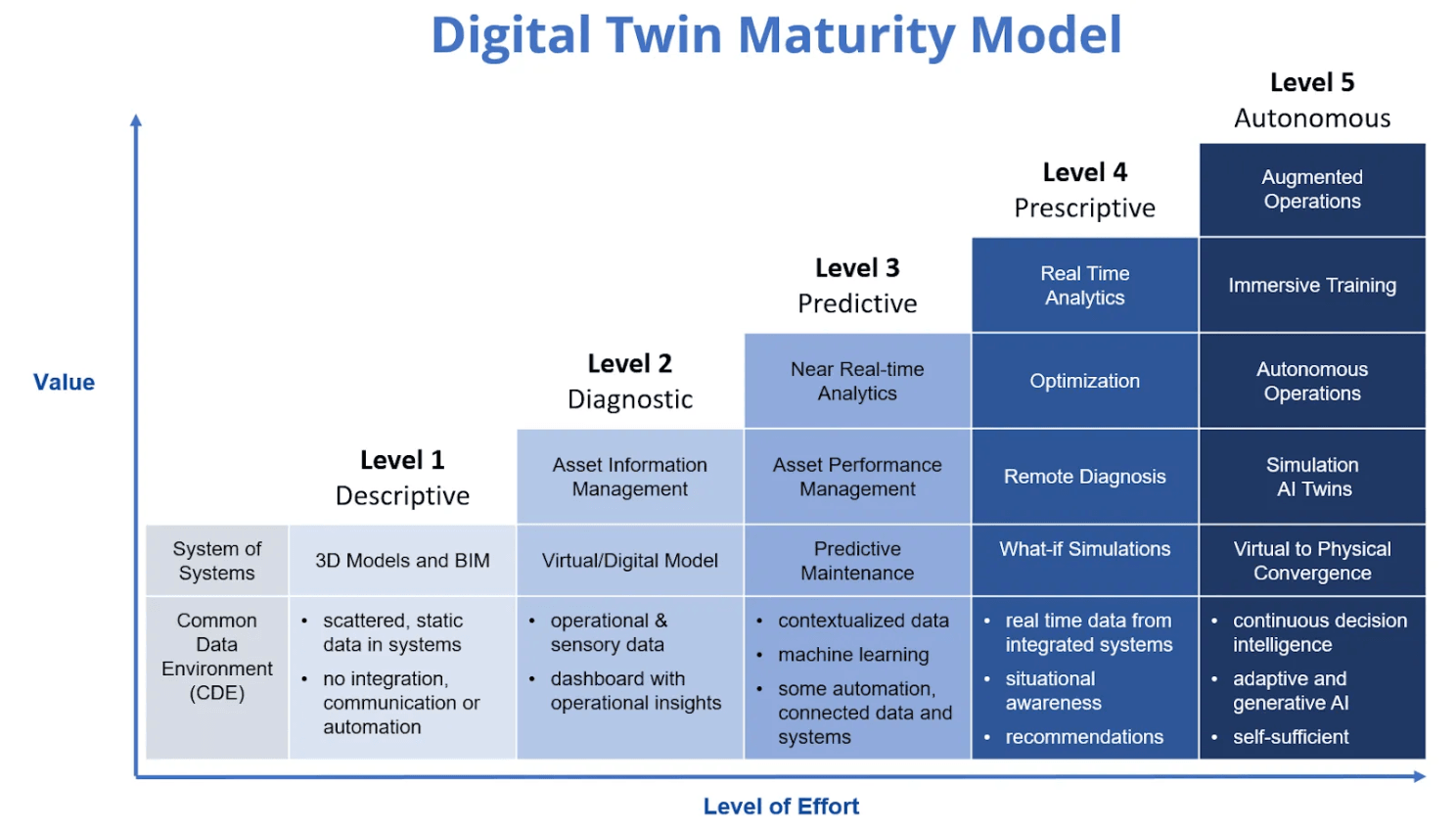
The Digital Twin Consortium, which includes industry giants like Boeing, Chevron, and Procter & Gamble working to establish best practices, is clear about the future: the highest maturity level for Digital Twins includes "autonomous decision-making and the ability to learn and act on behalf of users with no human interference."¹⁸
To reach this level, Digital Twins must be trusted, secure, transparent, and integrated with real-time Decision Intelligence. XMPro implements this vision through agentic reasoning audits, governed autonomy, and transparent supervisory layers. Intelligent decisions are grounded in validated operational data and are fully traceable from edge to cloud.
Dan Isaacs, CTO of the Digital Twin Consortium and former NASA - National Aeronautics and Space Administration digital transformation leader, explains: "Digital twins deliver the ability to understand and make data-driven decisions. Twins are capable of taking millions of data points and reducing them to the handful of most important ones."¹⁹
XMPro's Value at a Glance: The Operational and Strategic Payoff
XMPro helps industrial organizations move beyond dashboards to intelligent, agentic operations. Clients close the loop from data to trusted action at scale, with solutions deployed in weeks, not years, and without disrupting existing systems. Typical results exceed 10X ROI within the first year.
Oil & Gas Supermajor:²⁰
- $16 Million saved per year
- $8 million value within 6 months
- 3-month deployment, break-even in 4 weeks
- 18% reduction in field service trips
- 95% reduction in maintenance planning time
Mining Giant:²¹
- $10 Million saved per year
- 80% reduction in conveyor downtime
- 9,000 tons of product saved monthly
- 30-day initial deployment
- Processing 42 million messages daily
Major North American Mining Enterprise:²¹
- 6 sites live
- 1,000+ assets monitored
- 35+ operational, tactical and strategic use cases built by in-house engineering team
Global Haul Truck Operator:²²
- 95% reduction in nuisance alarms
- 4X improvement in staffing efficiency
- Single common operating picture across operations
These aren't multi-year transformation projects. Most XMPro deployments show initial results within 30 days, with typical ROI exceeding 10X within the first year.
Beyond cost savings, organizations report enhanced safety, improved sustainability, preserved institutional knowledge through AI agents, and freed SME capacity for innovation.
Why Now: Will Your Dashboards Drive the Future, or Drift Toward the Graveyard?
The cost of inaction is rising fast:
- 65% of security incidents still go undetected despite modern monitoring tools²³
- 2.1 million manufacturing jobs will go unfilled by 2030 due to the skills gap, with experienced operators retiring faster than they can be replaced. The cost of those missing jobs could potentially total $1 trillion in 2030 alone²⁴
- Industrial complexity is exploding beyond human capacity to manage
- 33% of organizations have already deployed Decision Intelligence²⁵
McKinsey research shows that companies excelling at both decision quality and speed see higher growth rates and overall returns from their decisions. Respondents at these "decision-making winners" are twice as likely as others to report superior returns from their most recent decisions.²⁶
The shift from data-driven to decision-centric operations is no longer optional, it's existential. Organizations clinging to dashboard-centric approaches will find themselves unable to compete with those operating at decision velocity.
Where Are Your Dashboards Today?
Are they empowering decisions? Or drifting toward the graveyard?
The industrial leaders making this shift today will dominate their industries tomorrow. While competitors debate dashboard designs, they're building decision engines that operate at machine speed with human trust.
The question isn't whether to move beyond dashboards, it's whether you'll lead this transformation or scramble to catch up.
If you’re evaluating how to move beyond dashboards toward trusted Decision Intelligence, I’d be happy to connect. --> Wouter Beneke
The future of industrial operations isn't more dashboards. It's intelligent, auditable systems that transform data into trusted decisions at scale. The shift is happening now. Where will you be?
#DecisionIntelligence #DigitalTwins #IndustrialAI #AI #XMPro #OperationalExcellence #MAGS #IndustrialAutomation
References
- Gartner. (2024). Emerging Tech Impact Radar: Decision Intelligence. Referenced in David Pidsley LinkedIn post.
- Sallam, Rita. (2024). "Bridge AI and Business Outcomes With Decision Intelligence Trends." LinkedIn article. Available at: https://www.linkedin.com/pulse/bridge-ai-business-outcomes-decision-intelligence-trends-pidsley-wiehe
- Pidsley, David. (2024). LinkedIn post on Decision Intelligence predictions. Available at: https://www.linkedin.com/posts/davidpidsley_decisionintelligence-activity-7337755989791715329-kriU
- Beneke, Wouter. (2024). "Getting Past Dashboard Information Overload - Reducing Cognitive Strain With Augmented Decision Intelligence." XMPro Blog. Available at: https://dev.xmpro.com/getting-past-dashboard-information-overload-reducing-cognitive-strain-with-augmented-decision-intelligence/
- XMPro. (2024). "From the Control Room to the Bedroom." XMPro Blog on industrial alarm statistics.
- ISA-18.2 Alarm Management Standard and industry studies on alarm intervention rates.
- Industry studies on operational tool proliferation.
- Research on cognitive load and alarm fatigue.
- Carroll, Michael. (2025). "Is 2025 the Year of Agent Washing?" LinkedIn article. Available at: https://www.linkedin.com/pulse/2025-year-agent-washing-michael-carroll-fsyze/
- Kozyrkov, Cassie. LinkedIn posts on decision intelligence and dashboard limitations.
- Pidsley, David. (2024). Gartner survey results on Decision Intelligence priorities.
- Sallam, Rita. Gartner. Decision Intelligence Market Guide 2024.
- Digital Twin Consortium. (2024). "Digital Twin Consortium Unveils Updated Definitions." Press release. Available at: https://www.digitaltwinconsortium.org/press-room/10-03-24/
- XMPro customer case study - mining operation false alarm reduction.
- van Schalkwyk, Pieter. (2024). "Beyond AI Horseless Carriages: Why Multi-Agent Systems Demand New Thinking." XMPro Blog.
- van Schalkwyk, Pieter. (2025). "The Carroll Industrial AI Agent Framework: Evaluating True AI Agency." XMPro Blog. Available at: https://dev.xmpro.com/the-carroll-industrial-ai-agent-framework-evaluating-true-ai-agency/
- van Schalkwyk, Pieter. (2024). "Decision Intelligence with Digital Twins is 'kinda like' DCS for…" LinkedIn post. Available at: https://www.linkedin.com/posts/pietervs_decision-intelligence-with-digital-twins-activity-7077573637964263424-aH2M
- Digital Twin Consortium. (2024). "Digital Twin Consortium Publishes Business Maturity Model." Press release. Available at: https://www.globenewswire.com/news-release/2024/11/25/2986711/0/en/Digital-Twin-Consortium-Publishes-Business-Maturity-Model.html
- Isaacs, Dan. (2024). Digital Twin Consortium CTO statement on decision-making capabilities.
- XMPro. (2024). Customer Case Study - Oil & Gas Supermajor.
- XMPro. (2024). "Customer Case Study: Digital Twins in Mining Operations and Maintenance." Available at: https://dev.xmpro.com/customer-case-study-digital-twins-in-mining-operations-and-maintenance/
- XMPro. (2024). Customer Case Study - Global Haul Truck Operator.
- Industry security monitoring effectiveness studies.
- Manufacturing Institute & Deloitte. (2021). "Creating pathways for tomorrow's workforce today: Beyond reskilling in manufacturing." Study showing 2.1 million unfilled jobs by 2030.
- Gartner. (2024). 2024 Gartner CDAO Survey on Decision Intelligence adoption.
- McKinsey & Company. (2019). "Effective decision making in the age of urgency." McKinsey Global Survey.
- Abnormal Situation Management Consortium. (1995). Study on costs of abnormal situations in U.S. petrochemical industry.
- Health and Safety Executive. Reports on Milford Haven, Texas City, and Buncefield incidents.
- Nimmo, Ian. (2020). Control Process Automation Hall of Fame induction. Control Global.
- EEMUA Publication 191. "Alarm Systems: A Guide to Design, Management & Procurement."
- ISA-18.2-2009. "Management of Alarm Systems for the Process Industries."
- Nimmo, Ian. (2012). The Path to High Performance HMI. Control Engineering.Available at: https://www.controleng.com/articles/the-path-to-high-performance-hmi/