






















Pieter Van Schalkwyk
CEO at XMPRO
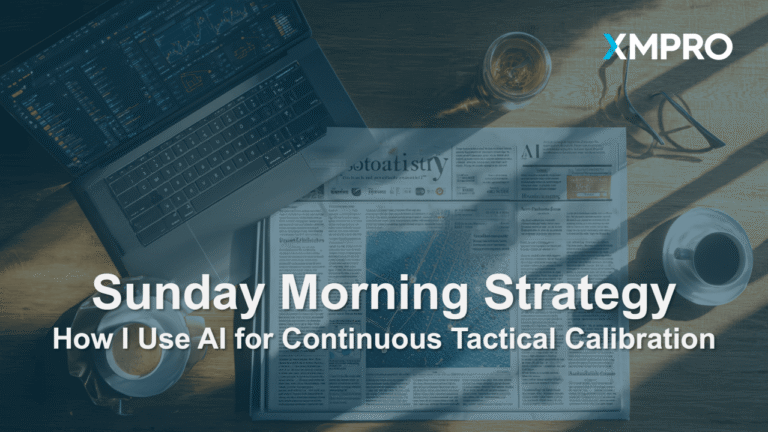
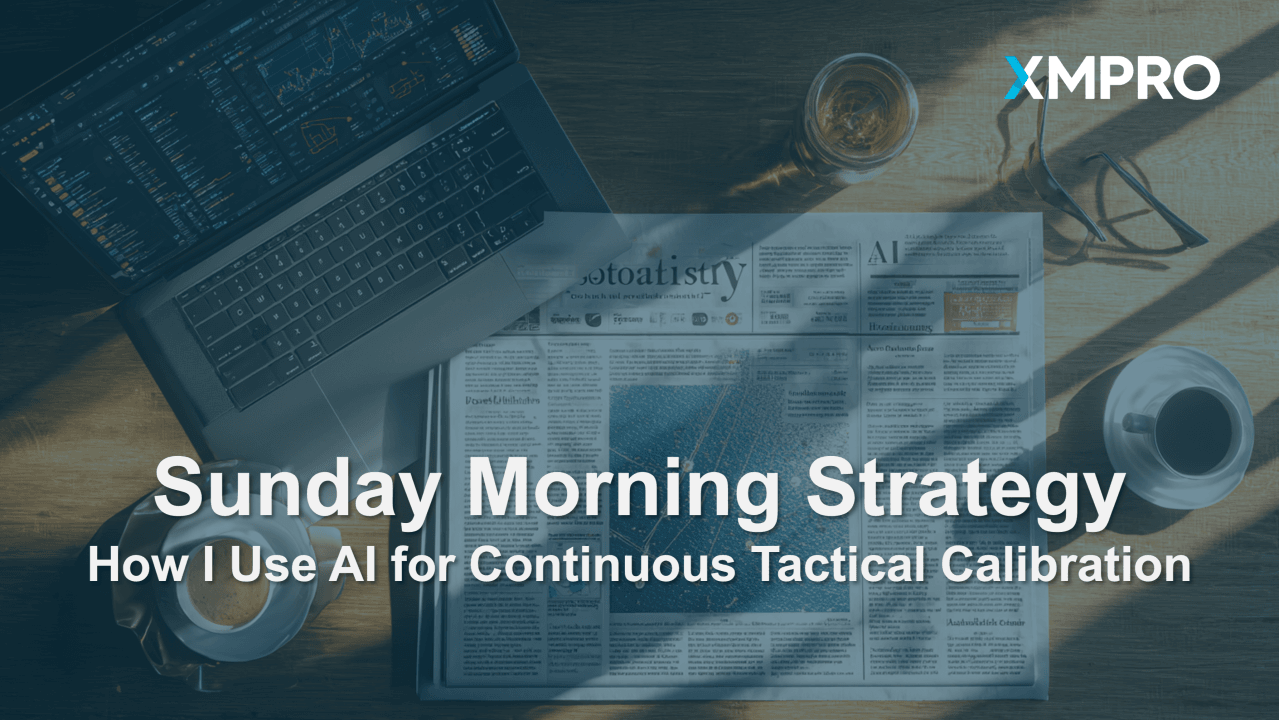
Sunday morning, February 15, 2026. I'm reading The Australian over coffee when an article catches my attention: "Code red: AI unleashes its own tech wreck on software shares."
Software companies are getting hammered. WiseTech down 63%. Xero down 56%. Atlassian down 45%. The market is in panic mode about AI disruption. The fear? Tools like Claude Code and ChatGPT are democratizing software development, potentially making traditional software companies obsolete.
My immediate thought: "What does this mean for XMPro?"
In the old way of doing strategy, I would have scheduled a meeting with my leadership team for next quarter. We'd discuss it at the offsite. The strategy team would research implications for a few weeks. We'd draft positioning documents. We'd refine them. By the time we had a plan, the market would have moved again, and competitors would have already responded.
Quarterly strategic planning feels like steering a ship by looking at last month's weather report.
What actually happened: By Sunday afternoon, I had two comprehensive strategy documents sitting in front of me. A complete customer disruption playbook. A detailed market positioning strategy. Ready for Monday morning executive alignment. Not analysis paralysis. Execution.
Strategy in the AI era isn't about quarterly planning sessions anymore. It's about continuous calibration.
Like sailing a yacht.
The Captain and the Tactician
Think about how traditional strategy works. You plot your course at the quarterly offsite. You assume conditions will stay relatively stable. You adjust your plans only when you review them again next quarter. It's like plotting a course for your sailing yacht and then ignoring the changing winds, currents, and what your competitors are doing.
Now think about how the best sailors actually win races. The captain sets the destination (the vision, the mission, the "where" and "why" we're going). The tactician provides continuous course corrections based on real-time conditions (the "how" and "when" of navigation). Scouts monitor wind patterns, currents, and competitors (feeding intelligence about "what's happening" in the environment).
The destination stays constant. The tactics adjust continuously.
This is exactly how I've structured strategy at XMPro. As CEO, I set our vision (autonomous operations for industrial enterprises), our mission (become THE platform for agentic operations), and our destination (category leadership). The team aligns on these, even though I set them. But our AI advisor has become our tactician, constantly monitoring market conditions, analyzing implications, and presenting options with clear trade-offs.
We still make all strategic decisions as a team. But AI handles continuous market calibration, enhancing everyone's ability to operate tactically while we stay focused on vision and mission. We're not outsourcing strategy. We're augmenting our team's strategic capabilities with continuous tactical intelligence.
The System - How Sunday Morning Strategy Works
I call it "Sunday Morning Strategy," and it's built on a simple multi-agent architecture that anyone can replicate.
First, I have scouts. These are AI agents (ChatGPT web search agents) that run weekly. They monitor competitor moves, track market trends, scan analyst reports. Every Monday morning, I have a digest of what changed while I was focused on execution.
Second, I have my tactician. This is Claude, configured as my strategic advisor through a Claude Project (a persistent AI workspace with uploaded documents and shared team access). Think of it as a living strategy library that contains our core strategy and positioning, competitive intelligence, customer proof points, decision frameworks, and partnership strategies.
Beyond documents, the Project includes strategic directives anchored by Peter Drucker's insight: "The essence of strategy is deciding what not to do." Decision frameworks that weight strategic impact, resource efficiency, risk assessment, learning value, and network effects. These aren't just prompts. They're the strategic philosophy the AI operates under.
Every time we learn something strategically significant, it goes into the Project. The Project is shared with the management team. The COO can ask about competitor moves affecting our strategy. My Marketing Manager can ask what messaging resonates with prospects. The Development Manager can ask where to prioritize R&D investment. They all get answers with the same strategic context I have.
This is organizational capability, not just CEO capability.
The Project doesn't reset quarterly. It evolves continuously. When that AI disruption article appeared Sunday morning, the analysis built on context from 50+ previous strategic conversations. The recommendations accounted for decisions we've already made, resources we've already allocated, and proof points we've already validated.
We don't do macro pivots anymore. We make continuous tactical adjustments. It's the difference between tacking a sailboat (smooth course corrections) and doing a 180-degree turn (disruptive and slow).

The Sunday morning ritual itself is simple:
- I read news and articles (the same habit I've had for twenty years)
- I identify something strategically significant (a gut check that takes seconds)
- I brief my AI tactician: "Here's what I'm seeing. What are the implications?"
- I review the analysis (decision frameworks, trade-offs, scored recommendations)
- I make decisions with confidence
Why Sunday? It's quiet time for strategic thinking. Weekend papers synthesize the week's developments. And whatever insights emerge are ready for Monday morning execution. While my competitors are reading the same news and scheduling meetings for next month, I'm already adjusting course.
This Sunday's Analysis
Let me show you exactly what happened this morning.
The article detailed how software stocks are crashing because investors fear AI tools will make traditional software obsolete. Companies that charge premium prices for specialized software are suddenly vulnerable to customers who can build their own solutions.
I opened the XMPro Strategic Advisor Project and briefed the tactician: "We sell industrial operations platforms. This article suggests AI disrupts software companies. But I think there's something more here. Could this positioning actually help us? Analyze this from multiple angles."
Within an hour, I had comprehensive analysis covering how our customers could use this narrative offensively, how we differentiate from threatened software vendors, market timing implications, competitive response scenarios, and partnership strategy alignment. The analysis connected to our existing strategy documents, referenced our competitive intelligence, cited our customer proof points, and applied our decision frameworks.
By Sunday afternoon, I had two complete strategy documents:
Customer Disruption Playbook: How our customers can use this AI disruption narrative offensively. The positioning: "Don't fear AI disruption. Use XMPro to BUILD autonomous operations that make YOU the disruptor in YOUR industry (mining, oil & gas, utilities) before your competitors do."
This repositions XMPro from operational efficiency tool to strategic weapon:
- BHP isn't just deploying software. They're building operational capabilities their mining competitors can't replicate.
- A major Middle Eastern oil company isn't improving its processes. They're setting industry benchmarks others must chase.
- Nutrien Potash isn't optimizing operations. They're creating validated competitive advantages.
The playbook includes messaging for different stakeholder levels (CEO: strategic imperative, COO: operational competitive advantage, VP Operations: build vs. buy), objection handling, and a 30/60/90 day campaign roadmap.
Industry Disruption Strategy: How XMPro disrupts the $50-60B industrial software market. The thesis: AI is accelerating a fundamental shift from buying vendor software to building operational IP on platforms.
Our elite operator customers didn't just choose XMPro over competitors. They chose to BUILD on XMPro instead of licensing from incumbent industrial software vendors:
- They own their IP. They control their roadmap.
- They created capabilities these vendors can't sell as products.
This document maps the competitive landscape (which incumbents are vulnerable), sizes the disruption opportunity ($5-8B addressable in our market), positions our elite SI partnerships as transformation enablers (not implementation services), and provides the competitive messaging to go directly after incumbent software spend.
Both documents were comprehensive, strategically grounded, and action-oriented. Ready for Monday morning leadership alignment and execution.
Why This Matters for Industrial Operations
I'm the CEO of an "Agentic Operations" company. We help industrial customers build autonomous operations where AI agents coordinate with human workers to execute operational processes in safety-critical environments.
My Sunday Morning Strategy process is exactly this concept applied to strategy instead of operations. I have autonomous agents (scouts) monitoring environmental conditions. I have AI providing continuous intelligence (tactical analysis) from a shared knowledge base. I make decisions within my governance boundaries (strategic frameworks). And I coordinate execution across my organization.
The Claude Project structure mirrors what we build for customers: a platform where multiple agents can access shared operational context, make informed decisions, and coordinate actions. Except instead of autonomous operations in a refinery, it's autonomous strategy in a software company.
I'm demonstrating the exact capability we're selling. When I tell industrial customers "autonomous intelligence enables better, faster decisions in volatile conditions," they see I'm not theorizing. The CEO of an "Agentic Operations" company is using agentic operations for strategy. I'm eating my own dog food.
How You Can Start This Sunday
You don't need my sophisticated setup to begin. Start simple.
Read an article relevant to your business this Sunday morning. Open Claude or ChatGPT (free versions work fine to start). Give it context about your company, competitors, and priorities. Ask: "What are the strategic implications of this for my company?"
One hour, Sunday morning. See what insights emerge.
When you see value, add sophistication:
- Create a Claude Project and upload your strategy documents, competitive intelligence, and customer insights.
- Add weekly scout agents to monitor competitor moves and market trends automatically.
- Build decision frameworks that reflect what matters most to you (competitive advantage, resource efficiency, risk mitigation).
- Share project access with your leadership team so everyone can ask strategic questions with the same context.
The sophistication grows as you see what works. But even basic Sunday Morning Strategy beats quarterly planning. Continuous tactical adjustment beats perfect but delayed plans.
Start where you are. Use what you have. Build as you learn.
Why This Isn't Risky
AI is our tactician, not our captain. It provides options with trade-offs. We make the final decisions as a team. AI suggests course corrections based on changing conditions. We choose the destination and whether to take the suggested route.
What about when AI gets it wrong? Same question applies to strategy consultants, market research reports, or opinions from your leadership team:
- Human judgment matters (we evaluate every recommendation as a team)
- Multiple perspectives help (AI, team, advisors, customers)
- Speed enables correction (wrong decision corrected in 24 hours beats perfect decision in 30 days)
- Continuous calibration catches errors faster (weekly adjustment vs. quarterly review)
Sharing this process doesn't give competitors the advantage. Everyone knows elite sailors adjust tactics continuously. That knowledge doesn't make them elite sailors. Execution matters more than knowledge.
What This Enables
We're entering an era where strategic velocity matters more than strategic planning. The company that can analyze and respond to 50 market shifts per year beats the company analyzing 4. Sunday Morning Strategy is my velocity multiplier.
This capability isn't limited to large companies with strategy teams:
- A solo founder with Claude can do strategic analysis I couldn't do with a big consulting budget five years ago.
- My entire management team can run strategic analysis with the same context through our shared Claude Project.
- We're not dependent on me being the strategic bottleneck.
The critical skill isn't "strategic planning" anymore. It's "strategic calibration" (continuously adjusting course while maintaining vision). The best sailors win by adjusting fastest to changing conditions while staying true to their destination.
That's the skill that matters in the AI era.
Start This Sunday
Next Sunday morning, read your industry news. Find one article that could affect your business (a competitor move, a market shift, a technology development).
Open Claude or ChatGPT. Brief it with your context. Ask: "What are the strategic implications of this for my company?"
See what insights emerge.
If you try Sunday Morning Strategy, I'd genuinely love to hear how it goes. What worked? What surprised you? What would you do differently? Let's learn from each other as we figure out AI-augmented strategy together.
Strategy in the AI era isn't about elaborate quarterly plans reviewed in conference rooms. It's about continuous tactical adjustment while staying true to your vision.
Set your destination. Let AI help you adjust course to get there faster.
That's Sunday Morning Strategy.
Pieter van Schalkwyk is the CEO of XMPro, specializing in industrial AI agent orchestration and governance. XMPro MAGS with APEX provides cognitive architecture and DecisionGraph capabilities for agent networks operating on existing industrial systems.
Our GitHub Repo has more technical information. You can also contact myself or Gavin Green for more information.
Read more on MAGS at The Digital Engineer