



























Pieter Van Schalkwyk
CEO at XMPRO
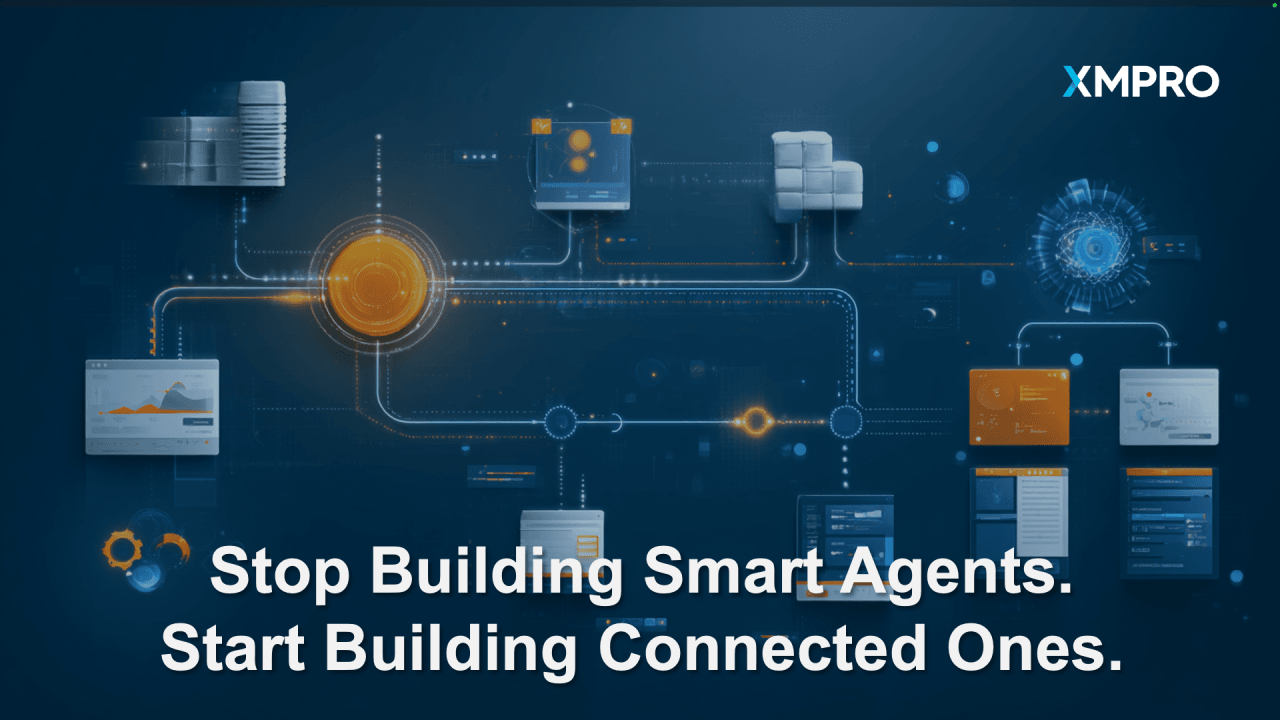
Stop Building Smart Agents. Start Building Connected Ones.
The Agentic AI market is headed toward $94.1 billion by 2035. Success won't come from the smartest agents. It will come from agents that connect smoothly to real business processes.
The $94 Billion Blind Spot
Agentic AI market forecasts look incredible. The market grows from $7.3 billion today to $94.1 billion by 2035. That's a 40% compound annual growth rate driving every tech vendor to build smarter AI agents.
But everyone misses a crucial factor. This factor will decide which companies actually deliver value from this huge opportunity.
Success in Agentic AI depends on business process integration depth, not just agent intelligence.
Everyone builds more sophisticated AI agents. Meanwhile, CIOs face an operational challenge that pure-play AI companies can't solve.
The CIO Challenge: Managing Hundreds of Autonomous Agents
Recent research shows what's coming. Enterprises will soon manage dozens or hundreds of AI agents across their operations. But AI vendors don't tell you about the real challenges CIOs will face.
The Version Control Nightmare
Traditional software deploys once and updates occasionally. Agentic AI systems need continuous deployment with ongoing testing. Each agent depends on external APIs, tools, and plugins that change independently. A minor API update can completely change an agent's behavior.
Multiply this across hundreds of agents. You get versioning complexity that makes traditional software management look easy.
Multi-Agent Coordination Problems
Modern enterprise processes don't use single agents. They require teams of agents that work together across networks. Version control must handle agent dependencies and communication protocols.
When you update one agent, how do you prevent breaking the entire agent system?
The Governance Challenge
Regulated industries face strict requirements. Every agent decision must be auditable in pharmaceuticals, manufacturing, and financial services. Every version change needs change control processes. Every failure must be traceable for compliance.
Most AI platforms provide agents but leave CIOs to solve governance alone.
What Enterprises Actually Buy
Here's what the AI industry gets wrong:
Companies don't buy AI agents. They buy business process improvements. Business process improvements need deep integration capabilities that take years to build.
Beyond Demos: The Last Mile Problem
Most Agentic AI platforms solve 80% of the problem. They create intelligent agents that reason and make decisions. But enterprise value comes from the final 20%. You must integrate those agents into actual business processes.
Common Integration Problems:
- Agents can't access real-time operational data
- Decision-making uses stale or incomplete information
- Agents can't trigger actions in operational systems
- No visibility into agent performance within business processes
Pure-play AI companies hit the wall here. They excel at creating intelligent agents. They lack enterprise infrastructure expertise for safe deployment at scale.
Enterprise Reality Check
Consider a manufacturing company deploying predictive maintenance agents. The AI vendor shows impressive capabilities. The agent analyzes sensor data, predicts equipment failures, and recommends maintenance actions.
But in production, that agent must:
- Connect to dozens of industrial systems (PLCs, SCADA, MES, ERP)
- Process real-time data from thousands of sensors
- Integrate with work order management systems
- Comply with safety and regulatory requirements
- Provide audit trails for maintenance decisions
- Coordinate with other agents managing quality, energy, and supply chain
The intelligent agent becomes a small part of a much larger integration challenge.
Why Cloud Platforms Fall Short
Cloud giants like Microsoft, Amazon, and Google might seem like the answer. They have broad platform capabilities and growing AI offerings. But they face a different problem.
Generic vs. Industry-Specific Integration
Cloud platforms provide generic integration capabilities. But enterprise business processes are specific to industries and operational contexts. Pharmaceutical manufacturing differs from oil refineries. Power plants have different requirements than both.
Building industry-specific connectors requires domain expertise. Understanding data models takes time. Learning regulatory requirements is complex. Earning operational trust happens slowly in each industry.
The XMPro Approach: Integration-First Agentic AI
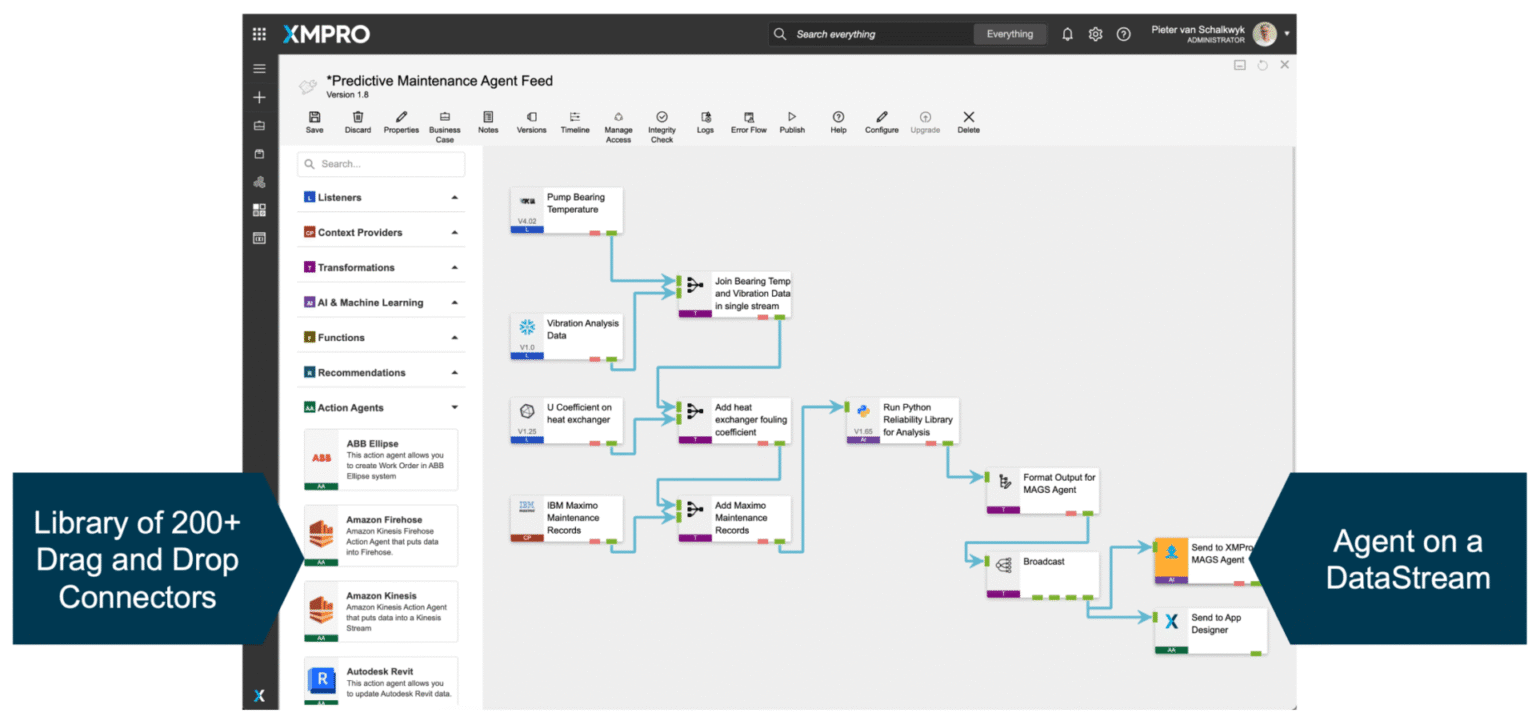
XMPro DataStreams changes the approach completely. We didn't build AI agents then figure out integration. We started with the integration challenge and built Agentic AI on proven enterprise infrastructure.
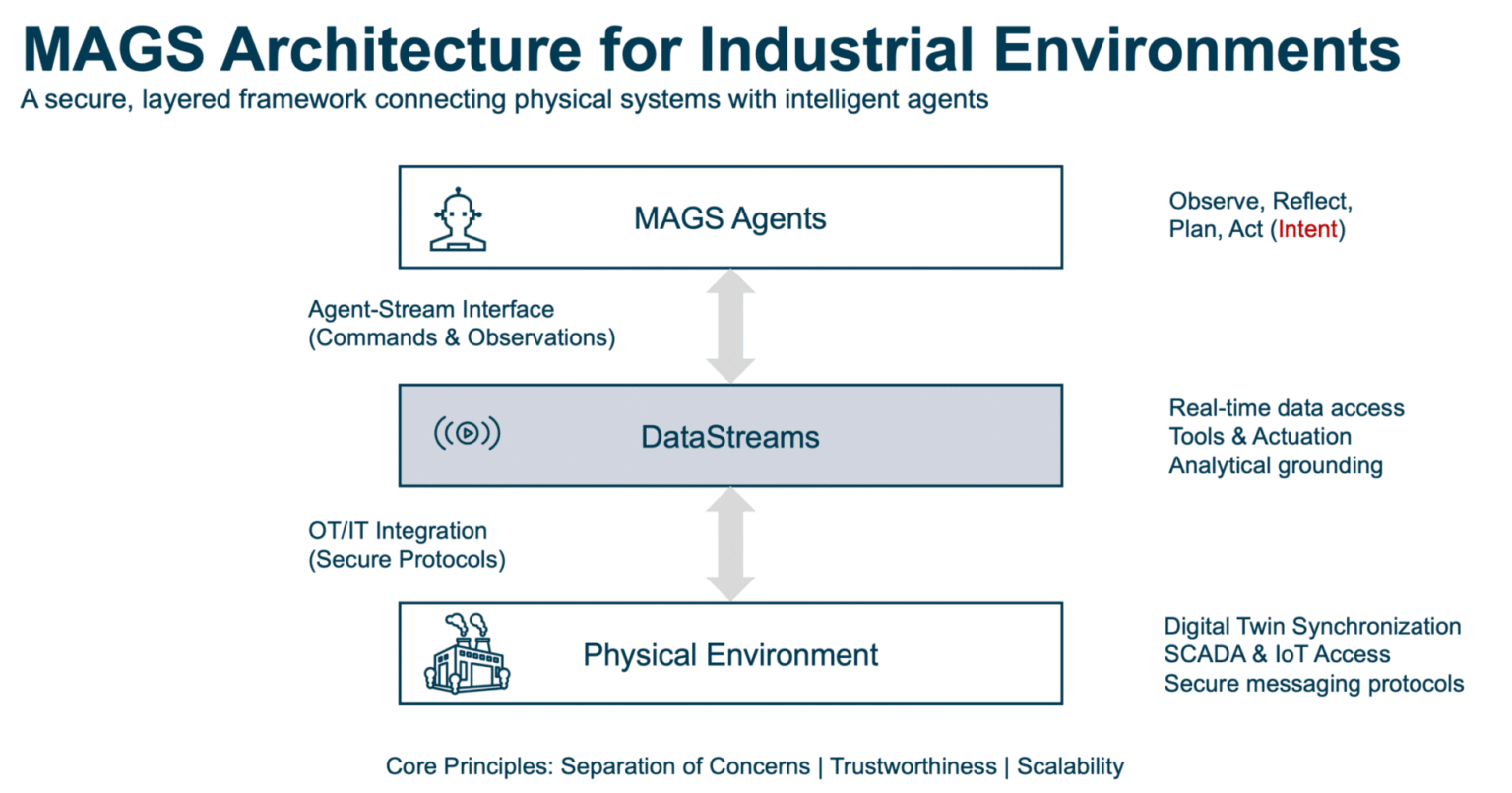
XMPro DataStreams as the platform to connect and scale multi agents
200+ Connectors: Years of Integration Work
Our DataStreams platform includes over 200 pre-built connectors. These connect to enterprise and industrial systems. This represents years of working with customers to understand their processes, data models, and operational needs.
When you deploy XMPro MAGS (Multi-Agent Generative Systems), you get more than intelligent agents. You get agents that connect immediately to your existing systems and work within your established business processes.
Real-Time Process Orchestration
Other platforms treat integration as an afterthought. DataStreams is built for real-time process orchestration. Our stream-based architecture processes millions of events daily. This lets agents act on real-time conditions with industrial-grade reliability.
Your agents don't just make smart decisions. They make timely decisions based on current operational reality.
Built-In Enterprise Governance
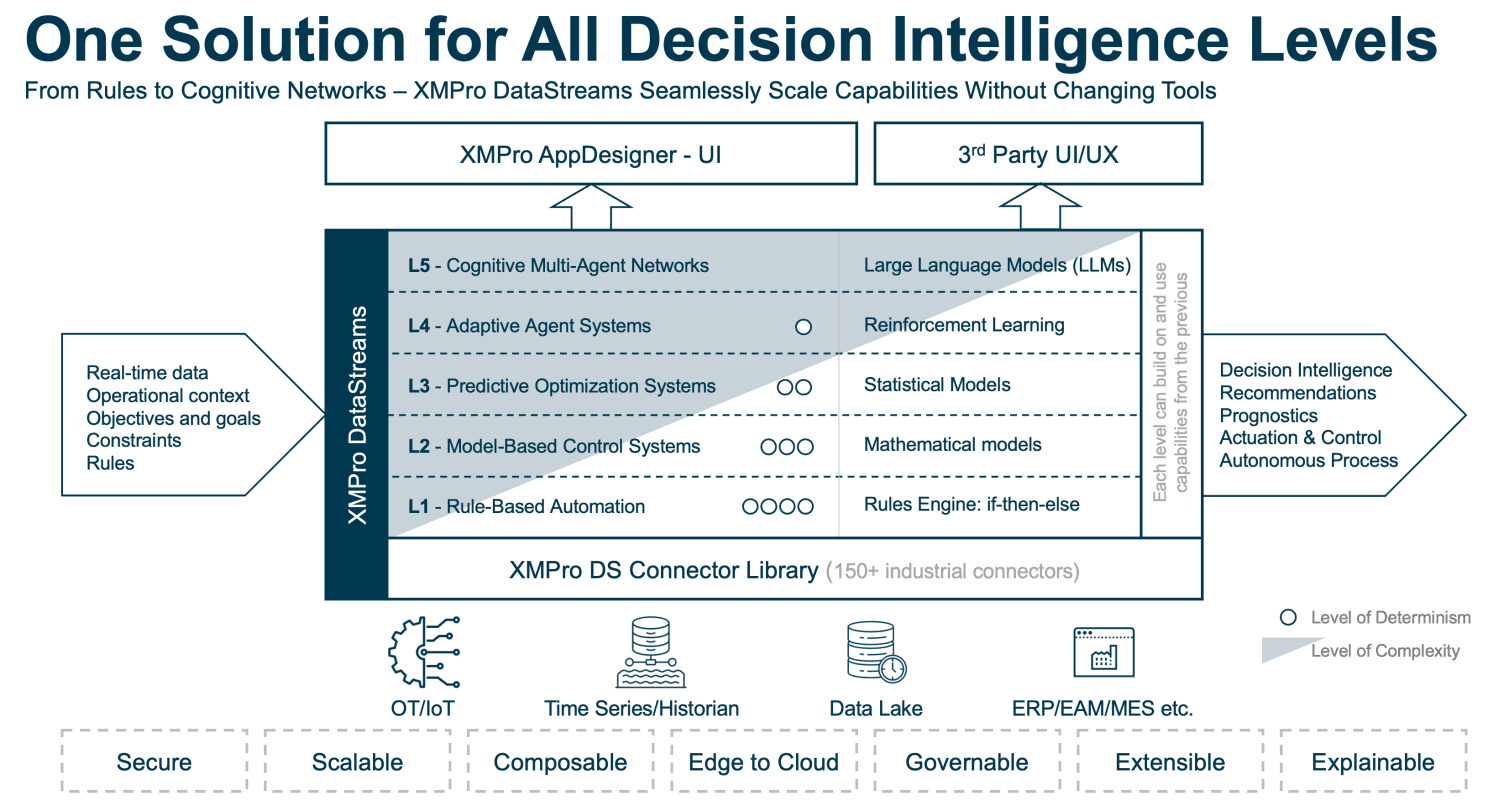
Remember those governance challenges CIOs face with hundreds of agents? DataStreams provides:
- Complete audit trails for every agent decision
- Version control and rollback capabilities for agent updates
- Compliance frameworks for regulated industries
- Visual management of complex multi-agent workflows
- Built-in safety and security controls
Strategic Implications for CIOs
When evaluating Agentic AI platforms, ask these critical questions:
1. Integration Depth vs. Intelligence
Don't get distracted by agent intelligence demos. Ask instead:
- How quickly can these agents connect to our existing systems?
- What percentage of our integration work is pre-built vs. custom development?
- How do you handle version updates across connected agents?
- What governance and compliance capabilities are built-in?
2. Production-Ready vs. Proof-of-Concept
Many AI platforms excel at demos but struggle in production. Ask:
- How many agents can the platform manage at once?
- What happens when external APIs change or fail?
- How do you handle rollbacks when agent updates cause problems?
- What monitoring and observability tools are included?
3. Industry Expertise vs. Generic Capabilities
Check whether the platform provider understands your industry:
- Do they have pre-built solutions for your industry's processes?
- Have they worked with your regulatory requirements?
- Do they understand your operational constraints and safety needs?
- Can they show measurable business results in similar environments?
The Time Advantage: Integration Takes Years
Building deep enterprise integration capabilities takes time. It requires:
- Understanding diverse industry requirements across manufacturing, energy, and healthcare
- Building relationships with technology vendors for certified connectors
- Developing domain expertise across multiple industries
- Proving reliability in mission-critical environments where downtime costs millions
- Earning customer trust for operational deployments where failures have real consequences
This creates a significant barrier for pure-play AI companies entering enterprise markets. They can build intelligent agents quickly. Building the integration infrastructure to deploy those agents successfully takes years.
Strategic Recommendations for CIOs
1. Start with Integration Requirements
When evaluating Agentic AI platforms, start with integration requirements, not AI capabilities. The smartest agent is useless if it can't connect to your business processes.
Key Questions:
- What systems do we need to integrate with immediately?
- What data do our agents need in real-time?
- What actions do agents need to trigger in our systems?
- What governance and compliance requirements do we have?
2. Plan for Scale from Day One
Don't choose platforms that work for pilots but can't scale to enterprise deployment. Ask vendors to demonstrate:
- Managing hundreds of agents simultaneously
- Coordinating complex multi-agent workflows
- Handling version updates across agent ecosystems
- Providing enterprise-grade monitoring and governance
3. Invest in Platforms, Not Projects
Companies that succeed with Agentic AI treat it as a platform investment, not individual AI projects. Look for:
- Reusable integration patterns across multiple use cases
- Composable agent architectures that support rapid deployment
- Built-in governance that scales with your agent ecosystem
- Industry-specific solutions that fit your operational context
4. Partner with Integration Experts
The most successful Agentic AI deployments combine AI intelligence with integration expertise. Look for partners who:
- Have deep experience in your industry's operational processes
- Provide proven integration platforms with extensive connector libraries
- Offer enterprise-grade governance and compliance capabilities
- Can demonstrate measurable business outcomes in production environments
Why Integration Wins Over Intelligence
Success in the $94 billion Agentic AI market won't go to companies with the smartest agents. It will go to companies whose agents connect smoothly to enterprise operations.
Companies don't buy AI agents. They buy business process improvements.
Business process improvements require deep, reliable integration capabilities that take years to build. These capabilities cannot be copied quickly.
For CIOs navigating this transformation, the choice is clear. Partner with platform providers who understand that integration is the foundation of successful Agentic AI deployment.
The companies that get this right today will lead tomorrow's Agentic AI market.
What's your experience with enterprise AI integration challenges? Are you seeing the gap between AI demonstrations and production deployment in your organization? Share your thoughts in the comments.
Pieter van Schalkwyk is the CEO of XMPro, specializing in industrial AI agent orchestration and governance. Drawing on 30+ years of experience in industrial automation, he helps organizations implement practical AI solutions that deliver measurable business outcomes while ensuring responsible AI deployment at scale.
About XMPro: We help industrial companies automate complex operational decisions. Our cognitive agents learn from your experts and keep improving, ensuring consistent operations even as your workforce changes.
Our GitHub Repo has more technical information. You can also contact me or Gavin Green for more information.
Read more on MAGS at The Digital Engineer