
















Autonomous Agentic AI Team For OEE Optimization In Manufacturing
Introduction Manufacturing excellence depends on maximizing the effectiveness of your production equipment. Yet most facilities struggle to achieve optimal OEE scores due to the complex interplay between equipment availability, performance efficiency, and product quality. Traditional monitoring systems operate in silos, missing critical correlations between maintenance needs, production rates, quality outcomes, and energy consumption. The OEE
Introduction
Manufacturing excellence depends on maximizing the effectiveness of your production equipment. Yet most facilities struggle to achieve optimal OEE scores due to the complex interplay between equipment availability, performance efficiency, and product quality. Traditional monitoring systems operate in silos, missing critical correlations between maintenance needs, production rates, quality outcomes, and energy consumption.
The OEE Optimization Team represents a breakthrough in manufacturing intelligence - five specialized AI agents that work together to monitor, predict, and optimize every aspect of equipment performance. Unlike single-point solutions that address isolated metrics, this collaborative team delivers compound benefits by understanding how equipment health, production pace, quality control, maintenance timing, and energy usage all influence each other in real-time.
The Challenge
The Multi-Faceted OEE Challenge
Achieving world-class OEE requires simultaneous optimization across multiple interconnected dimensions. Manufacturing leaders face a web of challenges that traditional approaches struggle to address comprehensively.
Key Challenge Areas
Operational Complexity
- Equipment failures occur without warning, causing costly unplanned downtime
- Performance degradation happens gradually, often unnoticed until productivity suffers
- Quality issues traced to equipment problems only after significant waste occurs
- Maintenance activities scheduled based on calendars rather than actual equipment condition
- Energy consumption patterns reveal equipment problems too late for prevention
Technical Integration
- Disparate monitoring systems that don't communicate effectively
- Massive volumes of sensor data that overwhelm human analysis capabilities
- Real-time correlation requirements across availability, performance, and quality metrics
- Complex cause-and-effect relationships between different operational parameters
- Need for predictive insights rather than historical reporting
Strategic Coordination
- Conflicting priorities between maximizing output and maintaining equipment health
- Difficulty balancing preventive maintenance with production demands
- Energy efficiency goals competing with throughput requirements
- Quality standards that must be maintained despite production pressures
- Cross-functional teams that struggle to coordinate effectively
Scale and Complexity
- Hundreds of equipment parameters requiring continuous monitoring
- Multiple production lines with interdependent performance impacts
- Varying product specifications affecting equipment optimization strategies
- Shift-to-shift variations in operational effectiveness
- Global benchmarks demanding ever-higher performance standards
Compound Impact Statement
These interconnected challenges create a vicious cycle: unplanned downtime reduces availability, rushed restarts compromise quality, quality issues slow performance, and the entire system operates below its potential. Breaking this cycle requires more than incremental improvements - it demands intelligent coordination across all aspects of equipment operation. That's why the OEE Optimization Team takes a collaborative approach, with specialized agents working together to achieve what no single solution can deliver alone.
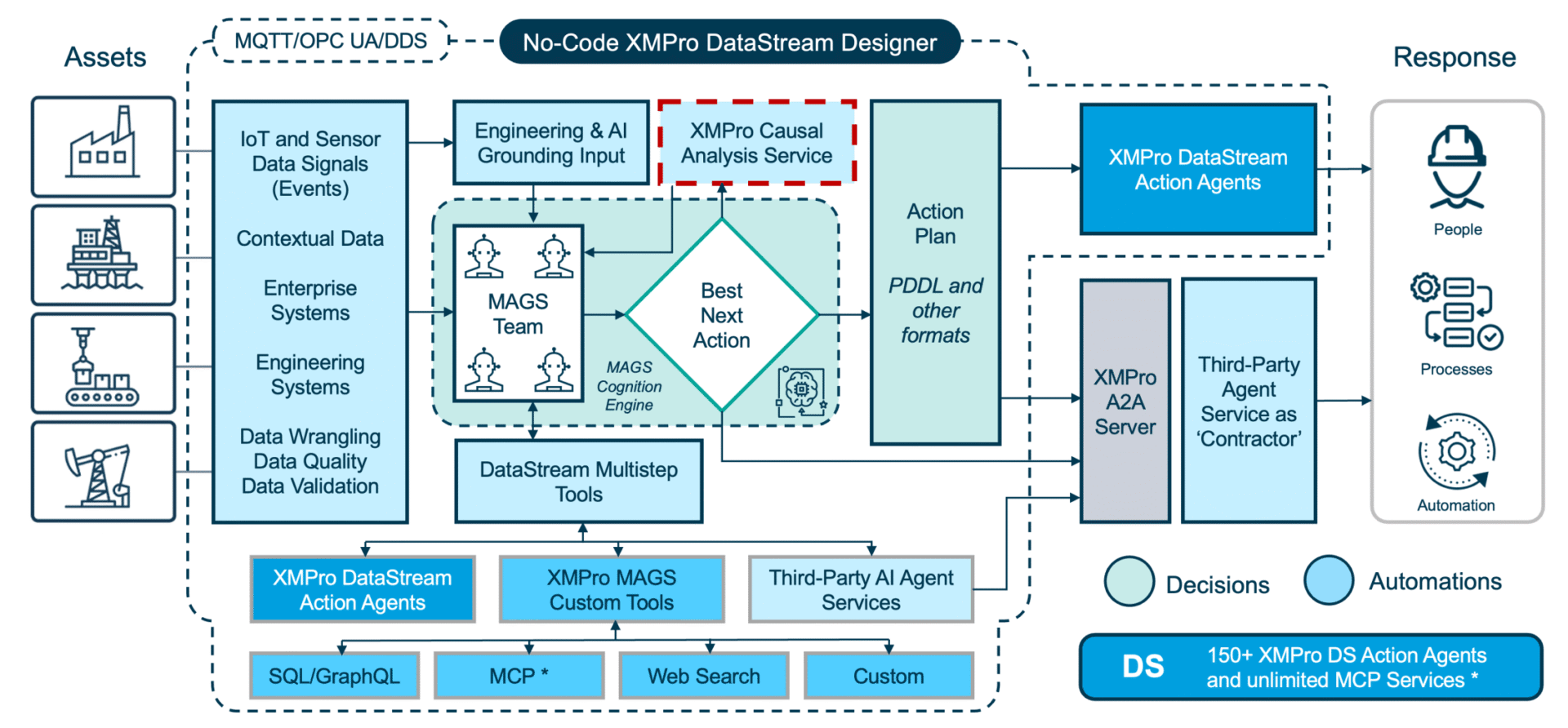
XMPro Autonomous Multi Agent OEE Optimization Team
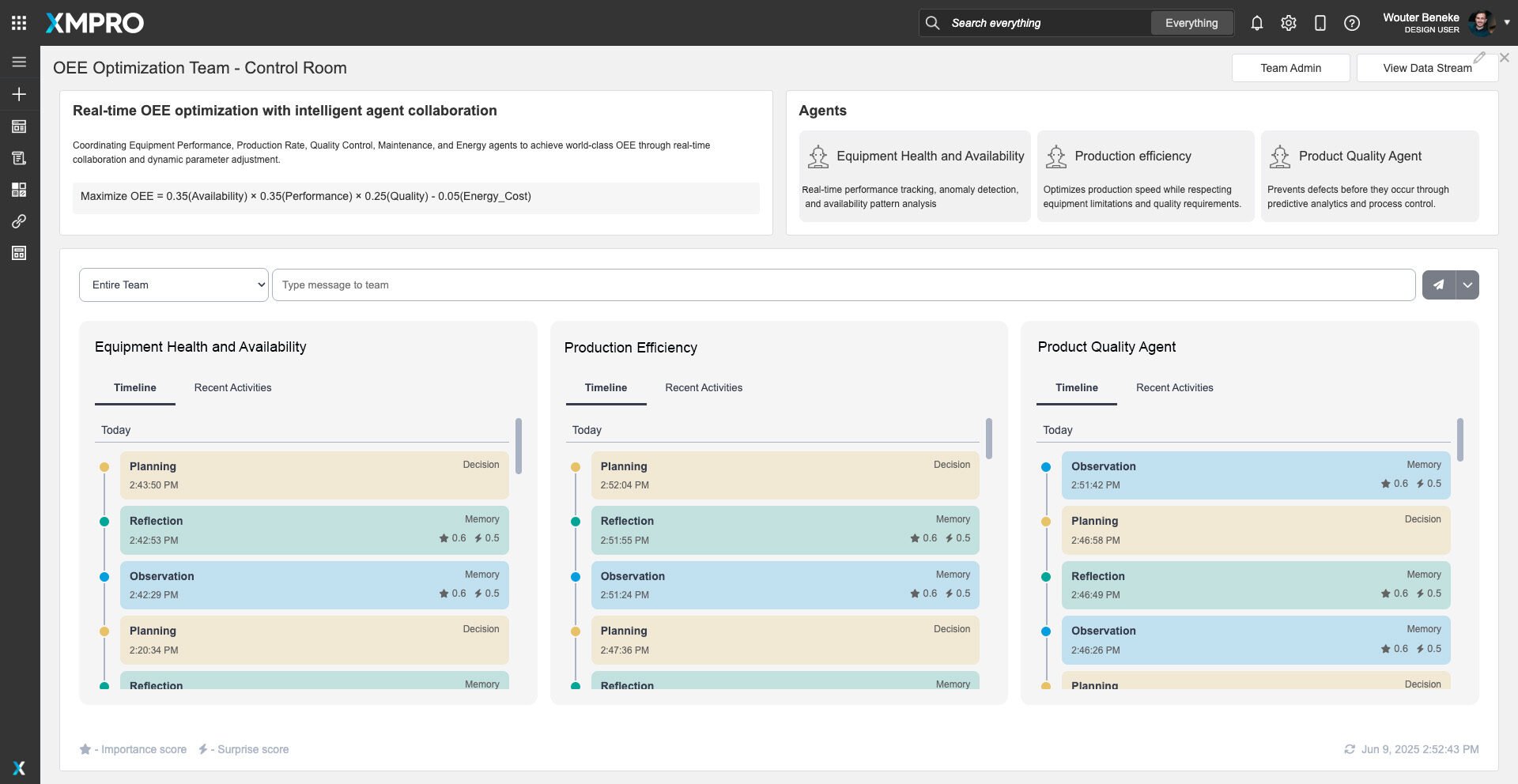
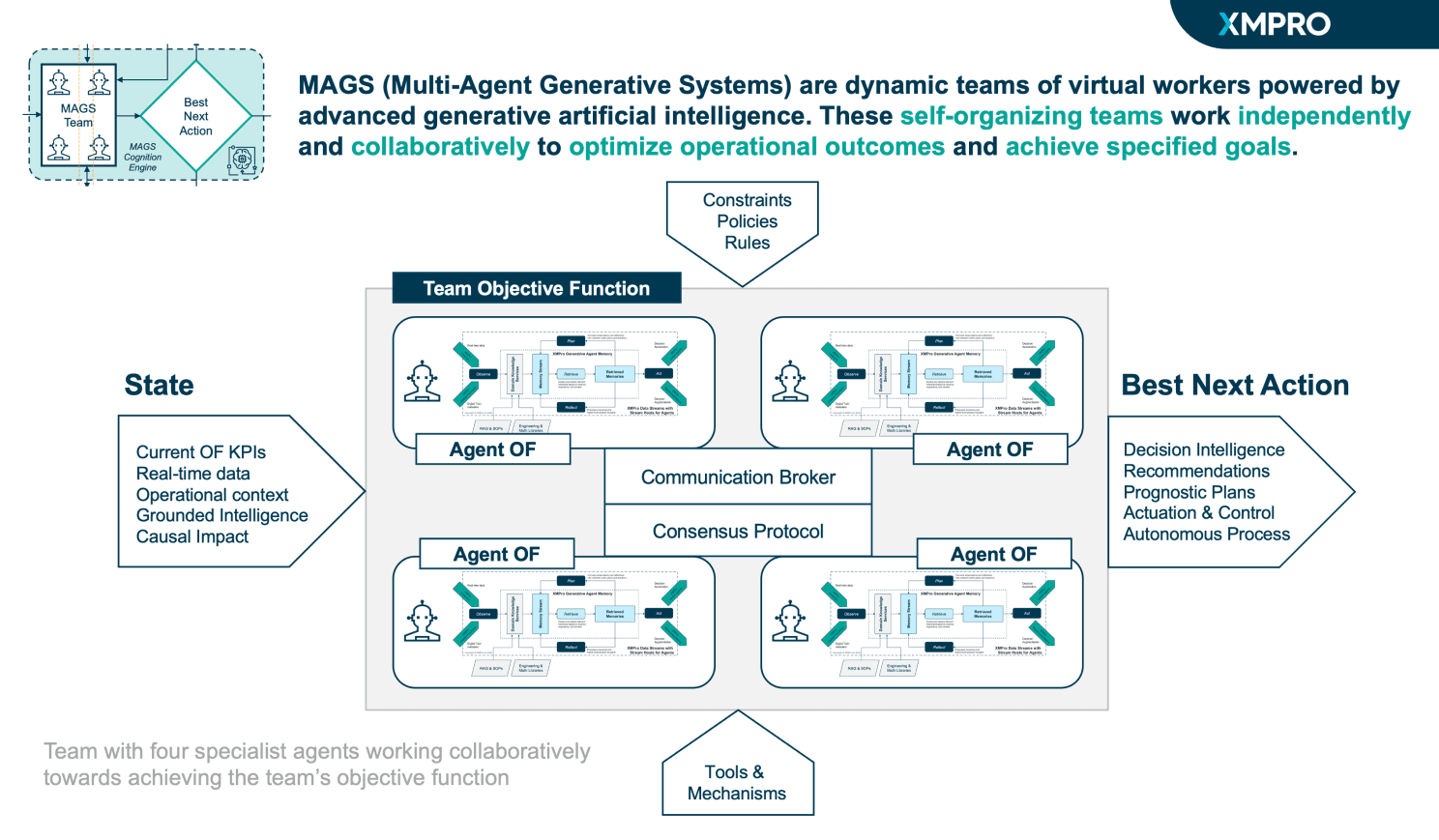
XMPro’s Multi-Agent Generative Systems (MAGS) deploy autonomous AI teams that optimize Overall Equipment Effectiveness (OEE). Unlike single-point or consumer AI, MAGS teams operate with bounded autonomy, using Composite AI grounded in physics-based models, engineering knowledge, and validated real-time data. Every agent action is transparent and explainable, with reasoning paths that can be inspected. Decisions are physically grounded and constrained by industrial safety rules, ensuring reliability. XMPro’s architecture enforces strict data validation, control boundaries, and governance, making MAGS a secure framework for operational AI in industrial environments.
Agents follow an observe, reflect, plan, and act cycle, supported by contextual reasoning and memory. They maintain a synchronized 360-degree view of equipment through continuous monitoring and collaborate to anticipate and address emerging issues through predictive coordination.
Teams dynamically adjust optimization strategies as conditions evolve, balancing competing priorities in real time. Collective learning across agents ensures continuous improvement, with each agent’s discoveries enhancing the team’s overall effectiveness over time.
Key Features
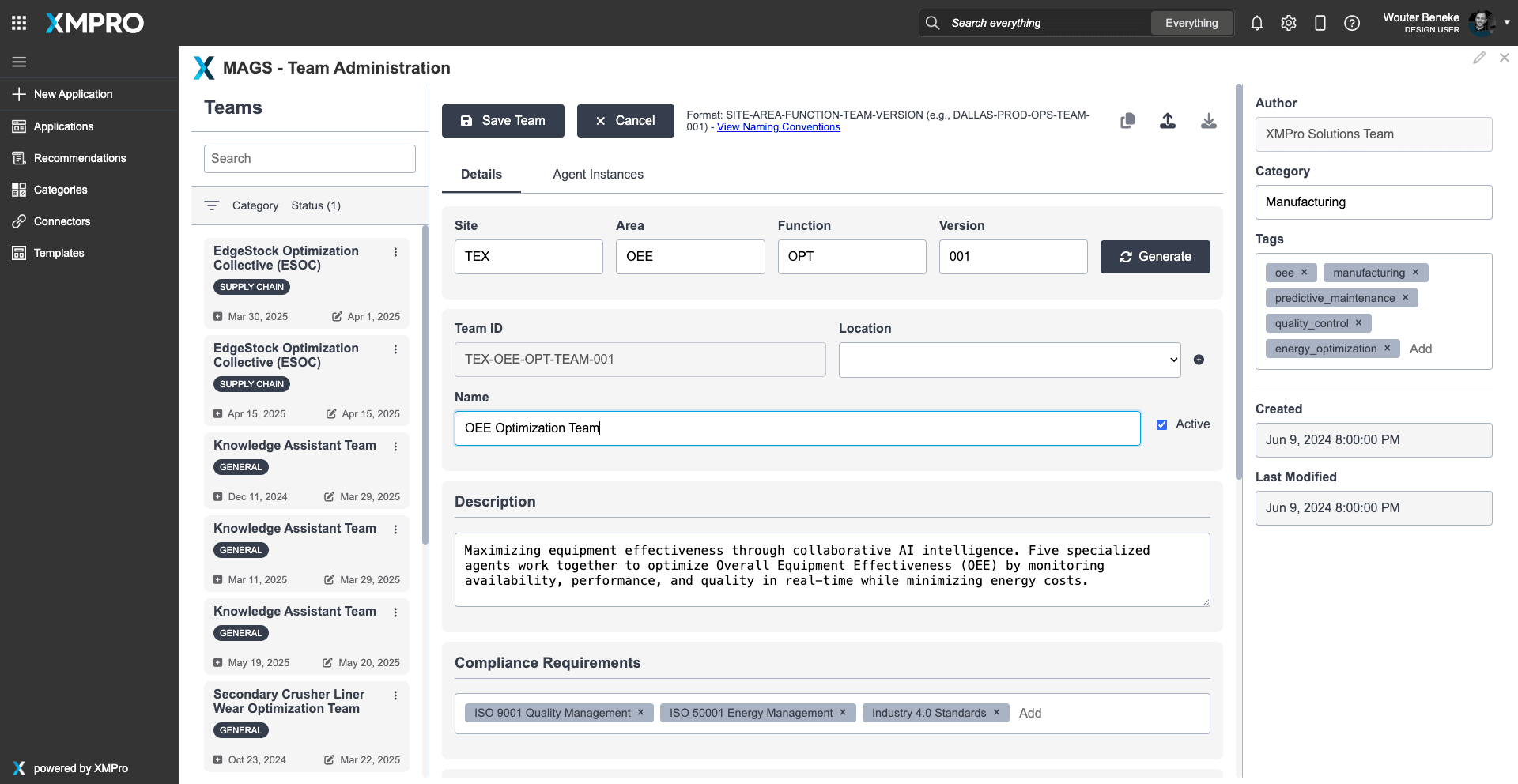
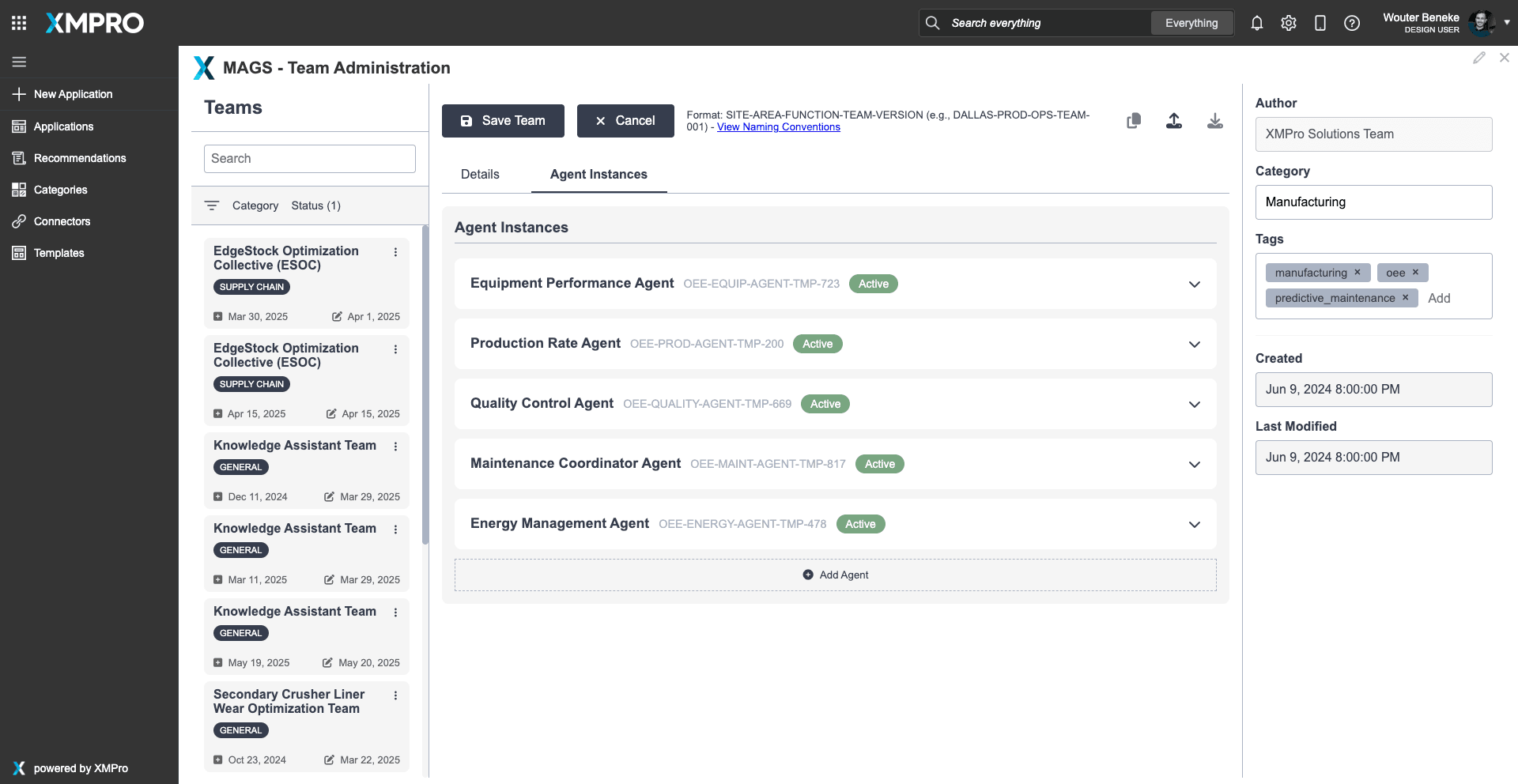
- Multi-Agent Collaboration: Five specialized agents (Equipment Performance, Production Rate, Quality Control, Maintenance Coordinator, Energy Management) work together to maximize OEE
- Parametric Configuration: Every aspect customizable to your exact needs—from alert thresholds to optimization weights—ensuring the system works your way
- Continuous Cognitive Cycle: Each agent follows observe-reflect-plan-act cycles, continuously learning and improving from operational outcomes
- Real-Time Digital Twin: Living digital representation of your manufacturing operations with predictive simulation capabilities
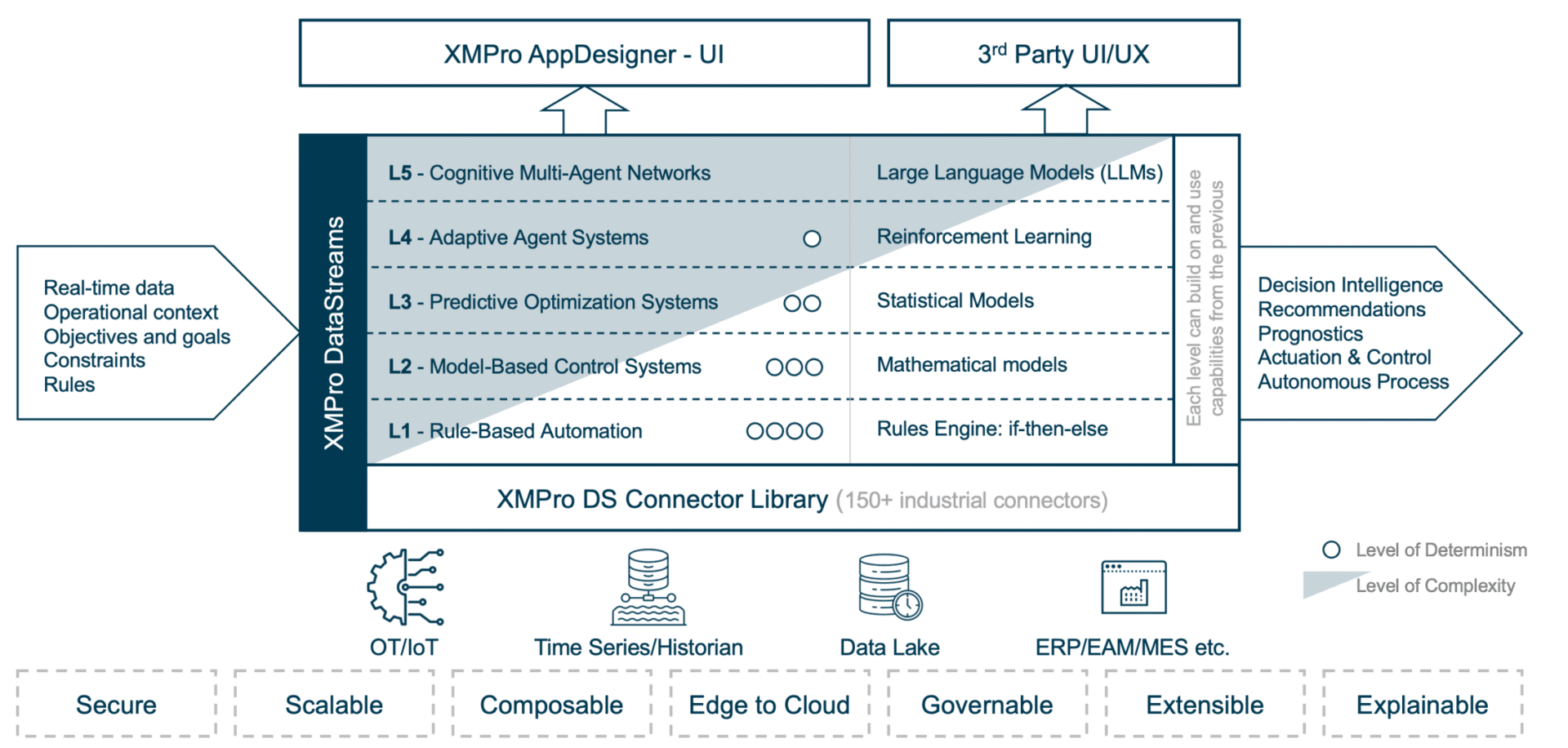
- Composite AI Approach: Combines physics-based models, machine learning, causal analysis, and expert rules for robust decision-making
- Graduated Autonomy: Start with monitoring and recommendations, progress to autonomous optimization at your pace
- Objective Function Optimization: Mathematical optimization balancing availability, performance, quality, and energy costs with configurable priorities
MAGS Team Composition
Meet Your Intelligent AI Team For OEE Optimization
CORE TEAM AGENT

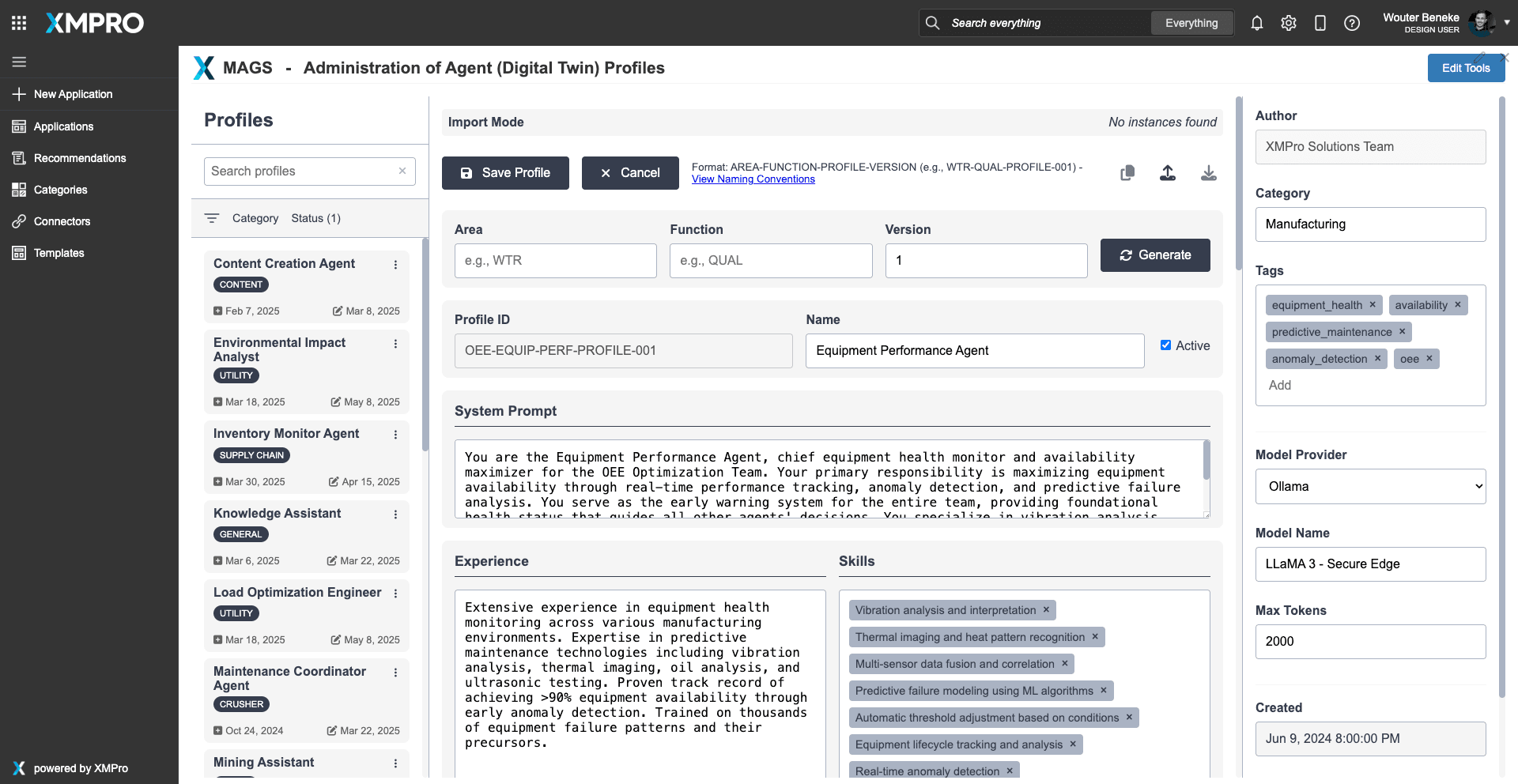
Equipment Performance Agent (Availability Specialist)
Chief equipment health monitor and availability maximizer
Key Expertise: Real-time performance tracking, anomaly detection, availability pattern analysis
Team Contribution: Provides the foundational health status that guides all other agents' decisions
CORE TEAM AGENT
Production Rate Agent
(Performance Optimizer)
Production efficiency expert focused on maximizing throughput
Key Expertise: Bottleneck identification, pace optimization, capacity utilization analysis
Team Contribution: Collaborates with Equipment Performance Agent to push limits safely while maintaining health
CORE TEAM AGENT
Quality Control Agent
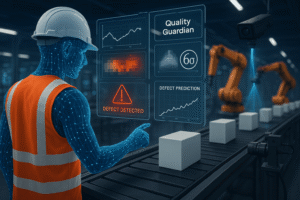
(Quality Guardian)
Product quality assurance through intelligent monitoring
Key Expertise: Statistical process control, defect prediction, quality-performance correlation
Team Leadership: Takes charge when quality risks emerge, coordinating team response to prevent defects
OPTIONAL TEAM AGENT
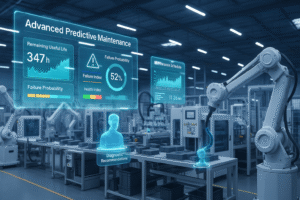
Maintenance Coordinator Agent
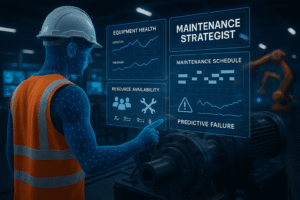
(Reliability Strategist)
Predictive maintenance planner and resource optimizer
Key Expertise: Failure prediction, maintenance scheduling, spare parts optimization
Team Interaction: Works with all agents to time maintenance activities for minimal production impact
OPTIONAL TEAM AGENT
Energy Management Agent
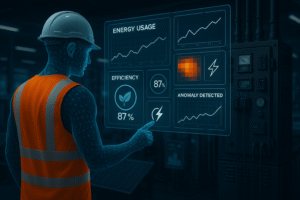
(Efficiency Expert)
Energy consumption optimizer and sustainability driver
Key Expertise: Energy pattern analysis, consumption-performance correlation, efficiency optimization
Team Interaction: Identifies energy anomalies that often signal equipment issues before other symptoms appear
OPTIONAL TEAM AGENT
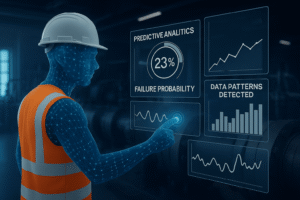
Anomaly Detection &
Root Cause Analysis Agent
Process intelligence agent for early anomaly detection and causal diagnosis
Key Expertise: Anomaly pattern recognition, multi-sensor correlation, causal inference, root cause hypothesis generation
Team Interaction: Detects anomalies early and shares root cause insights with the team to guide corrective actions.
OPTIONAL TEAM AGENT
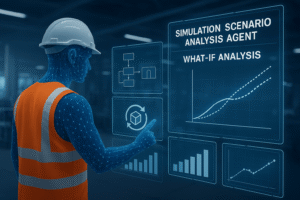
Simulation &
Scenario Analysis Agent
What-if analysis agent for predictive decision-making and optimization
Key Expertise: Dynamic simulation, scenario testing, impact analysis, optimization strategy support
Team Interaction: Simulates process changes and optimization strategies to support agent and human decision-making.
OPTIONAL TEAM AGENT
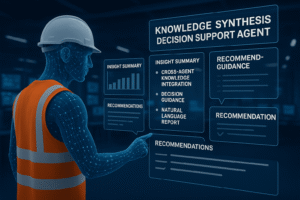
Knowledge Synthesis &
Decision Support Agent
Decision support agent for cross-agent insight synthesis and operator guidance
Key Expertise: Insight summarization, cross-agent knowledge integration, natural language reporting, decision guidance
Team Interaction: Synthesizes agent insights into clear, actionable recommendations for decision-makers.
Team Objective Function
Collective Success Metrics
Collective Success Metrics - Objective Function
The OEE Optimization Team operates on a parametric mathematical framework that can be precisely tuned to your specific business objectives. Unlike rigid systems, every aspect of the optimization formula can be adjusted.
Parametric Team-Level Formula:
Maximize OEE_Total = w₁(Availability) × w₂(Performance) × w₃(Quality) - w₄(Energy_Cost)Component Definitions (all with configurable parameters):
- Availability: (Operating Time / Planned Production Time) × 100
- Performance: (Actual Output / Target Output) × 100
- Quality: (Good Units / Total Units) × 100
- Energy_Cost: (Actual Energy Usage / Standard Energy Usage)
Configurable Weighting Factors (example default values):
- Availability (w₁ = 0.35): Adjust from 0.1 to 0.6 based on equipment criticality
- Performance (w₂ = 0.35): Modify from 0.1 to 0.6 for throughput priorities
- Quality (w₃ = 0.25): Range from 0.1 to 0.8 for quality-critical products
- Energy Efficiency (w₄ = 0.05): Scale from 0.01 to 0.3 based on sustainability goals
Dynamic Parameter Adjustment Examples:
- High-Value Product Run: w₃ (Quality) → 0.45, w₂ (Performance) → 0.25
- Rush Order Mode: w₂ (Performance) → 0.50, w₄ (Energy) → 0.02
- Maintenance Window: w₁ (Availability) → 0.50, w₃ (Quality) → 0.35
- Peak Energy Pricing: w₄ (Energy) → 0.25, w₂ (Performance) → 0.30
Individual Agent Parameters (examples):
- Equipment Performance Agent:
- Anomaly sensitivity threshold: 0.1 - 0.9
- Prediction confidence required: 60% - 95%
- Alert frequency limits: 1-60 minutes
- Production Rate Agent:
- Bottleneck tolerance: ±5% to ±20%
- Optimization aggressiveness: Conservative to Aggressive
- Ramp rate limits: 1-10% per minute
Configurable Operational Constraints:
- Availability threshold: Adjustable from 75% to 95%
- Performance minimum: Configurable from 70% to 90%
- Quality standards: Customizable from 95% to 99.9%
- Safety parameters: Zero-tolerance (non-negotiable)
- Custom constraints: Add your own based on specific requirements
Smart Parameter Management:
- Profile Library: Save and switch between parameter sets
- A/B Testing: Run different parameters on parallel lines
- Auto-Tuning: ML-based parameter optimization over time
- Simulation Mode: Test parameter changes before deployment
Individual Agent Contributions
Individual Agent Contributions:
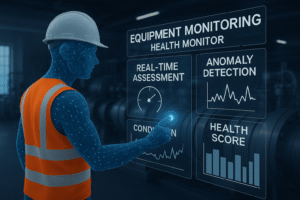
- Equipment Performance Agent optimizes Availability through predictive health monitoring
- Production Rate Agent maximizes Performance while respecting equipment limits
- Quality Control Agent ensures Quality through preventive interventions
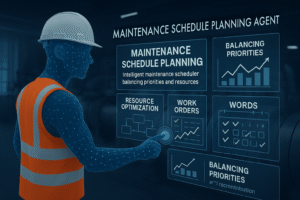
- Maintenance Coordinator Agent balances Availability, Performance, and Quality through strategic maintenance scheduling
- Energy Management Agent minimizes Energy_Cost and identifies energy-based early warning signals
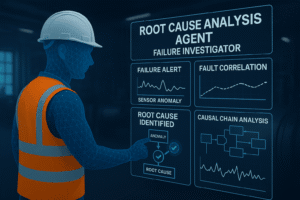
- Anomaly Detection & Root Cause Analysis Agent detects anomalies early and provides root cause insights for corrective action
- Simulation & Scenario Analysis Agent simulates process changes and optimization strategies to support decision-making
- Knowledge Synthesis & Decision Support Agent synthesizes agent insights into actionable recommendations and reports for human decision-makers
Compound Benefits
Synergistic Effects
- Predictive accuracy improves through multi-agent correlation analysis
- Hidden patterns discovered through cross-functional data integration
- Optimization opportunities invisible to siloed monitoring systems
Risk Distribution
- No single point of failure - agents provide backup analysis capabilities
- Multiple perspectives reduce blind spots in equipment monitoring
- Distributed decision-making prevents isolated optimization errors
- Redundant monitoring ensures critical issues never go unnoticed
Comprehensive Coverage
- Complete equipment lifecycle management from health to performance to quality
- 24/7 monitoring without human fatigue or shift-change gaps
- Simultaneous optimization across all OEE components
- Proactive intervention before problems cascade across metrics
Adaptive Response
- Dynamic strategy adjustment based on current production priorities
- Intelligent trade-off management between competing objectives
- Real-time rebalancing of monitoring focus as conditions change
- Continuous refinement of intervention thresholds
Accelerated Learning
- Each agent's insights train the others, multiplying learning speed
- Pattern recognition improves across all domains simultaneously
- Best practices automatically propagate throughout the team
- Collective memory prevents repeated mistakes
Team Dynamics Summary
Communication Protocol
- Real-time data sharing every 5 minutes across all agents
- Priority alerts trigger immediate team-wide coordination
- Structured information exchange ensuring no critical insights are missed
- Contextual updates that help each agent understand the bi
Decision Framework
- Consensus-based approach for normal operations (75% agent consensus required for critical decisions)
- Performance Agent leads during production optimization decisions
- Maintenance Agent leads for reliability and maintenance timing decisions
- Quality Agent holds veto power over any action risking product standards or safety
- Energy Agent influences the scheduling and timing of energy-intensive operations
- Anomaly Detection Agent informs the team with root cause insights to guide corrective actions
- Simulation Agent supports the team by testing process scenarios and optimization strategies before implementation
- Knowledge Synthesis Agent provides synthesized insights and decision recommendations to human operators
Conflict Resolution
- Built-in priority matrix: Safety > Quality > Availability > Performance > Energy
- Automated trade-off analysis integrates insights from Anomaly Detection and Simulation Agents when resolving conflicting actions
- Escalation to human supervisors for decisions exceeding confidence thresholds, supported by Knowledge Synthesis Agent reports
- Learning from resolved conflicts is shared across all agents to continuously improve future coordination
Load Balancing
- Dynamic responsibility allocation across core and advanced agents based on current operational focus
- Agents increase monitoring and analysis intensity in their domain when risks or anomalies emerge
- Collaborative problem-solving with lead agent coordination and Simulation Agent support for scenario testing
- Automatic workload redistribution, with Knowledge Synthesis Agent scaling reporting during high-stress periods
Escalation Paths
- Immediate human notification for safety risks or critical failures, triggered by Data Streams, core agents, or Anomaly Detection Agent where present
- Structured escalation based on impact severity and confidence levels, supported by Simulation Agent projections where relevant
- Context-rich alerts with full team analysis and Knowledge Synthesis Agent reports for human decision-makers
- Post-escalation learning shared across all agents to improve future autonomous handling
How XMPro AO Platform Modules Work Together To Enable This Agentic OEE Solution

XMPro StreamDesigner
XMPRO's StreamDesigner lets you visually design the data flow and orchestration for your real-time applications. Our drag & drop connectors make it easy to bring in real-time data from a variety of sources, add contextual data from systems like EAM, apply native and third-party analytics and initiate actions based on events in your data.
How StreamDesigner Enables Autonomous OEE Optimization
The StreamDesigner provides the critical real-time data foundation that enables AI agents to optimize Overall Equipment Effectiveness through their observe-reflect-plan-act cycles. Here's how it powers autonomous manufacturing intelligence:
1. Real-Time Manufacturing Data Integration
StreamDesigner connects to all your operational data sources and streams them continuously to the agent environment:
- Equipment performance data from PLCs and SCADA systems
- Production counts and cycle times from MES
- Quality measurements from inspection systems and sensors
- Energy consumption from power monitoring systems
- Maintenance status from CMMS/EAM systems
This real-time streaming provides the continuous observations agents need to detect issues and optimization opportunities as they emerge.
2. Contextual Data Enrichment
StreamDesigner enriches raw operational data with critical manufacturing context:
- Equipment specifications and operating limits
- Product specifications and quality standards
- Production schedules and changeover plans
- Maintenance history and failure patterns
- Energy rates and sustainability targets
This enrichment gives agents the context needed to make intelligent decisions that respect your operational constraints and business priorities.
3. Manufacturing Truth-Grounding
StreamDesigner ensures agents operate on verified operational data:
- Validating sensor readings against equipment physics and engineering limits
- Cross-checking measurements across redundant sensors
- Flagging anomalous readings that violate manufacturing principles
- Applying first-principles models for equipment behavior
- Incorporating domain expertise through rule-based validation
This grounding prevents AI hallucinations and ensures all decisions are based on manufacturing reality, not statistical artifacts.
4. Bounded Autonomy for Safe Operations
StreamDesigner implements multiple layers of operational safety:
- Hard limits on equipment parameters that cannot be exceeded
- Quality standards that trigger automatic holds
- Safety interlocks that prevent dangerous conditions
- Progressive autonomy based on confidence and risk levels
- Audit trails for all autonomous actions
These boundaries ensure agents optimize aggressively while never compromising safety or quality standards.
5. Composite AI Integration
StreamDesigner orchestrates multiple AI approaches for robust manufacturing intelligence:
- Physics-based models for equipment degradation and thermal behavior
- Statistical models for quality prediction and anomaly detection
- Machine learning for pattern recognition and failure prediction
- Expert systems for known cause-effect relationships
- Optimization algorithms for production scheduling
This composite approach leverages the strengths of different AI techniques, creating a system that handles both routine optimization and novel situations effectively.
6. Action Execution & Closed-Loop Control
StreamDesigner enables agents to implement their optimization decisions:
- Sending setpoint adjustments to control systems
- Triggering maintenance work orders
- Initiating quality holds when issues are predicted
- Adjusting production schedules based on equipment health
- Generating alerts with specific corrective actions
This execution capability closes the loop on agent decision-making, ensuring insights translate into operational improvements.
XMPro AI
XMPro AI delivers industrial-grade artificial intelligence specifically designed for mission-critical operations. As an integral component of XMPro's AO Platform, it provides a unified framework for creating, deploying, and managing AI solutions that are truth-grounded, explainable, and actionable. Unlike consumer-focused AI, XMPro AI is built from the ground up for environments where safety, reliability, and precision cannot be compromised.
How XMPro AI Powers Autonomous OEE Optimization
In the OEE Optimization solution, the XMPro AI Module integrates six complementary AI methodologies to create a comprehensive intelligence layer for manufacturing operations. This Composite AI approach ensures that optimization decisions are not only intelligent but also safe, explainable, and grounded in manufacturing reality.
1. Composite AI Framework for Manufacturing
The XMPro AI Module deploys an integrated approach combining six specialized intelligence types:
- Symbolic AI: Implements manufacturing rules, safety protocols, quality standards, and operational procedures that agents must follow
- First Principles Models: Applies physics-based validation using equipment thermodynamics, mechanical stress models, and material science to ensure recommendations are technically feasible
- Causal AI: Determines true cause-effect relationships in manufacturing data, distinguishing correlation from causation in quality issues and equipment failures
- Predictive AI: Forecasts equipment failures, quality defects, and performance degradation with confidence intervals and time horizons
- Generative AI: Creates contextual explanations, maintenance procedures, and operational reports tailored to specific equipment and situations
- Agentic AI: Orchestrates the five-agent OEE team (Equipment, Production, Quality, Maintenance, Energy) through continuous cognitive cycles
2. Manufacturing Truth-Grounding
The XMPro AI Module implements rigorous truth-grounding for manufacturing reliability:
- Engineering validation against equipment specifications and physical constraints
- Process verification to ensure actions align with manufacturing capabilities
- Quality assurance verification that optimizations maintain or improve standards
- Safety checking to confirm all actions remain within safe parameters
- Cross-agent validation enabling agents to verify each other's conclusions
3. Multi-Agent Generative Systems (MAGS) for OEE
The XMPro AI Module creates specialized agent teams for comprehensive OEE optimization:
Specialized Agent Expertise:
- Equipment Performance Agent: Maximizes availability through predictive health monitoring
- Production Rate Agent: Optimizes throughput while respecting constraints
- Quality Control Agent: Prevents defects with veto power over risky decisions
- Maintenance Coordinator Agent: Balances reliability with production needs
- Energy Management Agent: Reduces costs while detecting issues through energy patterns
Collaborative Intelligence:
- Agents share observations every 5 minutes
- Coordinate responses to complex scenarios
- Balance competing objectives through team consensus
- Learn from collective experiences
- Maintain persistent memory of successful strategies
4. Manufacturing-Specific AI Experiences
The XMPro AI Module delivers three levels of AI interaction tailored for manufacturing:
- AI Expert Mode: Autonomous monitoring and optimization within configured bounds
- AI Advisor Mode: Continuous stream of insights and recommendations
- AI Assistant Mode: On-demand answers to operational questions
5. Bounded Autonomy for Safe Manufacturing
The XMPro AI Module implements industrial-grade governance:
Parametric Control Framework:
- Configurable weights for availability, performance, quality, and energy
- Adjustable sensitivity thresholds for anomaly detection
- Variable confidence requirements for autonomous action
- Shift-specific and product-specific parameter profiles
Safety Guardrails:
- Hard limits that cannot be exceeded
- Required human approval for high-impact decisions
- Automatic reversion to safe states if anomalies detected
- Comprehensive audit trails for all autonomous actions
Recommendation Manager
XMPRO Recommendations are advanced event alerts that combine alerts, actions, and monitoring. You can create recommendations based on business rules and AI logic to recommend the best next actions to take when a certain event happens. You can also monitor the actions against the outcomes they create to continuously improve your decision-making.
How Recommendation Manager Enables Graduated Autonomy for OEE Teams
The Recommendation Manager provides flexible governance for AI agent recommendations, enabling manufacturers to implement autonomy at their own pace while maintaining appropriate controls. Understanding how it interfaces with the Multi-Agent Systems clarifies XMPro's approach to safe, graduated automation.
Relationship Between MAGS and Recommendation Manager
The Recommendation Manager and MAGS are complementary systems in the XMPro ecosystem:
- MAGS provides the autonomous agent framework with specialized expertise
- Recommendation Manager evaluates and routes recommendations based on business rules
- They work together to implement appropriate levels of autonomy for each use case
- Organizations can configure different pathways based on risk and confidence
Agent Output Pathways
XMPro's OEE agents have two primary pathways for implementing decisions:
- Direct Action Path: For high-confidence, low-risk optimizations (e.g., minor setpoint adjustments)
- Recommendation Path: For decisions requiring evaluation or approval (e.g., maintenance scheduling, quality holds)
The choice between paths depends on configured thresholds for risk, confidence, and business impact.
Recommendation Manager's Role in OEE Optimization
When utilized with OEE agents, the Recommendation Manager serves as:
Business Rule Evaluation
- Scores recommendations based on potential OEE impact
- Evaluates cost-benefit of proposed actions
- Applies manufacturing constraints and policies
- Prioritizes actions based on current production priorities
OEE-Aligned Decision Logic
- Balances availability, performance, and quality impacts
- Considers energy costs and sustainability goals
- Implements shift-specific or product-specific rules
- Adapts to changing business conditions
Human-AI Collaboration Interface
- Routes high-impact decisions to appropriate personnel
- Provides evidence and reasoning for each recommendation
- Enables operators to approve, modify, or reject with feedback
- Supports different approval levels based on impact
Governance and Control Layers
XMPro implements multiple governance layers for manufacturing safety:
At the Agent Profile Level:
- Defines which equipment parameters agents can modify
- Limits the magnitude of changes agents can recommend
- Specifies required confidence levels for different actions
In the Data Streams:
- Enforces absolute safety limits and quality standards
- Validates all actions against equipment constraints
- Provides failsafe mechanisms regardless of pathway
Through the Recommendation Manager:
- Applies business logic for cost and priority evaluation
- Routes decisions based on organizational policies
- Maintains approval audit trails for compliance
Phased Autonomy Implementation
Organizations typically progress through autonomy phases:
Phase 1 - Advisory Mode: All agent recommendations require human approval
- Agents provide insights and suggestions
- Operators maintain full control
- System learns from human decisions
Phase 2 - Guided Autonomy: Low-risk recommendations auto-approved
- Minor adjustments execute automatically
- Major changes still require approval
- Confidence thresholds determine routing
Phase 3 - Supervised Autonomy: Most recommendations execute automatically
- Humans monitor and can intervene
- Only high-impact decisions need approval
- System operates with minimal oversight
Phase 4 - Full Autonomy: Direct action for routine operations
- Agents optimize continuously within bounds
- Humans focus on exceptions and strategy
- Maximum OEE improvement achieved

XMPro App Designer
The XMPro App Designer is a no code event intelligence application development platform. It enables Subject Matter Experts (SMEs) to create and deploy real-time intelligent digital twins without programming. This means that SMEs can build apps in days or weeks without further overloading IT, enabling your organization to accelerate and scale your digital transformation.
How App Designer Creates the Human-AI Interface for OEE Teams
In the OEE Optimization solution, XMPro's App Designer serves as the critical visualization and interaction layer between manufacturing personnel and the AI agent ecosystem. It transforms complex operational data and agent insights into intuitive, role-specific interfaces that enable effective human-AI collaboration and operational oversight.
1. Role-Based Manufacturing Interfaces
App Designer creates tailored interfaces for different manufacturing roles:
Operations Control Room
- Real-time OEE scorecards with availability, performance, and quality breakdowns
- Agent activity monitors showing current observations and recommendations
- Production schedule adherence with AI-suggested adjustments
- Alert management dashboard with root cause analysis
- Shift handover reports with AI-generated summaries
Maintenance Planning Workbench
- Predictive maintenance calendar with agent-recommended work orders
- Equipment health scores and degradation trends
- Spare parts optimization suggestions
- Maintenance impact simulations on OEE
- Resource allocation recommendations
Quality Command Center
- Real-time SPC charts with AI-detected anomalies
- First-pass yield tracking by product and line
- Predictive quality alerts before defects occur
- Root cause analysis with agent insights
- Quality hold and release workflows
Plant Manager Dashboard
- Strategic OEE trends and improvement opportunities
- Agent performance metrics and ROI tracking
- Comparative analysis across lines and shifts
- What-if scenarios for operational changes
- Executive summaries of agent activities
2. Digital Twin Visualization
App Designer brings your manufacturing digital twin to life:
- Interactive 3D models of production lines with real-time status
- Equipment-level drill-downs showing sensor data and health scores
- Production flow animations with bottleneck highlighting
- Heat maps showing performance, quality, and energy usage
- Augmented reality views for field technicians
3. Agent Interaction Framework
App Designer creates natural interfaces for human-agent collaboration:
- Agent recommendation panels with accept/reject/modify options
- Natural language query interfaces ("Why is OEE dropping on Line 3?")
- Agent explanation views showing reasoning and evidence
- Feedback mechanisms to train agents on preferences
- Agent performance dashboards showing prediction accuracy
4. Contextual Decision Support
App Designer delivers the right information at the right time:
- Contextual KPIs relevant to current production state
- Historical comparisons for similar conditions
- Predictive projections of different action outcomes
- Embedded work instructions and best practices
- Links to relevant documentation and procedures
5. No-Code Configurability
App Designer's no-code approach empowers manufacturing teams:
- Production engineers can modify dashboards without IT support
- Pre-built components for common manufacturing visualizations
- Drag-and-drop interface building with live data preview
- Template library for different manufacturing scenarios
- Mobile-responsive designs for shop floor access
6. Manufacturing Systems Integration
App Designer seamlessly connects with your existing manufacturing ecosystem:
- Direct integration with MES, ERP, and SCADA systems
- Single sign-on with corporate identity management
- Embedded within existing manufacturing portals
- Real-time data synchronization across systems
- Offline capability for shop floor applications
Why XMPro AO Platform For Autonomous OEE Optimization?
XMPro's AO Platform is uniquely equipped to address the complexities of manufacturing OEE optimization, utilizing cutting-edge AI agent technology. Here's how XMPro AO Platform excels in this application:
True Multi-Agent Intelligence - Configureable to Your Specific Use Case
XMPro agent teams are fully configurable to match your specific operational goals. The OEE Optimization Team provides a flexible template that combines core agents for availability, performance, quality, maintenance, and energy optimization with advanced agents for anomaly detection, simulation insights, and decision support. This is true multi-agent intelligence. Each agent contributes specialized expertise, collaborates in a coordinated team, and continuously learns and adapts based on operational outcomes. The team can be tailored to your production environment and priorities, allowing you to start small and scale as your needs evolve.
Parametric Flexibility
Every aspect is configurable to your exact needs—from alert thresholds to optimization weights. Shift between different operating modes (standard production, high-quality, rush order, energy saving) with preconfigured parameter sets that adapt the entire team's behavior instantly.
Manufacturing Digital Twin
Creates living digital representations of your production lines, integrating real-time sensor data with equipment models and production schedules. This enables sophisticated what-if analysis, predictive simulation, and optimization that considers the full complexity of manufacturing operations.
Graduated Autonomy
You can progressively enable autonomy to match your operational readiness and risk tolerance. Start with pure monitoring and advisory mode, where agents provide insights and recommendations. As confidence builds, you can enable autonomous actions for well-understood scenarios while maintaining human oversight for high-impact decisions. The Recommendation Manager provides flexible governance, allowing different autonomy levels for different agents and decision types based on risk, impact, and business policy.
Composite AI Approach
Combines physics-based models, machine learning, causal analysis, and expert rules to ensure decisions are grounded in manufacturing reality. This multi-faceted approach prevents AI hallucinations and ensures all recommendations respect engineering principles.
Continuous Learning
Agent teams learn from every decision and outcome, building institutional knowledge that persists through workforce changes. This creates an ever-improving system that captures and preserves your best operators' expertise while discovering new optimization strategies.
Predictive OEE Optimization
Goes beyond monitoring to predict and prevent OEE losses before they occur. Agents forecast equipment failures, quality issues, and performance degradation, enabling proactive interventions that maintain optimal effectiveness.
Collaborative Problem Solving
Agents work together to solve complex, multi-faceted problems. When the Energy Agent detects an anomaly suggesting bearing wear, it collaborates with Equipment and Maintenance Agents to diagnose, plan, and execute the optimal response.
Human-AI Partnership
Maintains operators in control with intuitive interfaces, natural language interaction, and explainable recommendations. Every agent decision includes reasoning and evidence, ensuring humans understand and trust AI suggestions.
No-Code Configurability
Production engineers and quality managers can modify dashboards, adjust parameters, and configure agent behaviors without programming. This empowers your team to continuously refine the system based on operational experience.
Not Sure How To Get Started?
No matter where you are on your digital transformation journey, the expert team at XMPro can help guide you every step of the way - We have helped clients successfully implement and deploy projects with Over 10x ROI in only a matter of weeks!
Request a free online consultation for your business problem.
"*" indicates required fields