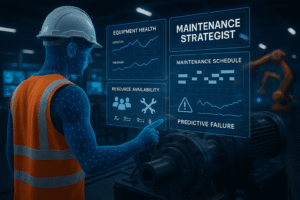













Agentic Downstream Oil & Gas Rotating Equipment Optimization Team
Introduction Downstream rotating equipment rarely fails for lack of data — it fails when reliability, production, energy, safety, maintenance, inventory, and workforce priorities are not coordinated quickly enough. A vibration alert or efficiency drift, if not reconciled with production targets, energy caps, or maintenance windows, can escalate into unplanned downtime, costly equipment damage, and safety
Introduction
Downstream rotating equipment rarely fails for lack of data — it fails when reliability, production, energy, safety, maintenance, inventory, and workforce priorities are not coordinated quickly enough. A vibration alert or efficiency drift, if not reconciled with production targets, energy caps, or maintenance windows, can escalate into unplanned downtime, costly equipment damage, and safety incidents.
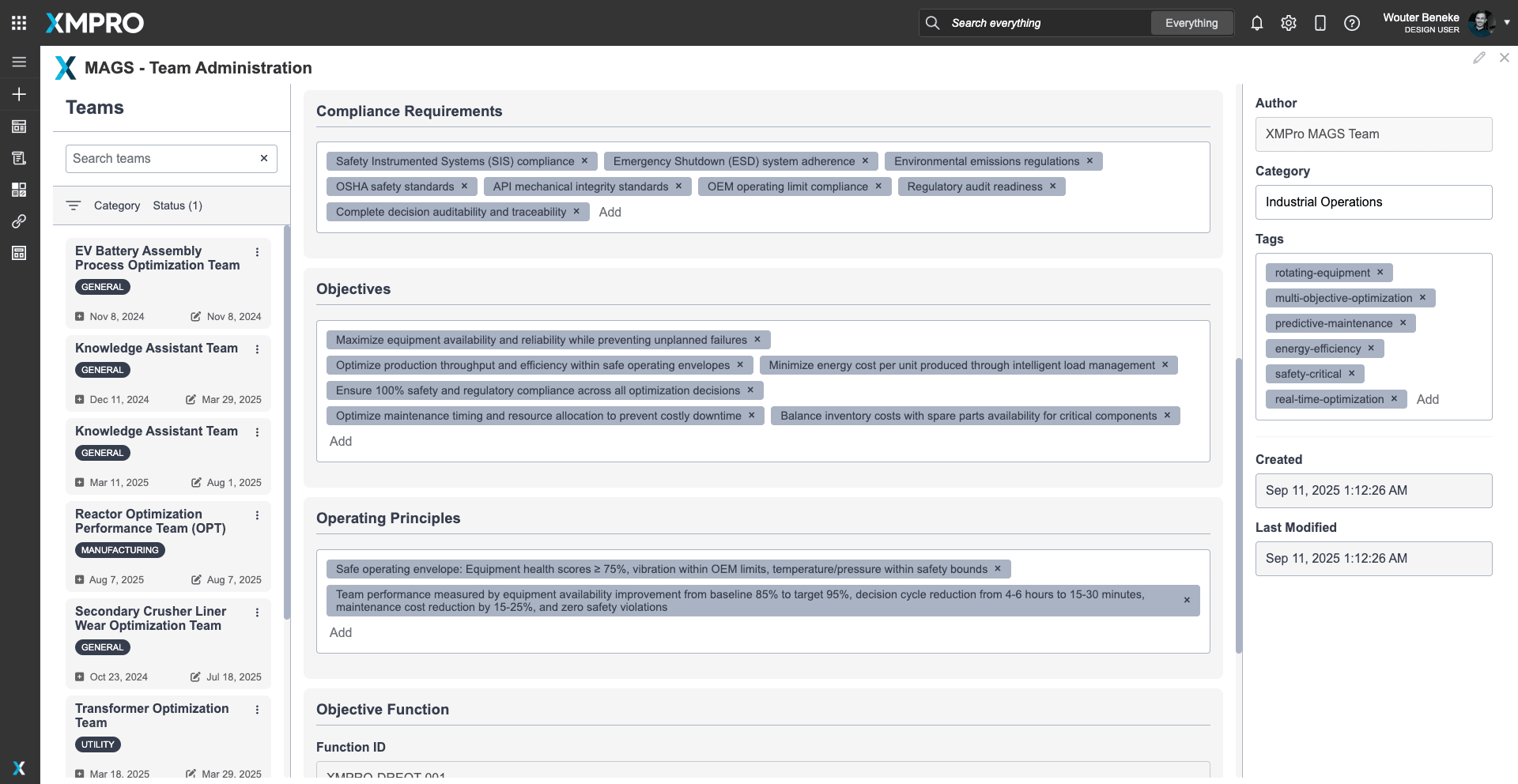
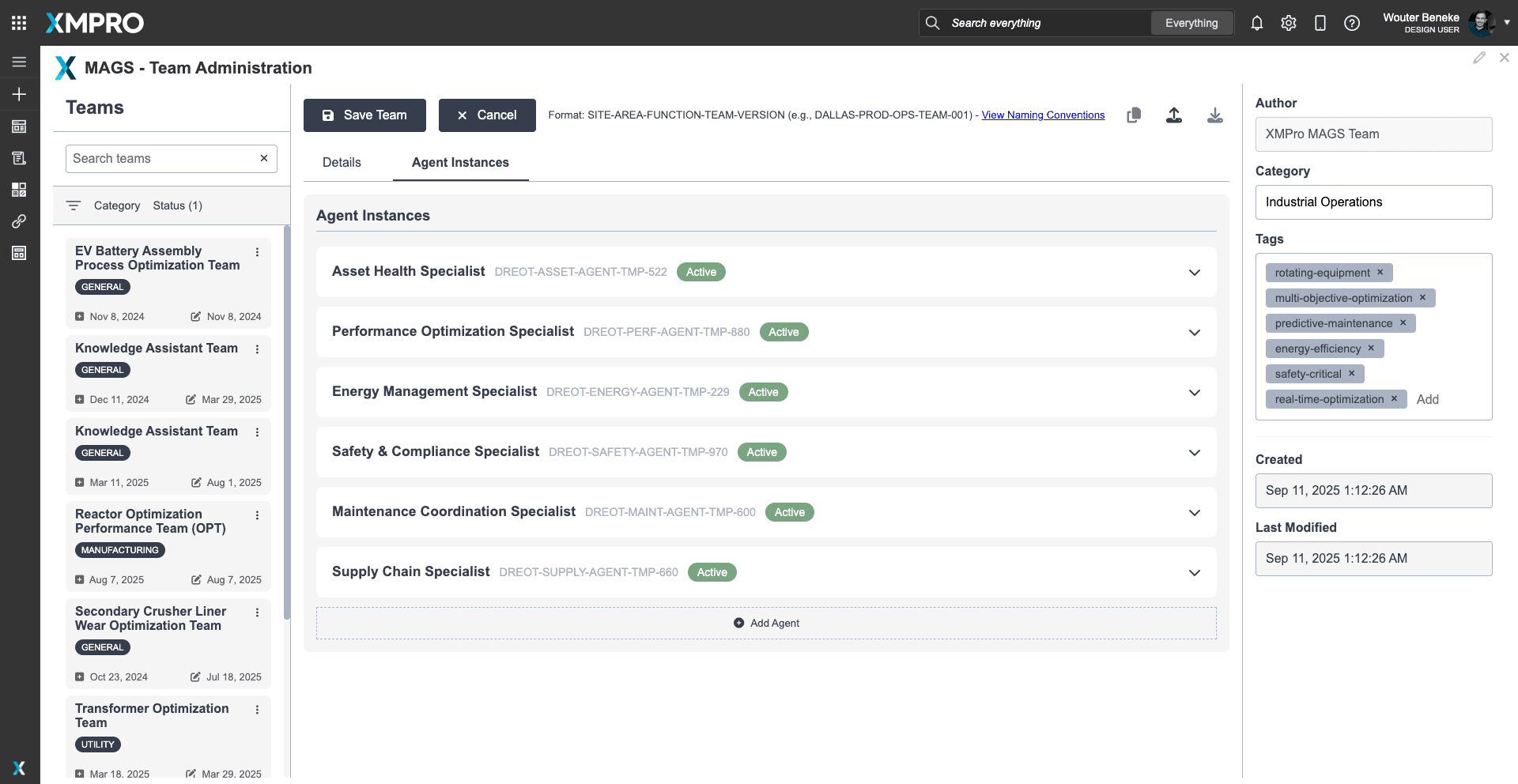
The Downstream Rotating Equipment Optimization MAGS Team addresses this challenge by coordinating six specialized agents — Asset Health, Performance Optimization, Energy Management, Safety & Compliance, Maintenance Coordination, Supply Chain, and Workforce Coordination — through XMPro’s MAGS decision intelligence layer. Each agent contributes domain expertise and objective functions; together they collaborate to produce governed, explainable recommendations within minutes instead of days.
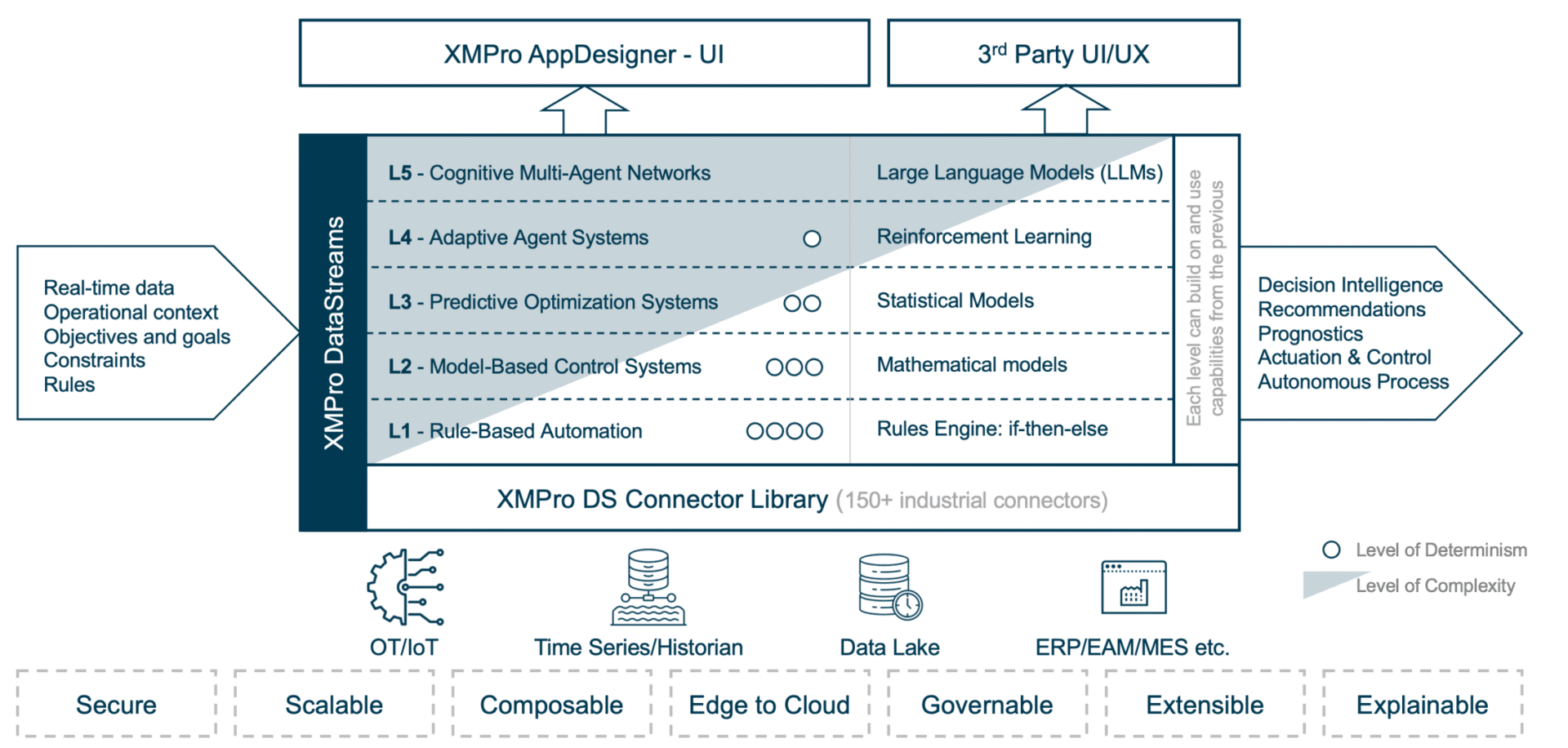
Unlike traditional monitoring tools, this team continuously balances reliability, throughput, energy efficiency, safety compliance, maintenance costs, inventory risks, and workforce utilization — all under hard safety and regulatory constraints. Every decision is transparent, explainable, and fully auditable, enabling facilities to operate as coordinated systems that maximize value without compromising operational safety or compliance.

The Challenge
The Challenge
The Challenge: Coordinating Multi-Objective Optimization Across Critical Assets
Downstream rotating equipment operates under tight performance and safety margins. Compressors, pumps, and turbines must deliver throughput while respecting efficiency envelopes, energy budgets, maintenance schedules, regulatory limits, and workforce availability. Yet most organizations still depend on siloed departments and manual coordination. When optimization opportunities arise, decisions are delayed, fragmented, and often suboptimal.
Key Challenge Areas
- Unplanned Failures: Equipment trips or degradation events are detected, but preventive responses often stall because reliability, operations, and maintenance teams cannot align quickly enough.
- Conflicting Priorities: Operations seek higher throughput, reliability teams argue for conservative limits, energy managers push for lower consumption, and maintenance pushes for downtime — without structured coordination, these priorities collide.
- Trade-Off Blind Spots: Energy savings may accelerate wear, delaying maintenance can raise emissions risk, and shifting work windows can disrupt supply commitments. These interdependencies are rarely optimized holistically.
- Slow Manual Decisions: Multi-stakeholder approvals take hours or days; by then, conditions have changed, leading to rework or conservative shutdowns that sacrifice performance.
- Disconnected Systems: SCADA, CMMS, ERP, and energy platforms operate in silos. Decision authority is unclear during abnormal conditions, and opportunities slip through the cracks.
The Compound Impact
The result is recurring financial losses from avoidable downtime, wasted energy, mistimed maintenance, and compliance risks. The root cause is not a lack of data but the absence of a governed, multi-objective decision layer. Facilities need intelligent coordination that resolves trade-offs transparently, consistently, and within all safety and regulatory boundaries.
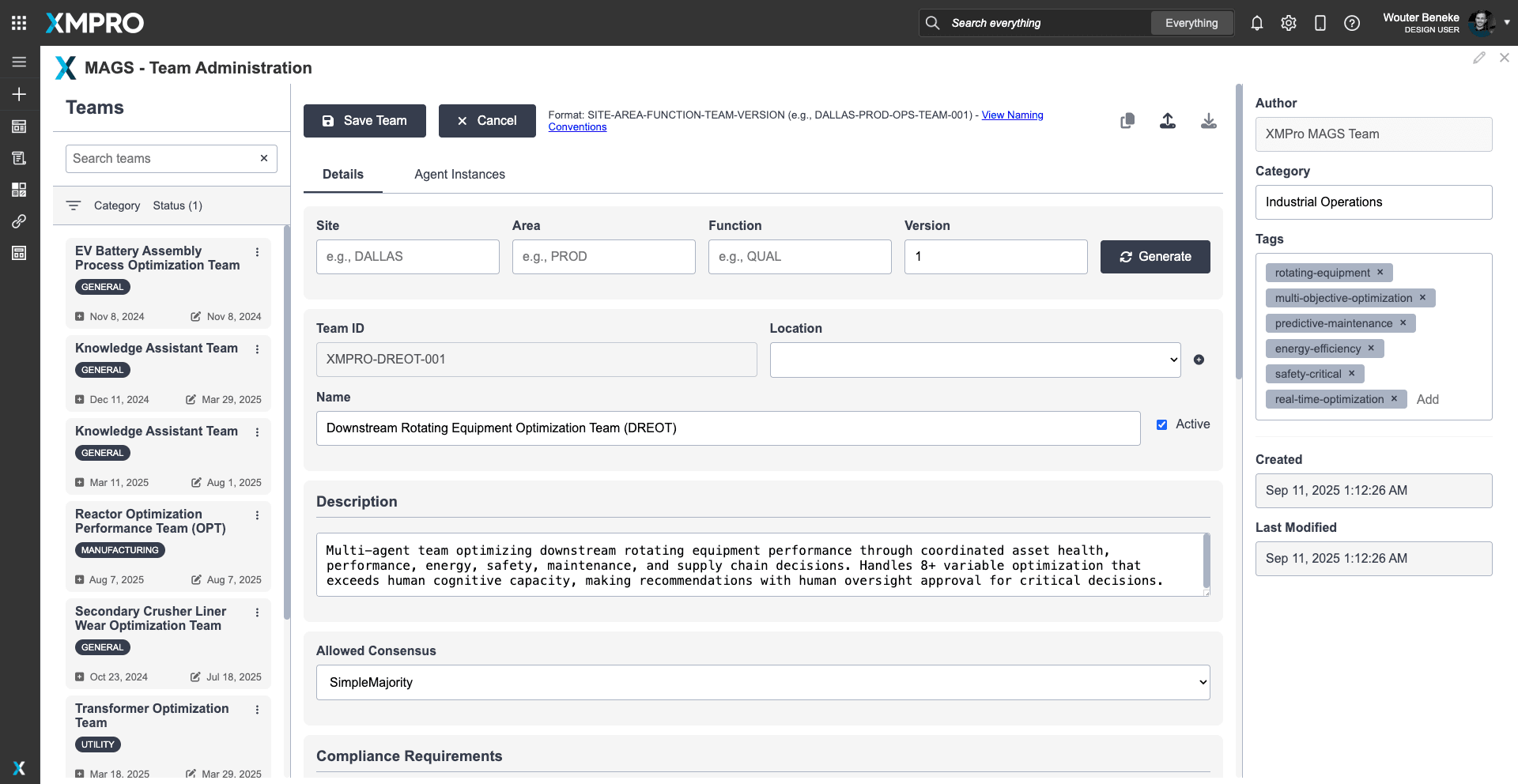
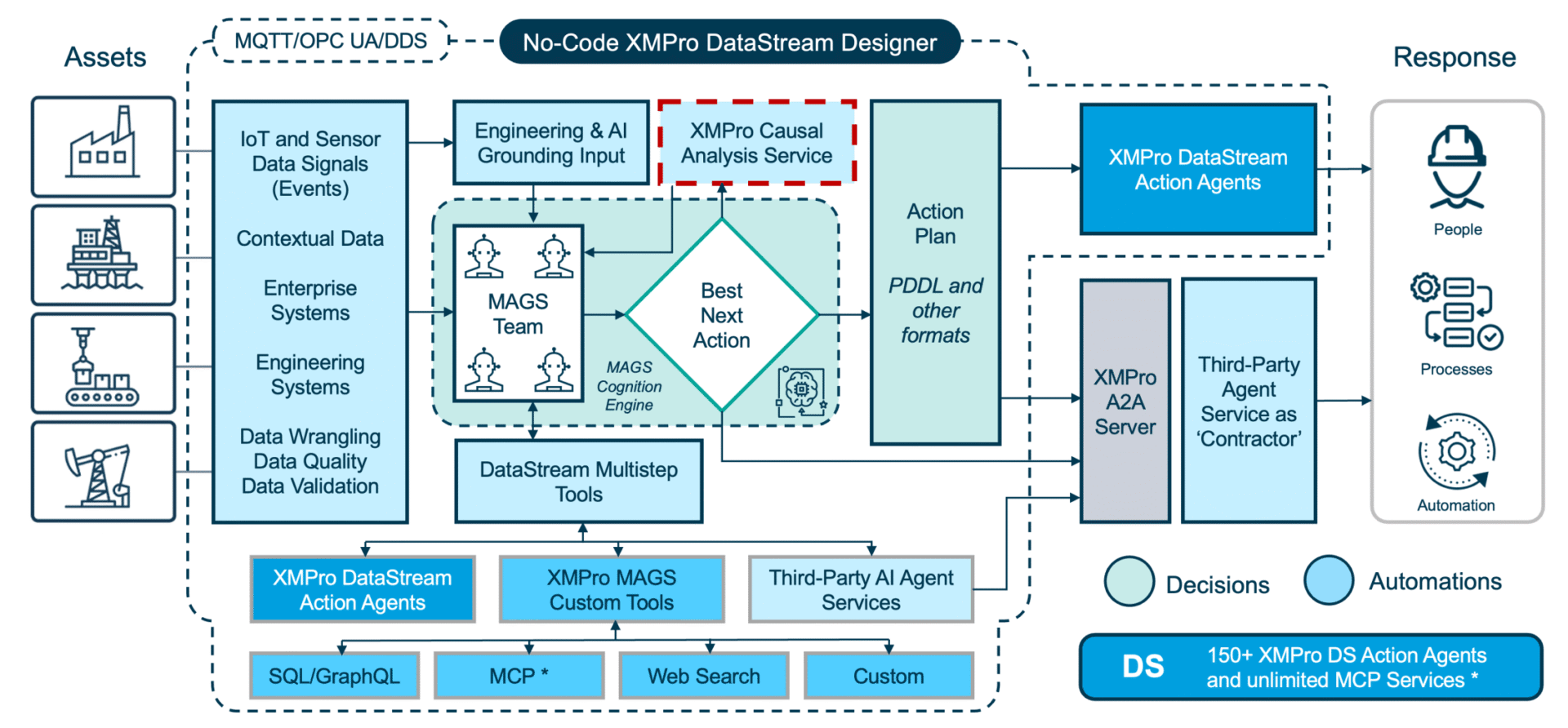
XMPro Downstream Rotating Equipment Optimization MAGS Team
From Departmental Silos to Coordinated Multi-Objective Optimization
Most downstream facilities don’t struggle with a lack of monitoring — they struggle with coordination. Reliability, throughput, energy, safety, maintenance, inventory, and workforce priorities are all managed in parallel but rarely optimized together. Traditional tools address each function in isolation, leaving conflicts unresolved and forcing human teams to choose conservative defaults or spend days aligning decisions.
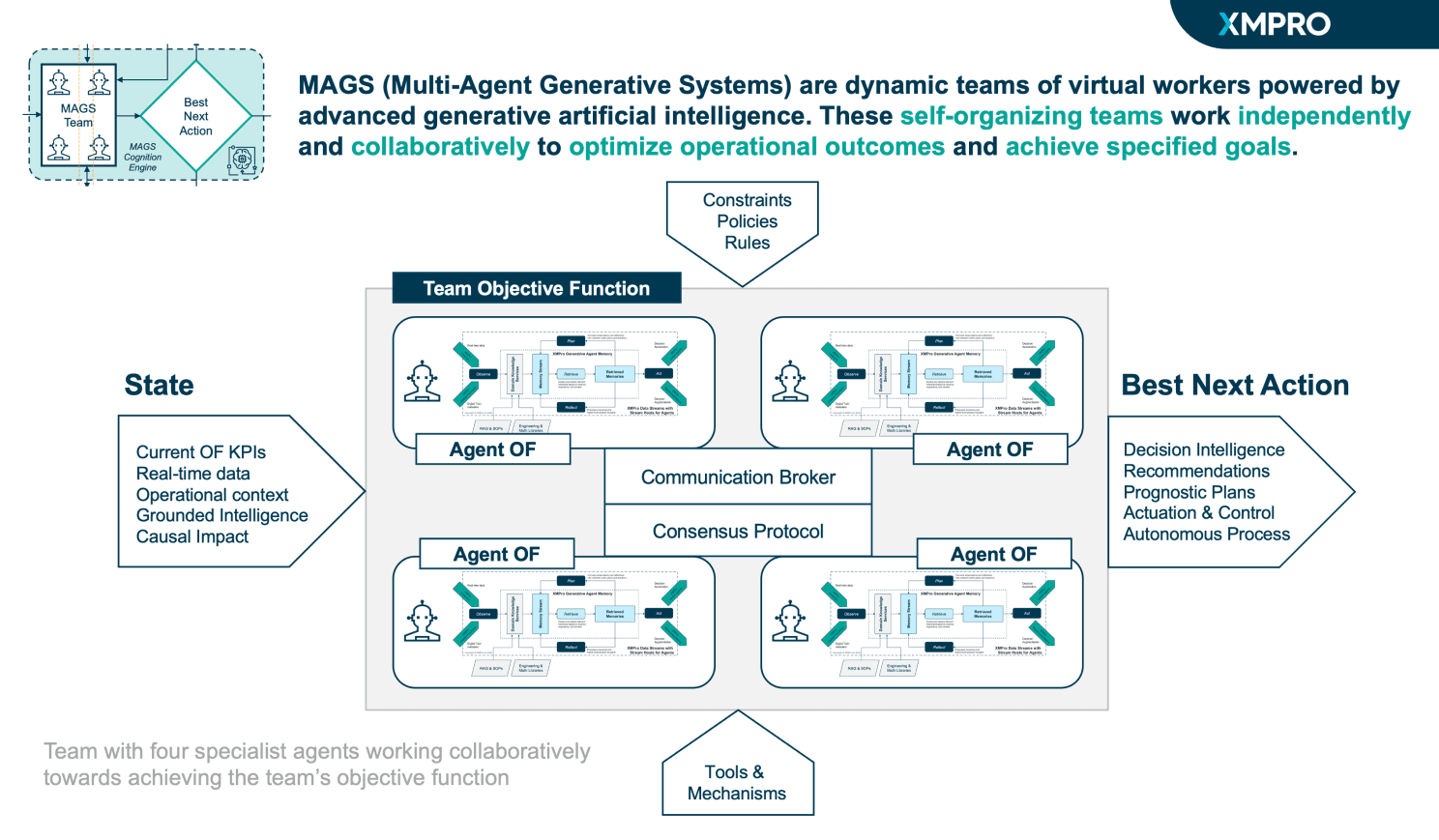
XMPro’s Downstream Rotating Equipment Optimization MAGS Team solves this by bringing together six specialized agents — Asset Health, Performance Optimization, Energy Management, Safety & Compliance, Maintenance Coordination, Supply Chain, and Workforce Coordination. Each agent applies its own reasoning cycles and objective functions, but all operate within XMPro’s governed consensus protocols. The result is real-time negotiation of trade-offs, transparent decisions, and coordinated optimization across the plant.
Key Features
Key Features
Key Features of the Downstream Rotating Equipment Optimization MAGS Team
Six-Agent Coordination
Six specialized agents — Asset Health, Performance Optimization, Energy Management, Safety & Compliance, Maintenance Coordination, Supply Chain, and Workforce Coordination — collaborate through XMPro’s consensus protocols. Each agent brings domain expertise, but decisions are only executed when the team achieves governed agreement within safety and regulatory constraints.
Real-Time Multi-Objective Optimization
The team continuously balances reliability, throughput, energy efficiency, safety, maintenance costs, inventory, and workforce utilization. This ensures optimization decisions reflect the full operational context rather than siloed objectives.
Predictive Equipment Intelligence
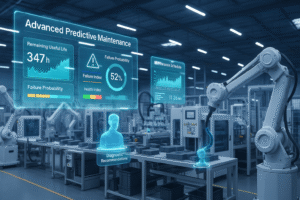
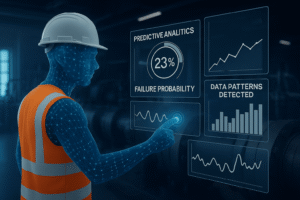
Advanced condition monitoring combined with failure prediction enables proactive intervention. Agents can recommend maintenance windows, operating envelope adjustments, or resource allocations with look-ahead horizons from hours to months.
Parametric Configuration
Organizations define their own optimization priorities — for example, emphasizing reliability during aging equipment cycles, or throughput during high-margin periods. XMPro enables fast reconfiguration so objectives remain aligned with strategy and market conditions.
Living Digital Twin
The team maintains a digital twin of rotating equipment operations, integrating health, performance curves, energy consumption, maintenance history, and resource data. This provides a predictive model for scenario testing and optimization planning.
Tiered Objective Policy (Safety First)
Optimization follows a clear hierarchy: safety and compliance → reliability → margin-weighted throughput → cost efficiency. Safety rules and OEM limits are non-negotiable hard constraints; all other objectives are optimized within those boundaries.
Progressive Autonomy
Teams can start in advisory mode (recommendations only), move to supervised autonomy (bounded actions with human validation), and progress to governed autonomy for routine optimization. All actions remain transparent, explainable, and fully auditable.
MAGS Team Composition
Meet Your Rotating Equipment Optimization Specialists
CORE TEAM AGENT

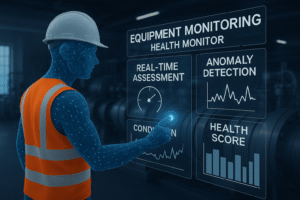
Asset Health Specialist
(Equipment Reliability & Condition Expert)
Key Expertise: Monitors asset telemetry and performance curves to predict failures and define safe operating envelopes.
Team Contribution: Protects equipment reliability by publishing health scores, risk forecasts, and condition-based limits that guide performance, maintenance, and energy decisions.
CORE TEAM AGENT
Performance Optimization Specialist
(Throughput & Efficiency Expert)
Key Expertise: Maximizes production throughput and operating efficiency using real-time process data and capacity models.
Team Contribution: Optimizes throughput within safe health and energy boundaries, providing bounded setpoint recommendations to operators or advanced process control systems.
CORE TEAM AGENT
Energy Management Specialist
(Efficiency & Cost Optimization Expert)
Key Expertise: Tracks power, steam, and utility usage against tariffs and demand profiles to minimize energy cost per unit produced.
Team Contribution: Reduces energy spend by aligning load management and equipment scheduling with production and reliability objectives.
CORE TEAM AGENT
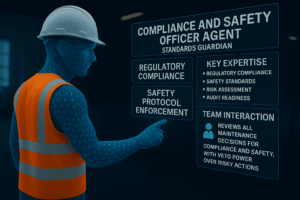
Safety & Compliance Specialist
(Regulatory & Risk Management Expert)
Key Expertise: Monitors SIS, ESD, emissions, and regulatory thresholds; validates all actions against safety and compliance boundaries.
Team Contribution: Holds veto authority over unsafe or non-compliant actions, ensuring all optimization stays inside hard safety and regulatory constraints.
CORE TEAM AGENT
Maintenance Coordination Specialist
(Resource & Schedule Optimization Expert)
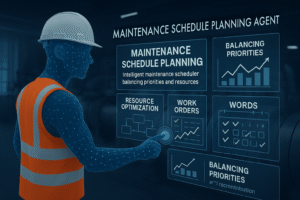
Key Expertise: Orchestrates condition-based scheduling, technician availability, and work order management.
Team Contribution: Balances maintenance timing with production schedules and equipment health forecasts to minimize unplanned downtime and resource conflicts.
CORE TEAM AGENT
Supply Chain Specialist
(Inventory & Procurement Expert)
Key Expertise: Optimizes spare parts levels, procurement timing, and supplier performance for critical rotating equipment components.
Team Contribution: Ensures required parts are available when failures are predicted or maintenance is scheduled, while minimizing inventory carrying costs.
Team Objective Function
Collective Success Metrics
Collective Success Metrics
Each agent has its own domain-specific objective function, but success is only meaningful when coordinated at the team level. The Downstream Rotating Equipment Optimization MAGS Team integrates these objectives into a unified framework where safety and compliance are never compromised, reliability is protected, and margin and cost are balanced transparently.
Individual vs. Team Objectives
- Asset Health Specialist: Predicts failures and defines safe operating envelopes to protect reliability.
- Performance Optimization Specialist: Maximizes throughput and efficiency while staying within health and safety boundaries.
- Energy Management Specialist: Minimizes energy cost per unit by aligning load management with production and reliability.
- Safety & Compliance Specialist: Holds veto power, ensuring every decision meets regulatory and safety requirements.
- Maintenance Coordination Specialist: Optimizes maintenance timing and resource allocation to prevent downtime.
- Supply Chain Specialist: Ensures parts are available when needed, minimizing inventory cost and risk.
Team-Level Metrics
- Reliability: Equipment availability %, MTBF improvement, % of failures predicted and prevented.
- Production: Throughput vs. plan, OEE uplift, margin-weighted output.
- Energy: Energy cost per unit produced, % peak demand reduction, efficiency ratio improvements.
- Maintenance: Planned vs. unplanned maintenance ratio, maintenance cost per operating hour.
- Safety & Compliance: Zero safety breaches, emissions compliance %, audit readiness.
- Resource Efficiency: Inventory service level %, labor utilization, contractor dependency ratio.
Why It Matters
The value of the Rotating Equipment Optimization Team is not just better monitoring — it is coordinated, explainable, and governed optimization. By embedding reliability, compliance, and cost-efficiency into the team’s shared objective function, XMPro enables downstream facilities to protect uptime, capture margin opportunities, and meet sustainability and safety commitments without compromise.
Individual Agent Contributions
Individual Agent Contributions
While the team’s value is measured collectively, each agent brings domain expertise that is essential to balancing reliability, production, cost, and compliance. Their contributions combine into coordinated, explainable outcomes.
- Asset Health Specialist: Predicts equipment failures 1–180 days in advance, defines safe operating envelopes, and publishes health scores for use by other agents.
- Performance Optimization Specialist: Maximizes throughput and efficiency while respecting health and safety limits, aligning production with business margins.
- Energy Management Specialist: Reduces cost per unit by optimizing load schedules, avoiding demand charges, and coordinating energy usage with production needs.
- Safety & Compliance Specialist: Ensures all optimization stays within OEM, safety, and regulatory boundaries, holding veto power over unsafe recommendations.
- Maintenance Coordination Specialist: Aligns work orders and resource availability with predicted failures and production windows, preventing unplanned downtime.
- Supply Chain Specialist: Synchronizes spare parts inventory and procurement with predicted maintenance needs, balancing cost with service level assurance.
Together, these contributions resolve conflicts that no single department can manage alone — enabling optimization decisions that are fast, transparent, and aligned with facility-wide objectives.
Compound Benefits
Compound Benefits
The value of the Downstream Rotating Equipment Optimization MAGS Team comes from the way agents reinforce each other. Instead of isolated optimizations, the team resolves trade-offs in real time and ensures every decision advances multiple objectives at once.
Coordinated Optimization
Equipment health forecasts link directly with production, energy, and maintenance planning. This coordination prevents conflicts between reliability, throughput, and cost control that typically cause downtime or wasted effort.
Proactive Interventions
By combining predictive maintenance, inventory forecasting, and workforce scheduling, the team enables interventions to be planned days or weeks in advance, reducing emergency work and extending asset life.
Transparent Trade-Offs
Conflicts such as “throughput vs. energy cost” or “maintenance vs. production” are resolved through governed consensus. The reasoning path is recorded, auditable, and explainable to operators, managers, and regulators.
Resilience and Safety
Safety and compliance remain hard constraints across all decisions. This ensures reliability and cost optimization never undermine non-negotiable safety, environmental, or regulatory requirements.
Continuous Learning
Every optimization cycle feeds back into the agents’ knowledge base. Over time, the team learns which interventions deliver the best outcomes, improving accuracy and building organizational trust in autonomous optimization.
By combining these capabilities, the MAGS Team transforms downstream facilities from siloed operations into coordinated, governed systems — improving uptime, reducing costs, and protecting compliance while maximizing asset value.
Team Dynamics Summary
Communication Protocol
Communication Protocol
The Downstream Rotating Equipment Optimization MAGS Team uses structured, governed communication to ensure agents share relevant intelligence, not just raw data. This creates a clear, auditable flow of information that supports explainable decision-making.
Real-Time Data Sharing
All agents receive validated updates from connected systems (SCADA, DCS, CMMS, ERP, energy monitors). Health scores, performance indicators, energy prices, and compliance checks are broadcast every 5–15 minutes, with immediate alerts on threshold breaches.
Contextual Decision Updates
Instead of raw sensor values, agents publish decision-ready insights — e.g., “Compressor #2 health declining, failure risk >70% within 72 hours, production impact = $200K if not addressed.” This allows other agents to act quickly without re-analyzing the same data.
Consensus Coordination
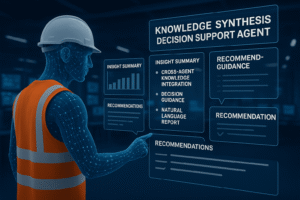
When a decision spans multiple domains (e.g., raising throughput affects energy and reliability), the proposing agent triggers a coordination cycle. Other agents evaluate impact, constraints are validated, and consensus is reached within minutes using XMPro’s MAGS protocols.
Human-in-the-Loop Integration
Decisions, alerts, and trade-off explanations flow into operator dashboards, CMMS interfaces, and ERP systems. Each recommendation includes a reasoning path so humans can validate, approve, or override when needed.
Auditability
All inter-agent communications and decisions are timestamped, logged, and linked to compliance records. This ensures every optimization cycle is explainable and regulatory-audit ready.
Decision Framework
Decision Framework
Domain Authority & Expertise
Each agent has defined decision authority within its expertise domain — asset health, performance, energy, safety, maintenance, supply chain, or workforce. When decisions primarily affect one domain, that agent leads the optimization while others provide constraint validation and impact assessment.
Multi-Agent Consensus Protocol
For complex trade-offs affecting multiple domains — such as whether to extend equipment run time for production targets vs. health protection — agents contribute domain-specific analysis. The MAGS consensus mechanism evaluates business value, operational performance, and constraint compliance to identify optimal solutions.
Safety & Compliance Override Authority
The Safety & Compliance Agent maintains absolute veto authority over decisions violating safety systems, regulatory requirements, or environmental limits. This ensures operational optimization never compromises non-negotiable safety and regulatory compliance.
Progressive Autonomy Implementation
Low-impact decisions (equipment parameter adjustments, maintenance scheduling) can be executed autonomously within defined boundaries. High-impact decisions (major maintenance, production changes) require human approval with comprehensive reasoning packages.
Transparent Decision Documentation
Every optimization decision includes contributing agents, trade-off analysis, constraint validation, and expected outcomes. This provides complete audit trails for performance review, regulatory compliance, and continuous improvement.
Conflict Resolution
Conflict Resolution
Mathematical Trade-Off Optimization
Conflicts between competing demands — reliability vs. throughput, energy vs. performance, maintenance vs. production — are resolved through mathematical optimization of the dual objective functions rather than subjective departmental negotiations.
Safety-First Resolution Hierarchy
All conflict resolution follows governed priorities: Safety Compliance → Equipment Protection → Regulatory Adherence → Business Value Optimization → Operational Performance. This ensures critical constraints are never compromised for optimization gains.
Pareto Optimization Approach
When agents propose conflicting solutions, the system identifies Pareto-optimal alternatives that improve multiple objectives simultaneously or provide the best balanced trade-offs between competing demands using quantified impact analysis.
Dynamic Context Adaptation
Conflict resolution adapts to operational context: during high market demand periods, business value may be weighted higher; during equipment aging or regulatory scrutiny, operational performance and compliance receive priority weighting.
Human Escalation for Complex Conflicts
When conflicts involve high-stakes decisions (>$100K impact), safety uncertainty, or major strategic trade-offs, the system escalates to human management with complete analysis packages including:
- Quantified trade-off options evaluated by each agent
- Business value and operational performance impact projections
- Risk assessments and constraint validation
- Recommended solutions with reasoning paths
Continuous Learning from Resolutions
All conflicts and their outcomes are analyzed to improve future trade-off optimization, enabling the team to resolve similar conflicts more effectively and reduce escalation requirements over time.
Load Balancing
Load Balancing
Dynamic Monitoring Adaptation
Agents automatically adjust their processing intensity and communication frequency based on operational conditions. During equipment stress periods, Asset Health monitoring intensifies; during peak energy costs, Energy Management optimization increases.
Condition-Based Resource Allocation
When critical situations arise — equipment health deterioration, production bottlenecks, safety concerns — the team redistributes computational resources and decision-making focus to address the highest priority risks while maintaining routine optimization.
Collaborative Workload Distribution
Processing load is dynamically distributed across the seven-agent team based on current priorities:
• Equipment alarms → Asset Health intensifies monitoring; Maintenance prepares intervention plans
• Production targets → Performance leads optimization; Energy validates constraints
• Maintenance windows → Maintenance coordinates resources; Supply Chain ensures parts availability
• Energy cost spikes → Energy Management leads optimization; Performance validates production impact
Scalable Processing Architecture
Each agent can scale its processing capability based on data volume, decision complexity, and time criticality, ensuring response times remain within operational requirements regardless of facility size or complexity.
Resilient Performance Maintenance
During high-stress periods or individual agent maintenance, the remaining agents maintain essential optimization functions while affected capabilities are restored, ensuring continuous facility optimization without single points of failure.
Escalation Paths
Escalation Paths
The Downstream Rotating Equipment Optimization MAGS Team escalates decisions based on governed parameters rather than fixed thresholds. Escalation logic is embedded in XMPro’s decision intelligence layer, ensuring flexibility across sites, assets, and operating contexts.
Parametric Triggers
Escalation is activated when configured parameters exceed defined tolerances. Examples include the following:
- Failure probability above a configurable risk tolerance (e.g., medium, high, critical)
- Predicted production loss above a set business impact level
- Safety margin, emissions, or compliance exposure beyond allowable deviation
- Energy, maintenance, or workforce costs breaching configured budget ranges
- Multi-agent disagreements that cannot be resolved within bounded consensus cycles
These parameters are defined per facility and can be tuned as business priorities evolve.
Escalation Levels
Escalation flows to the appropriate authority based on the type and magnitude of the parameter breach:
- Operational Escalation: To control room operators for immediate adjustments
- Tactical Escalation: To supervisors for cross-department scheduling and resource conflicts
- Strategic Escalation: To management for high-value trade-offs or compliance exposure
Structured Escalation Packages
When escalation occurs, agents assemble a governed package including:
- Which parameters were exceeded and by how much
- Domain-specific agent assessments and constraints
- Alternative options with quantified impacts
- Recommended next actions and reasoning path
Why It Matters
By making escalation parameter-driven, facilities avoid rigid rules that don’t fit every situation. Instead, XMPro ensures that humans stay in the loop</strong for critical, high-impact, or ambiguous decisions — while routine optimizations remain automated, explainable, and fully auditable.