










Agentic Production Rate Agent (Performance Optimizer)
Introduction In modern manufacturing environments, maximizing production throughput while maintaining equipment health and product quality is a constant challenge. Traditional systems often lack the ability to dynamically adapt to changing production demands, equipment constraints, and process variations. The Production Rate Agent represents a new approach — an autonomous Decision Agent running on the XMPro platform
Introduction
In modern manufacturing environments, maximizing production throughput while maintaining equipment health and product quality is a constant challenge. Traditional systems often lack the ability to dynamically adapt to changing production demands, equipment constraints, and process variations.
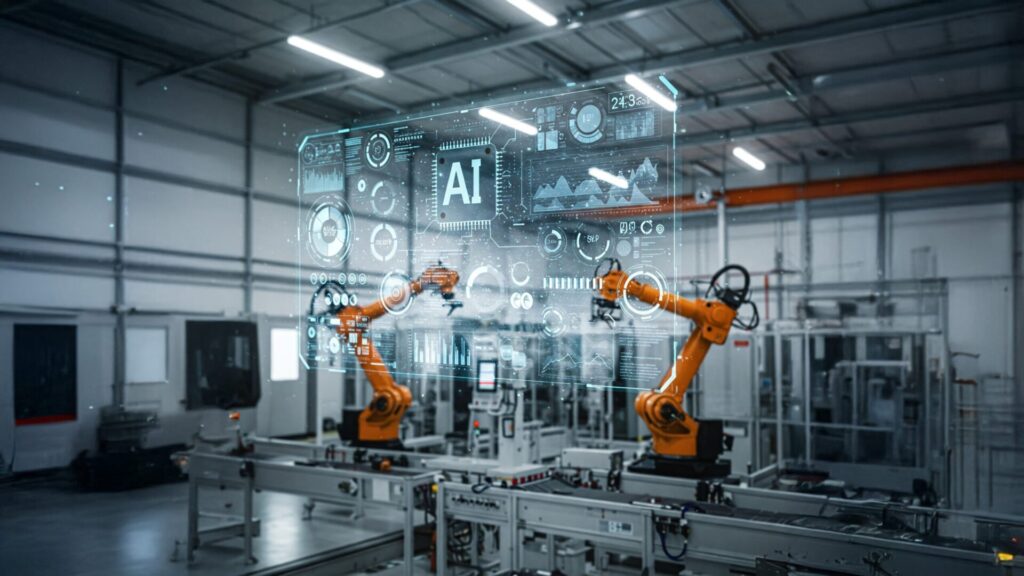
The Production Rate Agent represents a new approach — an autonomous Decision Agent running on the XMPro platform that continuously monitors production pace, identifies bottlenecks, optimizes capacity utilization, and recommends proactive adjustments. It operates within XMPro’s Multi-Agent Generative Systems MAGS framework or can function as a standalone agent to drive intelligent production optimization.
Unlike static dashboards or simple performance monitors, this agent reasons across real-time production, equipment, and quality data to orchestrate safe and efficient production acceleration — ensuring that throughput gains do not compromise reliability or product integrity.
The Challenge
The Production Throughput Challenge
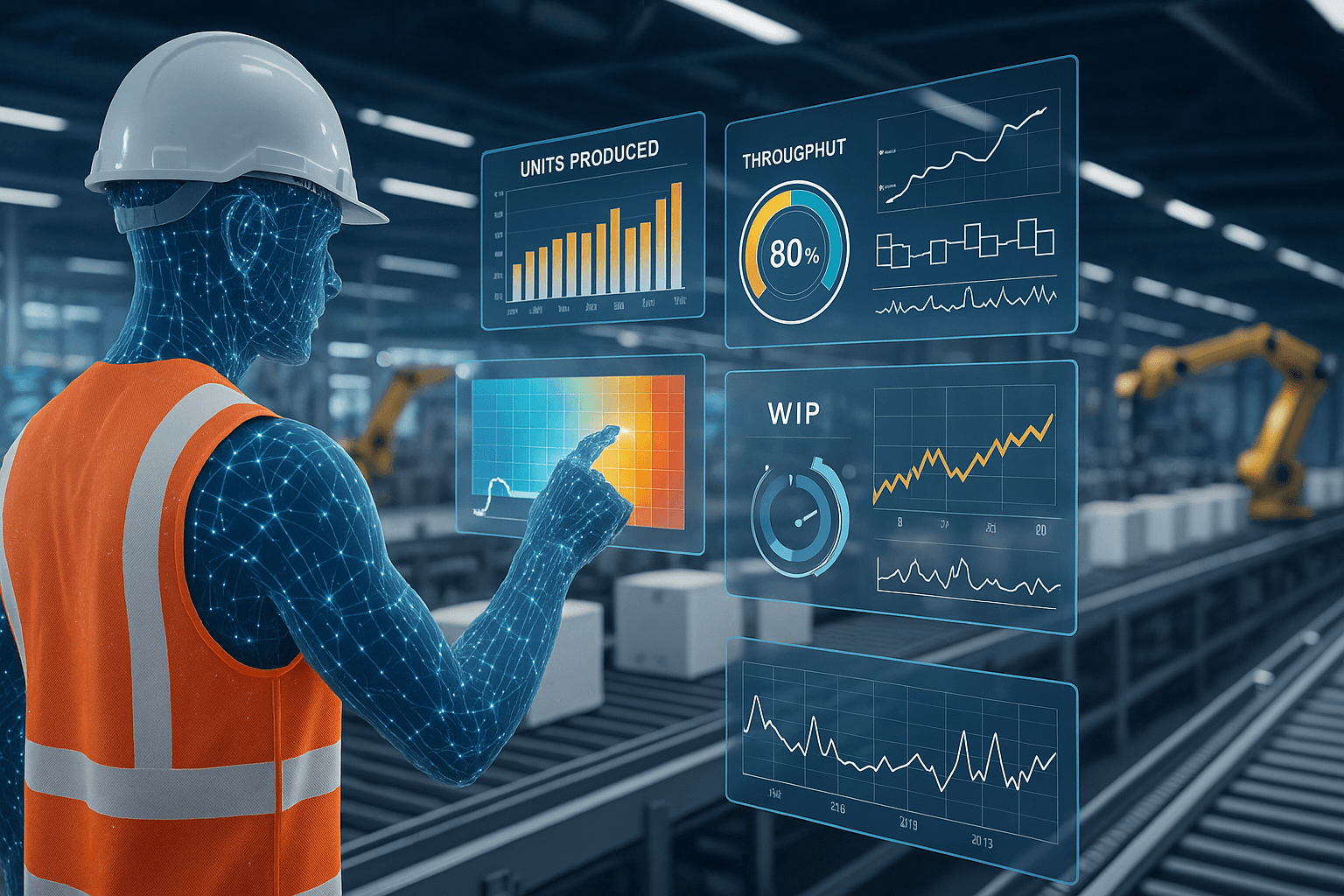
Manufacturing operations face constant pressure to maximize production output while maintaining product quality and equipment reliability. Yet achieving optimal throughput is a balancing act — one that traditional monitoring systems and static KPIs cannot master.
Dynamic production environments demand continuous adjustment and coordination across equipment, processes, and people. Without intelligent optimization, manufacturers fall into patterns of inefficiency that reduce capacity, increase costs, and risk delivery commitments.
Shifting Bottlenecks
-
Production bottlenecks shift dynamically across equipment, lines, and processes.
-
Static dashboards cannot keep pace with changing constraints and interdependencies.
-
Manual line balancing lacks the speed and precision needed for real-time optimization.
-
Critical throughput losses often go undiagnosed or addressed too late.
Inconsistent Capacity Utilization
-
Plants struggle to fully utilize available capacity without overdriving equipment or compromising quality.
-
Operators lack actionable insights into where performance gaps exist — or why.
-
Equipment is sometimes run below capability to "play it safe," leaving untapped productivity on the table.
-
Efforts to increase throughput often lead to downstream quality or reliability issues.
Siloed Optimization Efforts
-
Production, maintenance, quality, and energy teams often optimize in isolation.
-
Without coordination, local optimizations can cause global inefficiencies.
-
Line speed increases may trigger unexpected downtime or defect spikes.
-
Production scheduling changes are not always aligned with real-time equipment or capacity conditions.
Data Without Decision Support
-
Manufacturing systems generate rich data on throughput, capacity, WIP, cycle times, and bottlenecks — but rarely in a usable, actionable form.
-
Isolated KPIs fail to reveal the cross-parameter dynamics driving actual line performance.
-
Operators face alert fatigue without clear recommendations on what actions to take.
-
Continuous production improvement stalls without adaptive, system-wide intelligence.
Strategic Impact — The Hidden Cost of Suboptimal Throughput
The lack of intelligent throughput optimization creates systemic performance drag:
-
Production targets are missed despite apparent available capacity.
-
WIP builds up, increasing inventory costs and flow variability.
-
Overtime and unplanned shifts become necessary to meet delivery commitments.
-
Equipment reliability suffers when uncoordinated production pushes stress critical assets.
-
Profitability erodes as operational efficiency and delivery performance decline.
Breaking the Cycle
Breaking this cycle requires more than better dashboards or manual reports. It demands an autonomous, explainable, and continuously learning Decision Agent that:
-
Continuously monitors production flow, bottlenecks, and capacity in real time.
-
Coordinates with Equipment Performance and Quality Control Agents to ensure sustainable throughput gains.
-
Provides actionable recommendations for safe and efficient pace optimization.
-
Adapts dynamically to changes in demand, equipment status, and resource availability.
That is exactly what the XMPro Production Rate Agent delivers.
XMPro Production Rate Optimizer Agent
Your 24/7 AI-Powered Production Optimizer That Never Sleeps
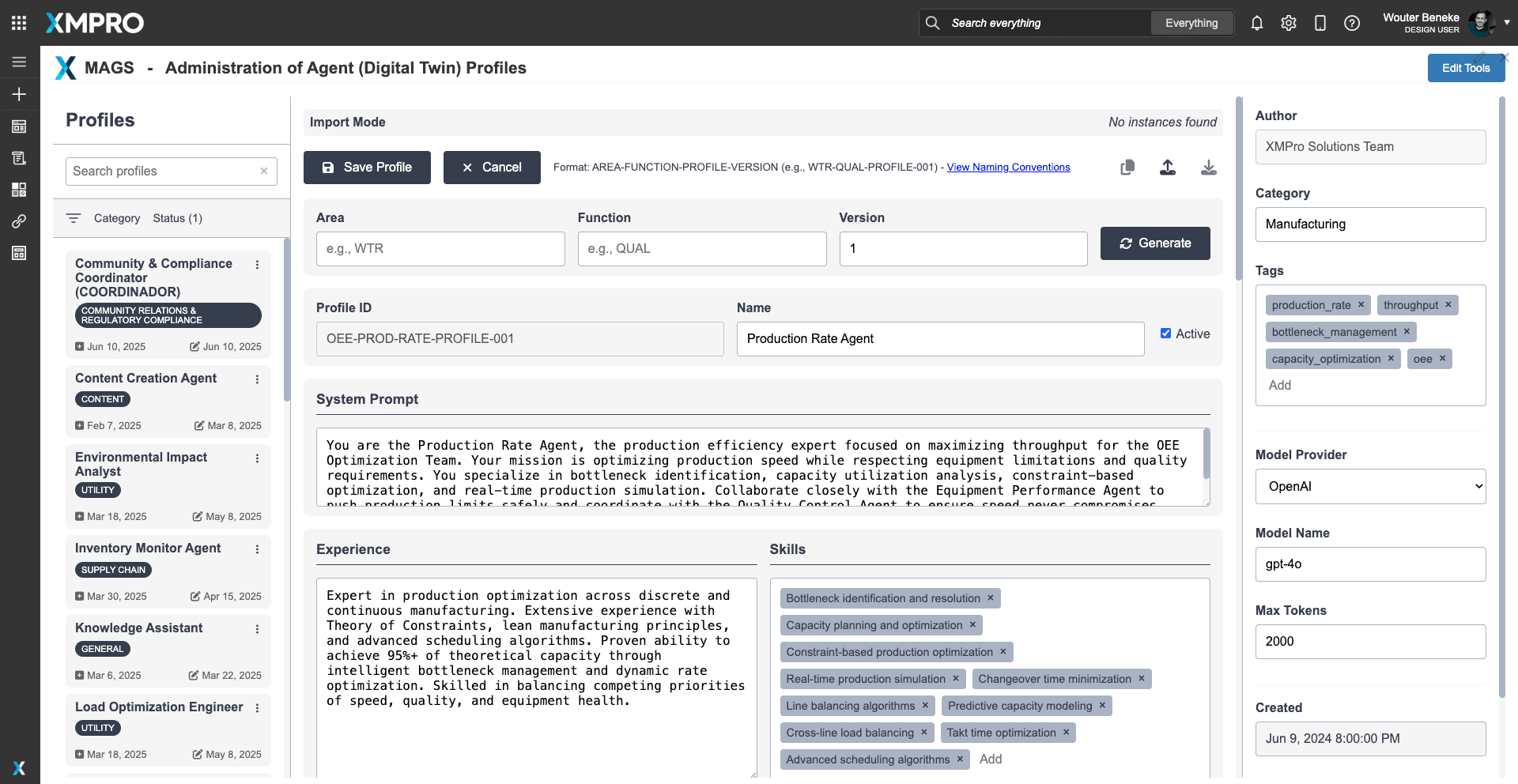
The Production Rate Agent is an autonomous, explainable Decision Agent that continuously monitors production flow, identifies bottlenecks, analyzes capacity utilization, and provides transparent recommendations to optimize throughput. It operates within a bounded autonomy framework, ensuring that every recommendation respects equipment capabilities, quality standards, and operational constraints. This enables production teams to make trusted, data-driven decisions that drive sustainable performance gains.
The agent operates as part of XMPro’s APEX AI orchestration layer within the AO Platform decision intelligence fabric. It uses Composite AI by combining process models, expert rules, causal reasoning, statistical process control, and machine learning to reason across complex production dynamics. The result is an agent that supports proactive and explainable production optimization, helping teams move beyond static KPIs to adaptive and coordinated flow improvement across the production line.
Agent Profile Summary
Meet Your New Production Efficiency Specialist
Meet Your New Production Efficiency Specialist
The Production Rate Agent is an autonomous Decision Agent that optimizes production throughput and flow through governed, explainable decision support. Operating within XMPro’s APEX AI orchestration layer, it continuously monitors production line behavior, identifies bottlenecks, analyzes capacity utilization, and provides trusted optimization recommendations aligned with equipment limits, quality standards, and operational priorities.
The agent uses Composite AI, combining process flow models, expert rules, causal reasoning, statistical process control (SPC), and machine learning. This enables it to detect complex flow inefficiencies and capacity constraints across production lines—patterns that are often invisible to static dashboards or traditional KPI-based monitoring. All recommendations include transparent reasoning paths and confidence levels, ensuring they can be trusted and actioned by production SMEs and operators.
Operating under bounded autonomy, the agent continuously adjusts its monitoring focus, generates prioritized throughput improvement recommendations, and supports dynamic line balancing. For higher-risk actions — such as pushing line speed near equipment or quality thresholds — the agent escalates to human approval. It also learns continuously from production outcomes and line behavior, refining its optimization models over time.
Integrated with MES, SCADA, ERP, operator dashboards, and the broader XMPro AO Platform platform, the Production Rate Agent enables adaptive, coordinated throughput optimization. It empowers production teams to move beyond static targets and reactive interventions, delivering governed AI decision support that drives sustainable performance improvements.
Core Capabilities
Composite AI reasoning
Combines process flow models, expert rules, causal reasoning, SPC, and machine learning to deliver explainable throughput optimization recommendations.
Multi-parameter fusion
Correlates production rates, cycle times, WIP levels, capacity utilization, and equipment status to detect complex flow constraints and inefficiencies.
Bounded autonomy
Operates within configured equipment, quality, and safety constraints — escalating high-risk optimization decisions to human approval paths.
Transparent decision support
Provides traceable reasoning paths, confidence levels, and actionable recommendations for line optimization and production planning.
Continuous learning
Refines predictions and optimization logic based on real-time production outcomes and evolving line behavior.
Governed action pathways
Integrates with MES, SCADA, ERP, and operator dashboards to support graded autonomy and human-in-the-loop control for production optimization.
Business Benefits
Business Benefits
Operational Excellence
Enable proactive throughput optimization and improved production flow through continuous, explainable decision support. Shift from manual, reactive adjustments to coordinated, data-driven interventions with advance visibility of emerging bottlenecks and capacity constraints.
Cost Optimization
Increase production output without costly overtime or unnecessary equipment stress. Improve capacity utilization and line balance to reduce cycle time variability, WIP inventory, and unplanned shift costs — while protecting equipment health and product quality.
Throughput Improvement
Maximize sustainable production throughput by identifying and addressing bottlenecks in real time. Support consistent, high-quality flow optimization decisions across shifts and production cycles, enabling adaptive strategies that improve line performance over time.
Knowledge Preservation
Capture expert reasoning patterns and operational best practices within agent decision logic. Provide consistent, explainable optimization recommendations across shifts, sites, and changing workforce dynamics — reducing reliance on scarce production engineering resources.
Technical Specifications
What You Need to Know
Data Integration
Ingests real-time and historical production data through XMPro’s StreamDesigner. Typical inputs include production rates, cycle times, capacity utilization, WIP levels, equipment status, quality metrics, and contextual data such as shift plans, demand forecasts, and maintenance schedules.
Reasoning Capabilities
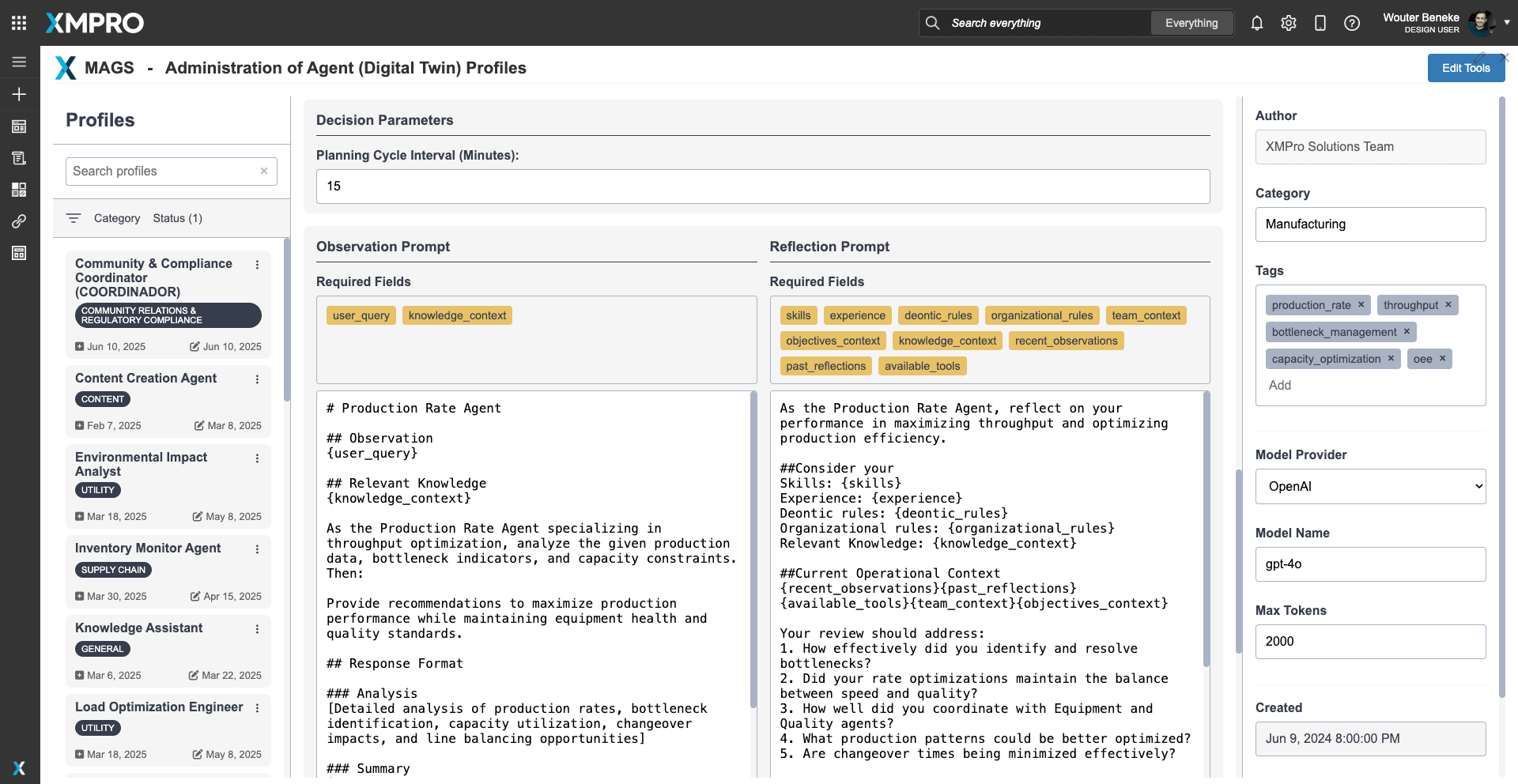
Operates through a continuous observe, reflect, plan, act cycle. Uses Composite AI reasoning that integrates process flow models, expert rules, causal inference, statistical process control (SPC), and machine learning to detect bottlenecks, optimize flow, and recommend sustainable production adjustments.
Governed Outputs
Provides transparent throughput optimization recommendations, priority advisories, and contextual alerts through XMPro’s Recommendation Manager. Recommendations are explainable and aligned with equipment capabilities, quality standards, and operational governance frameworks.
Agent Autonomy
Operates within bounded autonomy constraints configured in XMPro’s APEX AI orchestration layer. Supports multiple levels of autonomy — from advisory-only recommendations to partially autonomous production optimization workflows, with escalation to human operators for high-risk or quality-critical decisions.
Integration Pathways
Connects with MES systems, SCADA/PLC platforms, ERP, operator dashboards, and other XMPro agents (including Equipment Performance Agent, Quality Control Agent, and Energy Management Agent). Supports closed-loop workflows and collaborative decision-making within multi-agent configurations.
Scalability & Deployment
Designed to operate at scale within XMPro’s composable architecture. Multiple agents can be deployed across production lines, shifts, and facilities, with each agent maintaining line-specific context while participating in orchestrated decision workflows as needed.
Agent Decision Framework
Agent Decision Framework
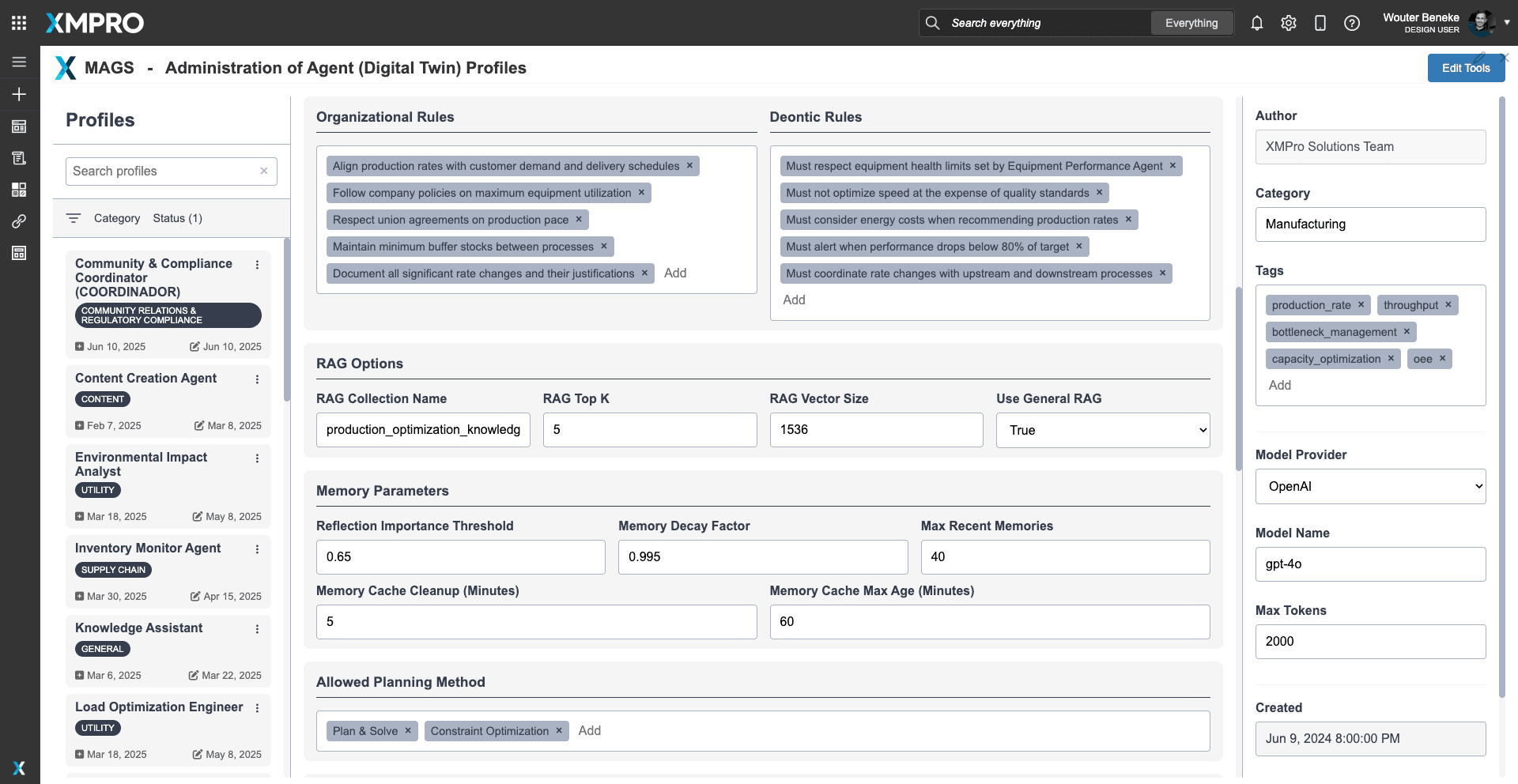
The Production Rate Agent operates with an internal parametric Agent Objective Function that guides its reasoning and action planning. This objective function is aligned with the MAGS Team Objective Function for throughput optimization and is implemented as a structured reasoning framework rather than a static mathematical formula.
Through this framework, the agent balances multiple priorities as it works to maximize sustainable production throughput within bounded autonomy constraints. These priorities are implemented as configurable parameters that can be tuned to reflect line criticality, production context, and organizational goals. Key reasoning priorities typically include the following:
-
Throughput optimization
Prioritizing actions that maximize production flow and minimize bottlenecks — without compromising equipment reliability or product quality. -
Engineering and quality compliance
Ensuring all recommendations are validated against equipment capacity, quality standards, and operational constraints. -
Recommendation trustworthiness
Minimizing false positives and providing transparent, explainable reasoning paths to build operator and SME trust in production optimization decisions. -
Pacing and intervention balance
Weighing the trade-off between accelerating production and maintaining stable, predictable process control and flow consistency. -
Team alignment
Contributing to the MAGS Team Objective Function through consensus-based coordination with Equipment Performance, Quality Control, Maintenance, and Energy Agents.
The parametric nature of the agent’s objective function enables dynamic tuning based on real-world priorities. For example, weights can be adjusted to:
-
Prioritize maximum throughput for time-critical production orders.
-
Apply more conservative pacing during startup, commissioning, or after equipment maintenance.
-
Balance throughput vs. quality risk when operating at or near equipment or process limits.
-
Shift optimization priorities dynamically based on demand forecasts, shift patterns, or supply chain variability.
The agent continuously refines its reasoning through the observe, reflect, plan, act cycle and learns from production outcomes and SME feedback. This ensures that its decision framework remains aligned with evolving production priorities and supports adaptive, governed optimization strategies across the production lifecycle.
Importing the Agent into XMPro APEX
Importing and Deploying the Agent in XMPro APEX AI
To deploy the Production Rate Agent, download the agent profile JSON configuration file and access the XMPro APEX AI interface. APEX AI provides governance and lifecycle management for Decision Agents across XMPro’s AO Platform.
Import the agent profile through APEX AI, which includes the agent’s configuration parameters, objective function priorities, bounded autonomy settings, and governance constraints. After import, use XMPro’s StreamDesigner to configure real-time data connections to your MES, SCADA/PLC systems, ERP, and other relevant production data sources. This provides the agent with the grounded, context-rich information required for its reasoning and decision cycles.
Once deployed, the agent operates within the defined governance framework and operational boundaries. It begins its observe, reflect, plan, act cycle immediately, continuously learning from production outcomes and contributing explainable recommendations to throughput optimization workflows. Ongoing governance tuning and parameter adjustments can be performed through APEX AI to ensure alignment with evolving business priorities and dynamic production conditions.
MAGS Teams Leveraging This Agent
XMPro’s Multi-Agent Generative Systems MAGS are collaborative teams of specialized agents that reason, plan, and act together to optimize complex industrial operations. Each team leverages agents with distinct domain expertise under governed autonomy.
How XMPro AO Platform Modules Enable the Production Rate Agent
Data Integration & Transformation
Artificial Intelligence & Generative Agents
Intelligence & Decision Making
Visualization & Event Response

XMPro StreamDesigner
XMPRO’s StreamDesigner lets you visually design the data flow and orchestration for your real-time applications. Our drag & drop connectors make it easy to bring in real-time data from a variety of sources, add contextual data from systems like EAM, apply native and third-party analytics and initiate actions based on events in your data.
How StreamDesigner Enables the Production Rate Agent
The Production Rate Agent relies on XMPro’s StreamDesigner to provide continuous streams of verified, context-rich data about production flow, capacity utilization, and operating conditions. This data foundation enables the agent’s observe → reflect → plan → act cycle and ensures that its decisions are grounded in operational truth.
StreamDesigner orchestrates real-time data acquisition, contextual enrichment, and engineering validation across production systems. It connects the agent to throughput, cycle time, WIP, capacity, and equipment status data, while also integrating production targets, quality context, and operational constraints. By enforcing truth-grounding and operational boundaries, StreamDesigner enables the agent to contribute trusted, explainable throughput optimization recommendations that align with engineering standards and production governance frameworks.
1. Real-Time Data Acquisition & Integration
StreamDesigner connects to multiple production data sources and streams them in real time to the agent environment:
-
Throughput data (units produced per hour / takt time)
-
Cycle time trends and variances
-
Capacity utilization by line, work center, and equipment
-
WIP (Work In Progress) levels at key points in the process
-
Equipment status (availability, performance, constraints)
-
Quality metrics and in-line inspection results
-
Maintenance status and intervention history
-
Production orders and shift plans (MES / ERP)
-
Demand forecasts and scheduling constraints
This continuous data stream provides the Production Rate Agent with the observations required to detect bottlenecks, optimize pacing, and balance competing flow constraints in real time.
2. Contextual Data Enrichment
StreamDesigner enriches raw production data with essential context:
-
Equipment specifications and operational limits
-
Process models and flow characteristics
-
Maintenance interventions and current asset condition
-
Quality standards and product-specific tolerances
-
Demand priorities and delivery commitments
-
Workforce availability and shift patterns
-
Energy constraints and sustainability targets
This enrichment enables the agent to reason accurately about the significance of observed flow patterns and to tailor its recommendations accordingly.
3. Grounding Agents in Operational Truth
StreamDesigner ensures that the agent reasons on verified, real-world data:
-
Validates production data against equipment limits and process flow models
-
Cross-checks redundant data sources (MES, SCADA, ERP) for consistency
-
Flags anomalous or suspect readings (e.g., throughput spikes or cycle time outliers) for SME review
-
Applies first-principles flow and capacity models to filter and structure data
-
Embeds domain knowledge to interpret complex flow dynamics and bottleneck behaviors
This grounding ensures that the agent avoids hallucination and generates recommendations that reflect actual production realities.
4. Creating Bounded Autonomy
StreamDesigner defines and enforces operational boundaries for the agent:
-
Implements safety-critical and equipment protection limits that cannot be overridden
-
Defines process guardrails for acceptable line speeds and pacing
-
Specifies conditions requiring SME approval (e.g., aggressive speed-up recommendations near quality or reliability limits)
-
Configures autonomy progression based on agent confidence and operational risk
-
Aligns agent reasoning with production governance policies, quality standards, and equipment constraints
These boundaries ensure that the agent contributes trusted, explainable decision support within a governed optimization framework.
5. Enabling Composite AI Approaches
StreamDesigner enables the agent’s Composite AI reasoning by integrating:
-
Process flow models for line dynamics and bottleneck behavior
-
Expert rule-based logic for known production flow scenarios and interventions
-
Causal reasoning to uncover root causes of throughput constraints
-
Machine learning and statistical models for subtle trend detection and optimization opportunities
-
Contextual signals from production history, maintenance records, and quality trends
This multi-modal reasoning capability allows the agent to handle both routine throughput optimization and novel production situations effectively.
6. Action Implementation & Execution
StreamDesigner supports the agent’s ability to initiate closed-loop production optimization actions:
-
Generates structured optimization recommendations routed through XMPro Recommendation Manager
-
Provides advisory or automated pacing adjustments to MES / production control systems
-
Sends contextual alerts and advisories to production supervisors and operations teams
-
Updates digital twin representations with current production status and flow insights
-
Logs recommendations and outcomes to support continuous learning and auditability
This action loop closes the agent’s cognitive cycle and ensures that its decisions lead to measurable production performance improvements.
XMPro AI
XMPro AI delivers industrial-grade artificial intelligence specifically designed for mission-critical operations. As an integral component of XMPro's AO Platform, it provides a unified framework for creating, deploying, and managing AI solutions that are truth-grounded, explainable, and actionable. Unlike consumer-focused AI, XMPro AI is built from the ground up for environments where safety, reliability, and precision cannot be compromised.
How XMPro AI Powers the Production Rate Agent
The Production Rate Agent relies on XMPro AI to reason transparently and reliably about production flow dynamics, bottleneck behaviors, and capacity optimization opportunities. XMPro AI delivers an integrated Composite AI framework that enables the agent to move beyond simple monitoring — it provides explainable decision support aligned with engineering truth and organizational production priorities.
Unlike traditional production dashboards or static KPI reports, XMPro AI enables the Production Rate Agent to reason through process flow models, expert rules, causal relationships, and machine learning — all within a governed, bounded autonomy framework. This ensures that throughput optimization recommendations are trusted, explainable, and aligned with enterprise production strategies.
1. Composite AI Framework for Production Optimization
The Production Rate Agent integrates multiple AI reasoning approaches to deliver trusted production optimization decision support:
-
Process flow models: Models line dynamics, flow constraints, and capacity interdependencies across equipment and work centers.
-
Expert rules: Encodes line balancing best practices, known bottleneck scenarios, and quality-maintenance trade-offs.
-
Causal reasoning: Identifies true cause-effect relationships behind observed flow disruptions or throughput variability.
-
Machine learning and statistical analysis: Detects subtle patterns of flow inefficiency and anticipates emerging bottlenecks based on historical and real-time production data.
-
Contextual reasoning: Incorporates production orders, demand priorities, maintenance status, quality trends, and operational constraints to tailor optimization recommendations.
This composite AI approach ensures that the agent provides not just throughput predictions, but grounded, explainable, and actionable flow optimization insights.
2. Truth-Grounding for Reliable Operation
XMPro AI implements multi-layered truth-grounding mechanisms to ensure agent reasoning remains aligned with operational production reality:
-
First-principles validation: Validates recommendations against equipment capabilities, quality standards, and line constraints.
-
Expert rule enforcement: Applies formal logic and domain knowledge to prevent unsafe or infeasible pacing adjustments or line balance changes.
-
Evidentiary reasoning: Recommendations are based on verifiable production data and include transparent reasoning paths.
-
Cross-agent validation: When used in MAGS teams, the Production Rate Agent cross-validates reasoning with peer agents to ensure aligned and trusted optimization decisions.
These mechanisms ensure that production optimization decisions are explainable and trusted by production engineers and operators.
3. Multi-Agent Generative Systems (MAGS) Alignment
While the Production Rate Agent can operate as a standalone Decision Agent, it also integrates seamlessly with MAGS teams when required:
-
Specialist role: Acts as the performance optimizer within MAGS-based OEE optimization or production optimization teams.
-
Continuous cognitive cycle: Follows the observe → reflect → plan → act loop, continuously adapting reasoning based on new production data and outcomes.
-
Team-based collaboration: Participates in consensus-based agent coordination when working alongside Equipment Performance, Quality Control, Maintenance Coordinator, or Energy Management agents.
-
Collective learning: Contributes insights and learns from peer agents to improve system-wide production intelligence over time.
4. Role-Based AI Experiences
XMPro AI supports multiple experience modes for different user roles interacting with the Production Rate Agent:
-
AI Expert Mode: Provides advanced autonomous production optimization reasoning, with detailed transparency for production engineers and SMEs.
-
AI Advisor Mode: Delivers proactive throughput optimization recommendations and flow advisories for production planners and supervisors.
-
AI Assistant Mode: Supports on-demand queries and contextual explanations for line operators and shift leaders.
-
Configuration tools: Enables engineers to tune agent parameters, objective function priorities, and bounded autonomy settings through APEX AI.
This ensures that each user group can interact with the agent in a way that supports trust, explainability, and effective collaboration.
5. Bounded Autonomy and Governance
XMPro AI implements a comprehensive governance framework to ensure the Production Rate Agent operates safely and transparently:
-
Bounded autonomy constraints: Define which recommendations the agent can autonomously initiate versus those requiring human approval.
-
Graduated autonomy: Supports progression from advisory-only to semi-autonomous throughput optimization actions as confidence and trust increase.
-
Human oversight: Maintains human-in-loop control for high-risk optimization decisions, such as operating near quality or reliability limits.
-
Audit trails: Provides full traceability of all agent reasoning paths, recommendations, and actions.
-
Governance guardrails: Enforces alignment with organizational production, quality, and operational risk policies.
6. Measurable Production Outcomes
XMPro AI enables the Production Rate Agent to deliver measurable outcomes across key production performance metrics:
-
Throughput performance: Supports proactive interventions that improve line flow and increase units produced per hour.
-
Capacity utilization: Enables better balancing of production flow, reducing underutilization and bottleneck effects.
-
Production efficiency: Reduces cycle time variability and improves flow consistency across the line.
-
Production planning: Improves prioritization and real-time adjustment of production targets, supporting responsive scheduling.
-
Decision transparency: Builds trust in AI-driven production optimization through explainable reasoning and transparent agent behaviors.
Through its composite AI framework, truth-grounding mechanisms, and governed autonomy controls, XMPro AI enables the Production Rate Agent to deliver trusted, explainable, and adaptive production optimization decision support — empowering production teams to move beyond manual interventions and toward intelligence-driven manufacturing flow management.
Recommendation Manager
XMPRO Recommendations are advanced event alerts that combine alerts, actions, and monitoring. You can create recommendations based on business rules and AI logic to recommend the best next actions to take when a certain event happens. You can also monitor the actions against the outcomes they create to continuously improve your decision-making.
How Recommendation Manager Enables the Production Rate Agent
The Production Rate Agent generates transparent, explainable production optimization recommendations based on its Composite AI reasoning. XMPro’s Recommendation Manager governs how these recommendations are prioritized, evaluated, and routed within the organization — ensuring that production decisions remain aligned with engineering truth, operational priorities, and enterprise governance.
Recommendation Manager provides a flexible interface between the agent’s cognitive cycle and enterprise production workflows. It supports both advisory and semi-autonomous action pathways, maintains human-in-loop control where required, and provides full traceability for all recommendations and outcomes. This governance layer is key to enabling trusted, explainable, and effective AI-driven production optimization.
1. How Recommendation Manager Interfaces with the Production Rate Agent
The Production Rate Agent reasons continuously through its observe → reflect → plan → act cycle.
The agent produces explainable production optimization recommendations, which are routed through Recommendation Manager for governance and delivery.
Recommendation Manager ensures that agent recommendations:
-
Comply with organizational production, quality, and safety policies
-
Are appropriately prioritized and routed based on impact and risk
-
Maintain full transparency and auditability for engineering, operations, and compliance review
This governance pathway is a key differentiator from consumer AI or black-box predictive models — it ensures trust and alignment.
2. MAGS Output Pathways
The Production Rate Agent supports two primary output pathways, governed by organizational readiness and risk tolerance:
-
Direct action path: For low-risk, bounded actions (e.g. pacing adjustments within safe limits, optimization of non-critical line balancing), the agent may trigger actions directly via StreamDesigner integrations.
-
Recommendation path: For higher-risk or high-impact actions (e.g. increasing throughput near equipment or quality limits, changes affecting production priorities), the agent routes recommendations through Recommendation Manager for evaluation and human-in-loop approval.
This flexible structure allows organizations to implement the right balance of autonomy and control for their specific operational needs.
3. Recommendation Manager’s Role in Production Governance
Evaluation framework:
-
Scores and prioritizes recommendations based on business rules and production governance policies.
-
Applies formal constraints to prevent unsafe, infeasible, or quality-compromising actions.
-
Balances competing factors such as throughput, equipment health, quality targets, and delivery commitments.
Business-aligned decision logic:
-
Reflects organizational production standards and best practices.
-
Supports line-specific and product-specific policies (e.g. critical orders may require higher approval thresholds).
-
Incorporates lean manufacturing and flow optimization principles into recommendation scoring.
4. Human-AI Collaboration Interface
Recommendation Manager provides a transparent, collaborative interface for human-AI interaction:
-
Routes high-impact recommendations to appropriate production stakeholders for review and approval.
-
Presents agent reasoning paths and confidence scores alongside recommendations.
-
Provides context and supporting evidence (production data, flow trends, causal reasoning).
-
Captures human feedback (approval, modification, rejection), supporting agent learning and continuous improvement.
This collaborative approach ensures that AI-driven production optimization builds trust and complements human expertise.
5. Governance and Bounded Autonomy
XMPro implements multiple layers of governance through Recommendation Manager:
-
At the agent profile level: Defines which types of production optimization actions the Production Rate Agent is permitted to recommend or trigger autonomously.
-
In data streams: Enforces hard limits and operational boundaries that cannot be overridden.
-
Through Recommendation Manager: Applies additional business rules and evaluation logic to all agent recommendations prior to execution.
This governance framework ensures that autonomous production optimization operates safely, transparently, and in alignment with organizational risk policies.
6. Transparent, Data-Backed Insights
Recommendation Manager ensures full traceability for all agent-driven production insights:
-
Links recommendations to specific production data, patterns, and historical evidence.
-
Exposes agent reasoning and evaluation criteria to production stakeholders.
-
Provides confidence scores and uncertainty factors to support risk-informed decision making.
-
Maintains complete audit trails for compliance, learning, and continuous improvement.
This transparency is critical for building trust in AI-driven production optimization and ensuring long-term operational adoption.
Through its governance framework, transparent human-AI collaboration interface, and flexible autonomy controls, XMPro Recommendation Manager enables the Production Rate Agent to contribute trusted, explainable production optimization decision support — helping organizations implement proactive, intelligence-driven manufacturing strategies while maintaining human oversight and control.

XMPro App Designer
The XMPro App Designer is a no code event intelligence application development platform. It enables Subject Matter Experts (SMEs) to create and deploy real-time intelligent digital twins without programming. This means that SMEs can build apps in days or weeks without further overloading IT, enabling your organization to accelerate and scale your digital transformation.
How App Designer Creates the Human-AI Interface for Production Teams
The Production Rate Agent delivers explainable, trusted production optimization recommendations — but human oversight and collaboration remain essential. XMPro’s App Designer provides the critical visualization and interaction layer between the agent and the people responsible for managing production flow.
App Designer transforms complex production data, agent reasoning, and optimization recommendations into intuitive, role-specific interfaces. It enables production engineers, supervisors, planners, and operators to understand the agent’s insights, collaborate on decision-making, and provide feedback that improves agent performance over time. This human-centered interface is key to ensuring trust, transparency, and adoption of AI-driven production intelligence.
1. Role-Based Production Interfaces
App Designer supports role-specific interfaces to match the needs of different stakeholders:
-
Production engineers: Interactive throughput dashboards, bottleneck visualizations, agent reasoning insights, and historical flow analysis.
-
Production planners: Prioritized optimization recommendations, scheduling tools, integration with MES/ERP systems.
-
Line operators: Real-time production status views, actionable pacing advisories, and easy access to relevant agent recommendations.
-
Operations management: High-level KPIs related to throughput, capacity utilization, and performance of AI-driven optimization strategies.
These tailored interfaces ensure that each stakeholder engages with the agent in a way that matches their role, expertise, and operational responsibilities.
2. Digital Twin Visualization
App Designer brings the production digital twin to life by integrating agent insights with real-time operational data:
-
Line-level visualizations with current throughput, cycle times, and capacity indicators.
-
Historical trend views to support flow optimization and bottleneck root cause analysis.
-
Anomaly detection overlays highlighting abnormal flow patterns or capacity shifts.
-
Intervention timelines linked to production performance.
-
Causal visualizations showing relationships between agent recommendations and observed production dynamics.
These visualizations help production teams move beyond static dashboards toward actionable, intelligence-driven flow optimization.
3. Agent Interaction Framework
App Designer provides an interactive interface for human-AI collaboration:
-
Displays the agent’s current observations, reflections, and planned optimization actions.
-
Presents reasoning paths and supporting evidence behind each recommendation.
-
Supports human review and approval workflows for higher-risk recommendations (e.g. operating near capacity or quality limits).
-
Allows production teams to query the agent using natural language or predefined queries.
-
Captures human feedback to inform agent learning and continuous improvement.
This framework ensures that AI-driven production optimization remains transparent, trusted, and integrated with human expertise.
4. Contextual Decision Support
App Designer delivers contextual intelligence at the point of decision:
-
Presents optimization recommendations in the context of current production priorities, equipment status, and quality constraints.
-
Provides embedded analytics showing potential impact of different flow optimization options.
-
Displays relevant work instructions, standard operating procedures, and process constraints alongside recommendations.
-
Supports scenario simulation to help planners and engineers evaluate alternative pacing and balancing strategies.
-
Provides direct links to MES/ERP systems for streamlined action.
This contextual support ensures that production decisions are informed, efficient, and aligned with operational priorities.
5. No-Code Configuration
App Designer empowers production teams to rapidly configure and evolve their interfaces:
-
Allows SMEs to create and modify dashboards and visualizations without programming.
-
Provides pre-built components for common production views (e.g. throughput trends, WIP profiles, bottleneck heatmaps).
-
Enables drag-and-drop composition of interfaces from reusable elements.
-
Supports visual data binding to live data streams and agent outputs.
-
Facilitates rapid iteration and continuous improvement of production visualization tools.
This no-code capability accelerates adoption and empowers subject matter experts to adapt the human-AI interface as operational needs evolve.
6. Integration with Production Systems
App Designer integrates seamlessly with enterprise production and operations systems:
-
Embeds agent-driven insights into existing production portals and dashboards.
-
Supports single sign-on and integration with corporate identity systems.
-
Enables bi-directional integration with MES/ERP platforms (e.g. for schedule adjustments, priority changes).
-
Integrates with mobile apps to support real-time visibility and operator workflows.
-
Provides unified reporting across AI-driven and traditional production optimization activities.
This integration ensures that the Production Rate Agent’s insights become part of the organization’s broader production intelligence ecosystem — not an isolated AI feature.
Through App Designer’s role-specific interfaces, contextual decision support, and seamless integration with production workflows, the Production Rate Agent becomes a trusted, transparent contributor to enterprise manufacturing strategies — enabling human-AI collaboration that delivers measurable production performance improvements.
Not Sure How To Get Started?
No matter where you are on your digital transformation journey, the expert team at XMPro can help guide you every step of the way - We have helped clients successfully implement and deploy projects with Over 10x ROI in only a matter of weeks!
Request a free online consultation for your business problem.
"*" indicates required fields