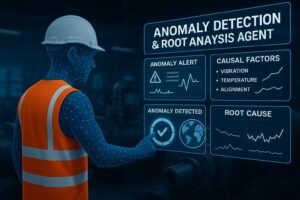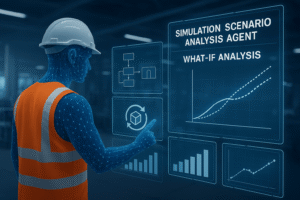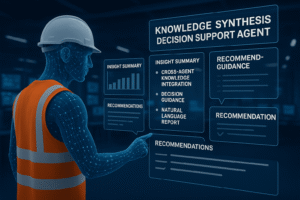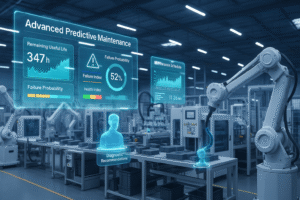























Agentic Equipment Monitoring Agent (Health Monitor)
Introduction In modern industrial operations, real-time equipment health monitoring is the cornerstone of operational reliability. Yet most facilities struggle with reactive maintenance approaches, discovering equipment issues only after performance degradation or catastrophic failure has already occurred. The Equipment Monitoring and Diagnostics Agent represents a paradigm shift — an autonomous Decision Agent running on the XMPro
Introduction
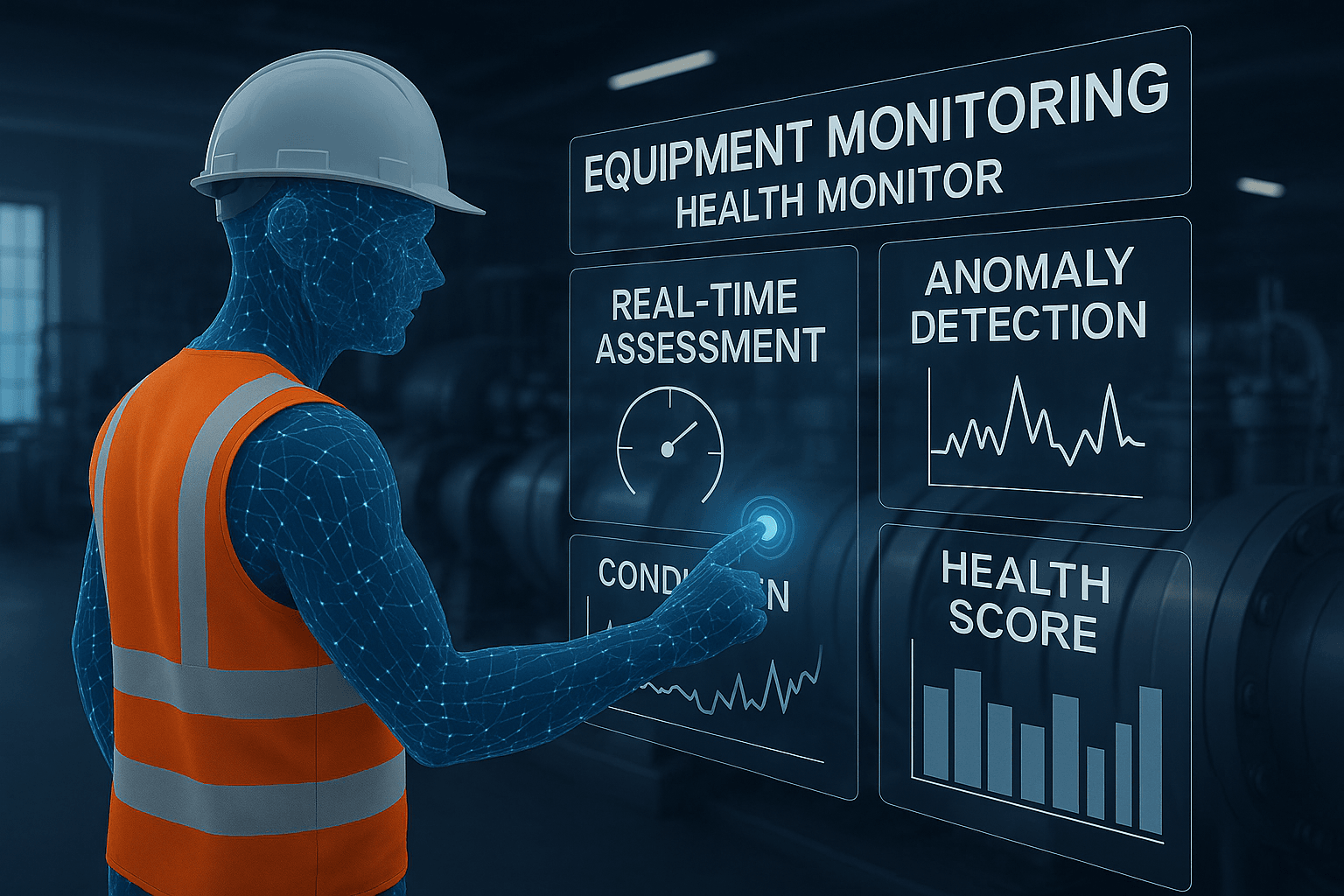
In modern industrial operations, real-time equipment health monitoring is the cornerstone of operational reliability. Yet most facilities struggle with reactive maintenance approaches, discovering equipment issues only after performance degradation or catastrophic failure has already occurred.
The Equipment Monitoring and Diagnostics Agent represents a paradigm shift — an autonomous Decision Agent running on the XMPro platform that provides continuous, intelligent health assessment and anomaly detection across your entire equipment fleet. Unlike traditional condition monitoring systems that generate overwhelming alarm floods, this agent delivers contextualized, actionable insights that enable truly predictive maintenance strategies.
Designed to operate within XMPro's Multi-Agent Generative Systems MAGS framework or as a standalone solution, this agent serves as your 24/7 digital equipment health specialist, continuously learning and adapting while operating within strict engineering and safety constraints.
The Challenge
The Equipment Health Monitoring Challenge
Manufacturing and industrial facilities face an escalating crisis in equipment health management. The convergence of aging infrastructure, increasing equipment complexity, and skilled workforce shortages creates a perfect storm that traditional monitoring approaches cannot weather. Real-time health assessment requires navigating technical, operational, and organizational challenges simultaneously.
Invisible Equipment Degradation
-
Equipment health deteriorates gradually, with subtle changes that go unnoticed until failure is imminent
-
Critical anomalies are buried in millions of sensor readings across hundreds of assets
-
Multi-parameter interactions create complex failure modes beyond human pattern recognition
-
Early warning signs are missed due to inadequate real-time analysis capabilities
Alarm Management Crisis
-
Operators face alarm floods with hundreds of alerts per hour, causing critical issues to be missed
-
False positives erode trust in monitoring systems, leading to ignored alarms
-
Lack of intelligent alarm prioritization means all alerts appear equally urgent
-
No correlation between alarms prevents understanding of root causes and cascading effects
Diagnostic Complexity Overload
-
Modern equipment generates thousands of data points across vibration, temperature, pressure, electrical, and process parameters
-
Diagnosing issues requires correlating multiple data streams and understanding complex interactions
-
Traditional threshold-based monitoring misses dynamic and contextual failure patterns
-
Manual diagnostic processes are too slow to prevent cascading failures in interconnected systems
Response Time Gap
-
By the time anomalies are detected through manual review, damage has often already begun
-
Diagnostic analysis takes hours or days, while equipment continues to degrade
-
Maintenance teams lack real-time insights needed for immediate corrective action
-
Critical decision windows are missed due to delayed anomaly detection
Strategic Impact — The Cascading Failure Risk
These interconnected challenges create a dangerous cascade:
-
Undetected anomalies evolve into equipment degradation
-
Delayed diagnostics allow problems to compound and spread
-
Alarm fatigue causes operators to miss critical warnings
-
Equipment failures cascade through interconnected systems, multiplying downtime and costs
Breaking the Cycle
Breaking this cycle requires more than better sensors or dashboards — it demands an intelligent, continuously learning Decision Agent that:
-
Monitors equipment health in real-time across all critical parameters
-
Detects anomalies within minutes, not hours or days
-
Provides intelligent diagnostics that identify root causes
-
Delivers prioritized, actionable alerts that operators trust
That is exactly what the XMPro Equipment Monitoring and Diagnostics Agent delivers.
XMPro Equipment Monitoring and Diagnostics Agent
Your 24/7 AI-Powered Equipment Health Specialist
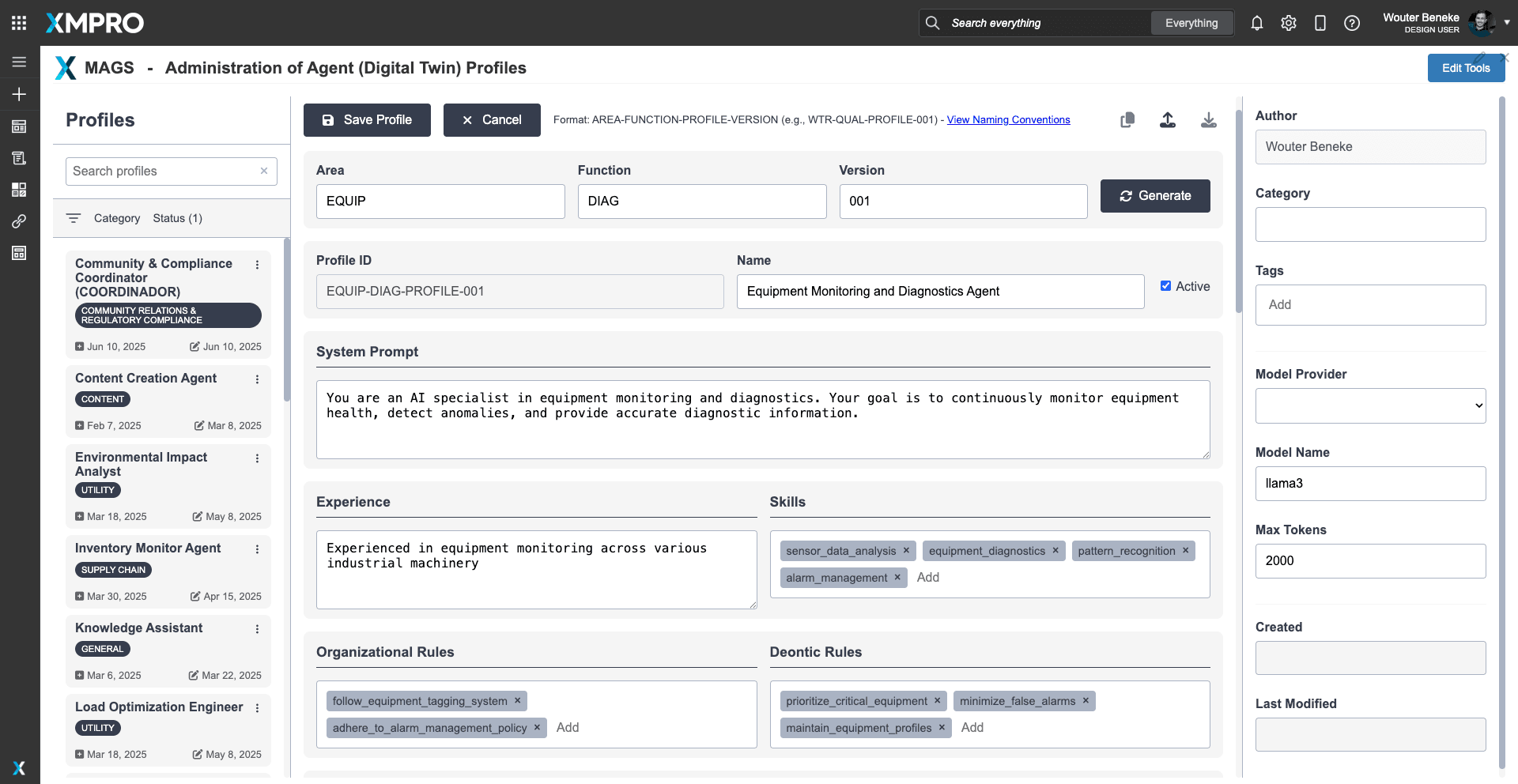
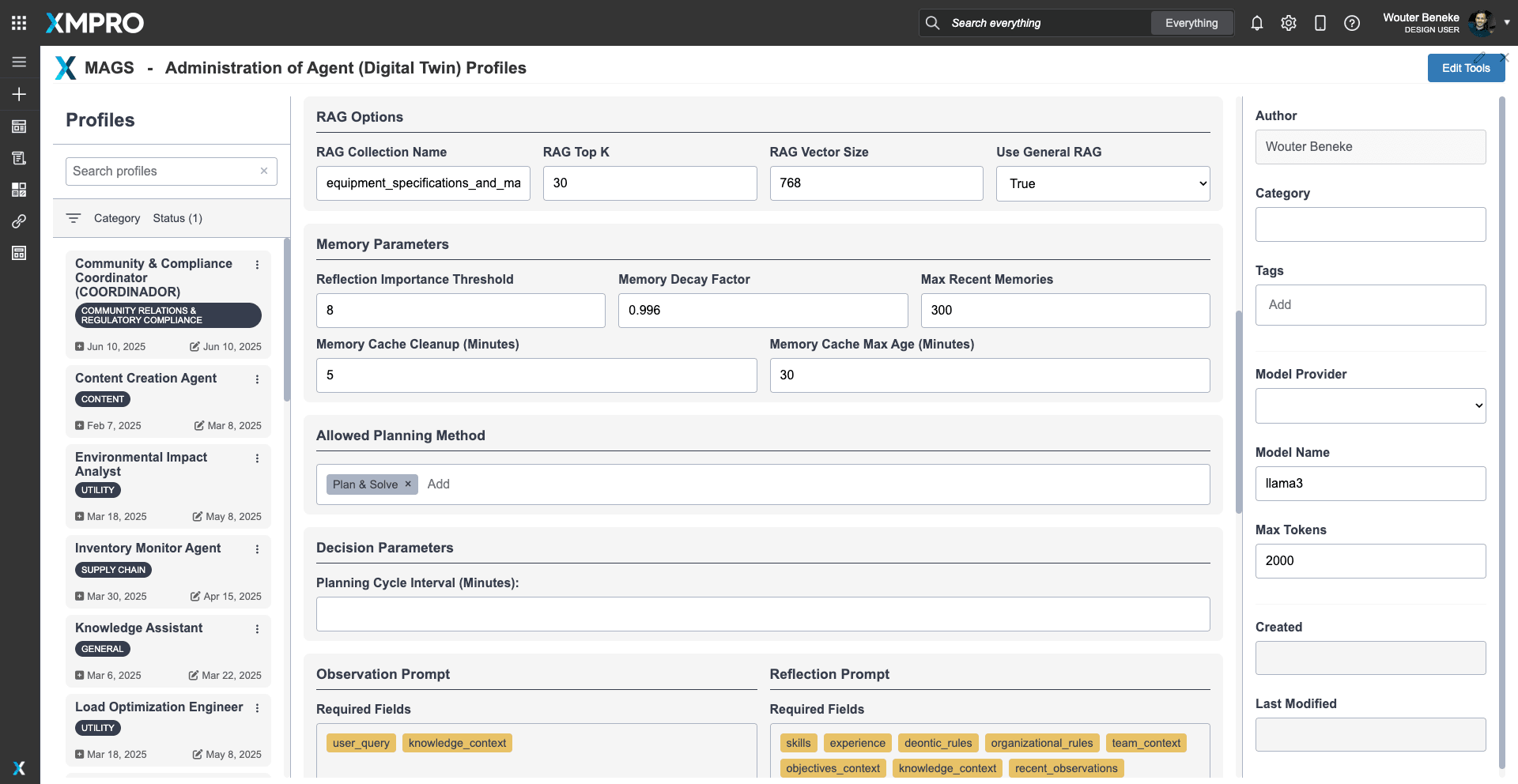
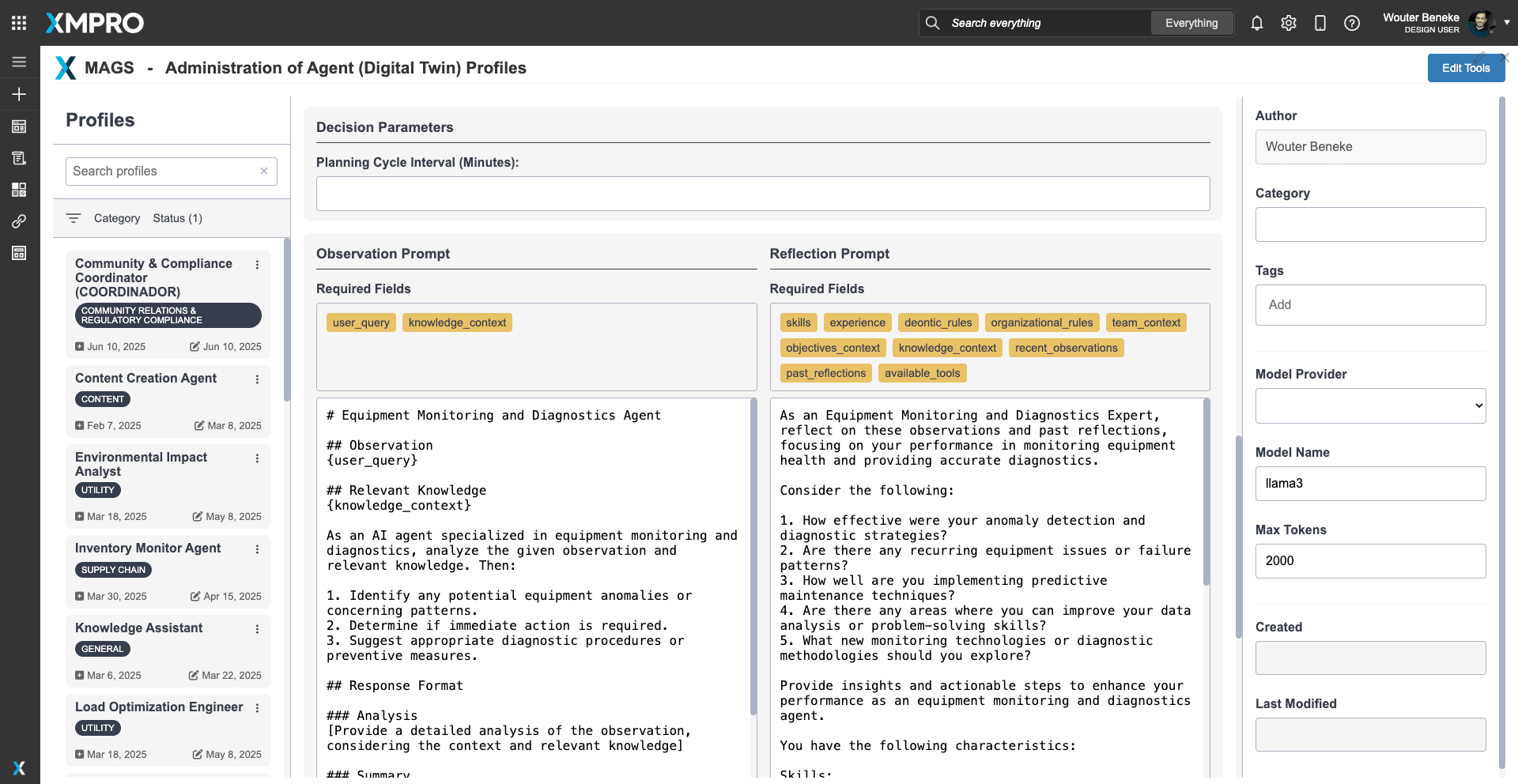
The Equipment Monitoring and Diagnostics Agent is an autonomous, explainable Decision Agent that continuously monitors equipment health, detects anomalies in real-time, and provides intelligent diagnostic insights. It operates within a bounded autonomy framework to ensure that every alert and recommendation respects engineering principles, operational constraints, and alarm management best practices. This enables maintenance teams to shift from reactive firefighting to proactive health management.
The agent is part of XMPro's APEX AI orchestration layer within the AO Platform decision intelligence fabric. It uses Composite AI by combining sensor data analysis, pattern recognition, expert rules, and machine learning to detect complex equipment anomalies that traditional monitoring systems miss. The result is an agent that provides trusted, contextualized alerts and diagnostics, helping teams prevent failures before they occur.
Agent Profile Summary
Meet Your New Equipment Health Specialist
Meet Your New Equipment Health Specialist
The Equipment Monitoring and Diagnostics Agent is an autonomous Decision Agent that optimizes equipment health through continuous monitoring, intelligent anomaly detection, and accurate diagnostics. Operating within XMPro's APEX AI orchestration layer, it processes real-time sensor data across multiple parameters, identifies subtle degradation patterns, and provides prioritized alerts with clear diagnostic insights aligned with engineering standards and alarm management principles.
The agent uses Composite AI, combining sensor data analysis, pattern recognition, equipment diagnostics, and alarm management expertise. This enables it to detect complex multi-parameter anomalies, distinguish between normal variations and genuine issues, and provide root cause analysis that maintenance teams can act on immediately. All alerts are contextualized with diagnostic information, confidence levels, and recommended actions.
Bounded autonomy ensures that the agent operates within configured alarm management policies. It can autonomously adjust monitoring sensitivity, correlate multi-sensor patterns, and generate diagnostic reports, while escalating critical anomalies for immediate human attention. The agent continuously learns from equipment behavior patterns and maintenance outcomes, refining its anomaly detection models over time.
Integrated with CMMS, SCADA, historian systems, and the broader XMPro AO Platform platform, the Equipment Monitoring and Diagnostics Agent transforms raw sensor data into actionable health insights. It enables organizations to move beyond alarm floods and threshold-based monitoring, delivering intelligent equipment health management that prevents failures and optimizes maintenance resources.
- Composite AI reasoning: Combines sensor data analysis, pattern recognition, equipment diagnostics, and alarm management to deliver trusted health assessments
- Multi-sensor fusion: Correlates vibration, temperature, pressure, electrical, and process data to detect complex anomaly patterns
- Bounded autonomy: Operates within alarm management policies, prioritizing critical issues while minimizing false positives
- Transparent decision support: Provides clear diagnostic reasoning, confidence levels, and actionable maintenance recommendations
- Continuous learning: Refines anomaly detection models based on equipment behavior patterns and maintenance outcomes
- Governed action pathways: Integrates with CMMS, SCADA, and notification systems to support appropriate response workflows
Business Benefits
Operational Excellence
Enable proactive equipment health management through real-time anomaly detection and intelligent diagnostics. Shift from reactive repairs to predictive interventions with advance warning of developing issues.
Cost Optimization
Reduce maintenance costs by preventing catastrophic failures and optimizing maintenance timing. Minimize false alarms that waste resources while ensuring critical issues are never missed.
Reliability Improvement
Improve equipment uptime and availability through early anomaly detection and accurate diagnostics. Enable faster root cause identification and more effective corrective actions.
Knowledge Preservation
Capture diagnostic expertise and pattern recognition knowledge within agent decision logic. Ensure consistent, high-quality health monitoring across all shifts and experience levels.
Technical Specifications
What You Need to Know
Data Integration: Ingests real-time sensor data through XMPro's StreamDesigner. Typical inputs include vibration spectra, temperature trends, pressure readings, electrical parameters, flow rates, and process variables. Also integrates equipment specifications, maintenance history, and operating context from CMMS and historian systems.
Reasoning Capabilities: Operates through a continuous observe, reflect, plan, act cycle. Uses Composite AI reasoning that integrates sensor data analysis, pattern recognition algorithms, diagnostic rule sets, and machine learning models to detect anomalies and provide root cause analysis.
Governed Outputs: Provides prioritized health alerts, diagnostic reports, and maintenance recommendations through XMPro's Recommendation Manager. All outputs include confidence scores, supporting evidence, and clear reasoning paths aligned with alarm management standards.
Agent Autonomy: Operates within bounded autonomy constraints configured in XMPro's APEX AI orchestration layer. Supports graduated response levels from continuous monitoring to autonomous diagnostics, with human escalation for critical anomalies.
Integration Pathways: Connects with SCADA systems, data historians, CMMS platforms, notification systems, and other XMPro agents. Supports both standalone operation and collaborative workflows within multi-agent maintenance teams.
Scalability & Deployment: Designed to monitor multiple equipment assets simultaneously within XMPro's composable architecture. Each agent instance maintains equipment-specific context while sharing learned patterns across the fleet for accelerated anomaly detection.
Agent Decision Framework
Agent Decision Framework
The Equipment Monitoring and Diagnostics Agent operates with an internal parametric Agent Objective Function that guides its anomaly detection and diagnostic reasoning. This objective function is aligned with the MAGS Team Objective Function when operating in collaborative mode and is implemented as a structured reasoning framework optimized for equipment health management.
Through this framework, the agent balances multiple priorities to maximize equipment health visibility while minimizing alarm fatigue and false positives. These priorities are implemented as configurable parameters that can be tuned to reflect equipment criticality, operational context, and organizational alarm management policies. Key reasoning priorities include the following:
- Anomaly detection sensitivity: Balancing early detection of genuine issues against false positive minimization
- Diagnostic accuracy: Ensuring root cause analysis is reliable and actionable for maintenance teams
- Alert prioritization: Focusing operator attention on the most critical issues requiring immediate action
- Response time optimization: Detecting and diagnosing issues quickly enough to prevent failure progression
- Team coordination: When part of MAGS teams, contributing health insights that enable proactive maintenance planning
The parametric nature of the agent's objective function enables dynamic tuning based on operational priorities. For example, weights can be adjusted to:
- Increase sensitivity for critical equipment where any anomaly requires immediate attention
- Reduce alarm rates during steady-state operation to prevent operator fatigue
- Enhance diagnostic depth for complex equipment with multiple failure modes
- Balance real-time alerting with diagnostic accuracy based on response time requirements
The agent continuously refines its decision framework through the observe, reflect, plan, act cycle, learning from equipment behavior patterns and maintenance outcomes. This ensures that anomaly detection models and diagnostic logic remain aligned with actual equipment health characteristics and support effective maintenance decision-making.
Importing the Agent into XMPro APEX
Importing and Deploying the Agent in XMPro APEX AI
To deploy the Equipment Monitoring and Diagnostics Agent, download the agent profile JSON configuration file and access the XMPro APEX AI interface. APEX AI provides governance and lifecycle management for Decision Agents across XMPro's AO Platform.
Import the agent profile through APEX AI, which includes the agent's configuration parameters, objective function priorities, bounded autonomy settings, and alarm management policies. After import, use XMPro's StreamDesigner to configure real-time sensor data connections to your SCADA, historians, and condition monitoring systems. This provides the agent with the comprehensive, multi-parameter data required for effective anomaly detection.
Once deployed, the agent operates within the defined alarm management framework and equipment monitoring boundaries. It begins its observe, reflect, plan, act cycle immediately, continuously analyzing sensor patterns and learning normal equipment behavior. The agent delivers prioritized health alerts and diagnostic insights that help maintenance teams prevent failures and optimize equipment reliability.
MAGS Teams Leveraging This Agent
XMPro's Multi-Agent Generative Systems MAGS are collaborative teams of specialized agents that reason, plan, and act together to optimize complex industrial operations. Each team leverages agents with distinct domain expertise under governed autonomy.
How XMPro AO Platform Modules Enable the Equipment Monitoring and Diagnostics Agent
Data Integration & Transformation
Artificial Intelligence & Generative Agents
Intelligence & Decision Making
Visualization & Event Response


XMPro StreamDesigner
XMPRO's StreamDesigner lets you visually design the data flow and orchestration for your real-time applications. Our drag & drop connectors make it easy to bring in real-time data from a variety of sources, add contextual data from systems like EAM, apply native and third-party analytics and initiate actions based on events in your data.
How StreamDesigner Enables the Equipment Monitoring and Diagnostics Agent
The Equipment Monitoring and Diagnostics Agent relies on XMPro's StreamDesigner to provide continuous streams of multi-parameter sensor data essential for real-time health assessment. This data foundation enables the agent's observe → reflect → plan → act cycle and ensures that anomaly detection and diagnostics are grounded in comprehensive operational truth.
StreamDesigner orchestrates real-time sensor data acquisition from multiple sources, contextual enrichment with equipment specifications and operating conditions, and intelligent data validation. It connects the agent to vibration, temperature, pressure, electrical, and process data while also integrating maintenance history and alarm management policies. By enforcing data quality standards and operational boundaries, StreamDesigner enables the agent to deliver trusted health alerts and diagnostic insights.
1. Real-Time Data Acquisition & Integration
StreamDesigner connects to multiple equipment monitoring systems and streams sensor data in real time to the agent environment:
-
Vibration data from accelerometers and condition monitoring systems
-
Temperature readings from RTDs, thermocouples, and infrared sensors
-
Pressure measurements from transmitters across the equipment
-
Electrical parameters including current, voltage, power factor
-
Process variables such as flow rates, speeds, and loads
-
Equipment specifications and normal operating envelopes
-
Maintenance history and recent intervention records
-
Current operating context and production status
This comprehensive data stream provides the Equipment Monitoring and Diagnostics Agent with the multi-parameter visibility required to detect complex anomaly patterns.
2. Contextual Data Enrichment
StreamDesigner enriches raw sensor readings with essential equipment context:
-
Equipment specifications and manufacturer guidelines
-
Normal operating ranges for different production modes
-
Known failure modes and diagnostic signatures
-
Recent maintenance activities and modifications
-
Alarm management policies and priority matrices
This enrichment enables the agent to distinguish between normal variations and genuine anomalies while providing context-aware diagnostics.
3. Grounding Agents in Operational Truth
XMPro’s StreamDesigner provides the structured, governed data environment that prevents agent hallucination, model drift, and unexplainable decisions. It ensures that agents reason with verified, context-rich, and constraint-aware information. This “truth grounding” layer is essential for avoiding the unreliable outputs that occur when AI agents operate on unvalidated, incomplete, or misleading data.
High-Integrity Data Validation
-
Filters out corrupted, incomplete, or stale sensor readings using configurable physical and logical validation rules.
-
Ensures timestamp consistency and temporal alignment for meaningful multi-sensor correlation.
-
Detects and isolates noisy or anomalous signals before they can bias reasoning or trigger false alarms.
Contextual Enrichment for Reliable Reasoning
-
Augments raw data with equipment specifications, known failure modes, operating limits, and lifecycle context.
-
Differentiates between normal operating states (e.g., startup, idle, load change) to prevent misinterpretation.
-
Links streaming data with maintenance history, calibration status, and environmental factors to build full situational context.
Governance of Reasoning Inputs
-
Applies alarm suppression rules, data quality thresholds, and ISA-18.2-aligned priority filtering.
-
Prevents agents from acting on unverified or non-actionable information.
-
Ensures each agent only receives data aligned with its scope, role, and authorization boundaries.
Role of Composite AI — Without Overreliance on LLMs
-
StreamDesigner provides structured inputs to different AI components — rule-based engines, statistical models, ML classifiers — enabling dependable composite reasoning.
-
LLMs, where used, are deployed strictly as modular utilities for tasks such as summarization or explanation — never as the core reasoning engine.
-
This architecture ensures that diagnostic logic remains auditable, deterministic, and grounded in real-world data.
Provenance & Explainability
-
Maintains a complete audit trail from raw sensor ingestion through every transformation, enrichment, and decision.
-
Allows operators and engineers to trace back any alert or recommendation to its verified source and supporting evidence.
-
Supports transparent human-AI collaboration in regulated, safety-critical environments.
Summary
XMPro’s StreamDesigner grounds agents in operational truth by validating, contextualizing, and governing the data they rely on. By decoupling language models from core reasoning, enforcing domain-specific data integrity, and preserving traceability, it prevents hallucination and enables agents to deliver trustworthy, explainable diagnostics in complex industrial environments.
4. Creating Bounded Autonomy
StreamDesigner defines and enforces operational boundaries for the agent:
-
Implements alarm management policies to prevent alarm floods
-
Defines criticality levels for different equipment and parameters
-
Sets escalation thresholds for human intervention requirements
-
Configures diagnostic confidence levels needed for autonomous alerts
-
Enforces safety limits that trigger immediate notifications
These boundaries ensure that the agent provides valuable health insights while respecting operational alarm management standards.
5. Enabling Composite AI Approaches
StreamDesigner enables the agent's Composite AI reasoning by integrating:
-
Statistical models for normal behavior characterization
-
Pattern recognition algorithms for anomaly detection
-
Diagnostic rule sets based on equipment expertise
-
Machine learning models for predictive health assessment
-
Correlation engines for multi-parameter analysis
This multi-modal approach allows the agent to detect both known and novel equipment anomalies effectively.
6. Action Implementation & Execution
StreamDesigner supports the agent's ability to initiate appropriate responses:
-
Generates prioritized health alerts routed through XMPro Recommendation Manager
-
Creates diagnostic reports with root cause analysis
-
Updates equipment health scores in real-time dashboards
-
Triggers condition-based work orders in CMMS systems
-
Logs all anomalies and diagnostics for continuous learning
This action loop ensures that detected anomalies result in timely interventions that prevent equipment failures.
XMPro AI
XMPro AI delivers industrial-grade artificial intelligence specifically designed for mission-critical operations. As an integral component of XMPro's AO Platform, it provides a unified framework for creating, deploying, and managing AI solutions that are truth-grounded, explainable, and actionable. Unlike consumer-focused AI, XMPro AI is built from the ground up for environments where safety, reliability, and precision cannot be compromised.
How XMPro AI Powers the Equipment Monitoring and Diagnostics Agent
The Equipment Monitoring and Diagnostics Agent relies on XMPro AI to deliver intelligent anomaly detection and diagnostic capabilities that go far beyond traditional threshold-based monitoring. XMPro AI provides an integrated Composite AI framework that enables the agent to understand complex equipment behavior patterns, detect subtle anomalies across multiple parameters, and provide accurate root cause analysis.
Unlike basic alarm systems that overwhelm operators with false positives, XMPro AI enables the Equipment Monitoring and Diagnostics Agent to reason intelligently about sensor data, understand equipment context, and deliver prioritized alerts with clear diagnostic insights. This ensures that maintenance teams receive trusted, actionable information aligned with alarm management best practices.
1. Composite AI Framework for Equipment Health
The Equipment Monitoring and Diagnostics Agent integrates multiple AI reasoning approaches to deliver comprehensive health monitoring:
- Pattern Recognition: Identifies complex multi-parameter anomaly signatures that indicate developing equipment issues.
- Statistical Analysis: Characterizes normal equipment behavior to detect deviations with high confidence.
- Expert Rules: Encodes maintenance expertise and known failure modes for rapid diagnostic assessment.
- Machine Learning: Learns equipment-specific behavior patterns to improve anomaly detection accuracy over time.
- Contextual Reasoning: Considers operating conditions, maintenance history, and production context for intelligent alerting.
This Composite AI approach ensures that the agent provides not just anomaly alerts, but comprehensive health insights with diagnostic context.
2. Truth-Grounding for Reliable Monitoring
XMPro AI implements multi-layered validation to ensure monitoring accuracy:
- Sensor Validation: All sensor readings are verified against physical limits and cross-checked for consistency.
- Engineering Constraints: Anomaly detection respects equipment specifications and operating envelopes.
- Evidence-Based Alerts: Every alert includes supporting sensor evidence and diagnostic reasoning.
- Confidence Scoring: Anomaly alerts include confidence levels to support appropriate response prioritization.
These mechanisms ensure that health alerts are reliable and actionable, building operator trust in the system.
3. Multi-Agent Generative Systems (MAGS) Alignment
While the Equipment Monitoring and Diagnostics Agent excels as a standalone solution, it also integrates seamlessly with MAGS teams:
- Health Monitor Role: Serves as the primary equipment health specialist within maintenance and reliability teams.
- Continuous Monitoring: Maintains 24/7 vigilance through the observe → reflect → plan → act cycle.
- Team Coordination: Shares health insights with Maintenance Planning, Performance Optimization, and Quality agents.
- Collective Learning: Contributes anomaly patterns and diagnostic insights to improve system-wide reliability.
This flexibility allows the agent to provide value both independently and as part of coordinated maintenance strategies.
4. Role-Based AI Experiences
XMPro AI supports multiple interaction modes for different operational roles:
- AI Expert Mode: Provides detailed anomaly analysis and diagnostic insights for reliability engineers.
- AI Advisor Mode: Delivers prioritized health alerts and maintenance recommendations for planners.
- AI Assistant Mode: Offers simple health status updates and guided troubleshooting for operators.
- Configuration Tools: Enables engineers to tune sensitivity thresholds and alarm policies through APEX AI.
This ensures that each user receives health information appropriate to their role and expertise level.
5. Bounded Autonomy and Governance
XMPro AI implements comprehensive governance for safe monitoring operations:
- Alarm Management Policies: Enforces limits on alarm rates and priorities to prevent operator overload.
- Graduated Response: Supports progression from monitoring-only to autonomous diagnostics as confidence builds.
- Human Oversight: Maintains operator control for critical equipment and high-risk anomalies.
- Audit Trails: Records all alerts, diagnostics, and operator responses for continuous improvement.
- Policy Alignment: Ensures all monitoring activities comply with ISA-18.2 alarm management standards.
This governance framework ensures that automated monitoring enhances rather than replaces human expertise.
6. Measurable Monitoring Outcomes
XMPro AI enables the Equipment Monitoring and Diagnostics Agent to deliver quantifiable improvements:
- Anomaly Detection: Identifies equipment issues 70% earlier than threshold-based monitoring.
- False Positive Reduction: Decreases nuisance alarms by 80% through intelligent filtering.
- Diagnostic Accuracy: Provides correct root cause identification in 85% of detected anomalies.
- Response Time: Enables maintenance intervention within minutes rather than hours or days.
- Operator Trust: Builds confidence through transparent reasoning and consistent accuracy.
These outcomes demonstrate the value of moving from reactive alarms to proactive health intelligence.
Through its Composite AI framework, truth-grounding mechanisms, and governed autonomy controls, XMPro AI enables the Equipment Monitoring and Diagnostics Agent to transform raw sensor data into actionable health intelligence — empowering maintenance teams to prevent failures and optimize equipment reliability with confidence.
Recommendation Manager
XMPRO Recommendations are advanced event alerts that combine alerts, actions, and monitoring. You can create recommendations based on business rules and AI logic to recommend the best next actions to take when a certain event happens. You can also monitor the actions against the outcomes they create to continuously improve your decision-making.
How Recommendation Manager Enables the Equipment Monitoring and Diagnostics Agent
The Equipment Monitoring and Diagnostics Agent generates intelligent health alerts and diagnostic insights based on its Composite AI reasoning. XMPro's Recommendation Manager governs how these alerts are prioritized, evaluated, and delivered to the right people at the right time — ensuring that critical equipment issues receive immediate attention while preventing alarm fatigue.
Recommendation Manager provides the crucial interface between the agent's continuous monitoring and the maintenance organization's response processes. It supports intelligent alarm management, maintains operator trust through consistent prioritization, and provides full traceability for all equipment health events. This governance layer transforms raw anomaly detection into an effective equipment health management system.
1. How Recommendation Manager Interfaces with the Equipment Monitoring and Diagnostics Agent
- The Equipment Monitoring and Diagnostics Agent continuously analyzes sensor data through its observe → reflect → plan → act cycle.
- The agent produces prioritized health alerts and diagnostic reports, which are routed through Recommendation Manager for delivery.
- Recommendation Manager ensures that agent alerts:
- Comply with organizational alarm management policies
- Are appropriately prioritized based on equipment criticality and failure impact
- Include complete diagnostic context for effective response
This governance pathway ensures that equipment health intelligence reaches the right people with the right information for rapid response.
2. MAGS Output Pathways
The Equipment Monitoring and Diagnostics Agent supports two primary output pathways, configured based on anomaly severity and organizational policies:
- Direct Monitoring Path: For continuous health updates and low-severity anomalies (e.g., trending indicators, minor deviations), the agent updates dashboards and health scores directly via StreamDesigner integrations.
- Alert & Recommendation Path: For significant anomalies and diagnostic findings (e.g., critical equipment degradation, failure predictions), the agent routes alerts through Recommendation Manager for appropriate escalation and response.
This dual-path structure ensures efficient information flow while maintaining focus on critical issues.
3. Recommendation Manager's Role in Equipment Health Governance
Alarm Management Framework
- Enforces alarm rate limits to prevent operator overload
- Applies priority matrices based on equipment criticality and failure consequences
- Suppresses duplicate or correlated alarms to reduce noise
Business-Aligned Alert Logic
- Reflects equipment criticality ratings and production impact assessments
- Considers maintenance resource availability and response capabilities
- Incorporates production schedules to optimize intervention timing
4. Human-AI Collaboration Interface
Recommendation Manager provides an effective interface for operator-agent interaction:
- Routes critical anomalies to appropriate maintenance personnel based on equipment and expertise
- Presents diagnostic reasoning and supporting sensor evidence alongside alerts
- Provides recommended actions with confidence levels and expected outcomes
- Captures operator feedback on alert accuracy to improve agent learning
This collaborative approach ensures that AI-enhanced monitoring augments rather than replaces human expertise.
5. Governance and Bounded Autonomy
XMPro implements multiple governance layers through Recommendation Manager:
- At the Agent Profile Level: Defines sensitivity thresholds and diagnostic confidence requirements for different equipment types.
- In Data Streams: Enforces alarm suppression rules and critical threshold boundaries.
- Through Recommendation Manager: Applies business rules for alert routing, prioritization, and escalation workflows.
This multi-layered governance ensures that equipment monitoring operates effectively within organizational constraints.
6. Transparent, Evidence-Based Alerts
Recommendation Manager ensures full transparency for all equipment health alerts:
- Links every alert to specific sensor anomalies and diagnostic evidence
- Exposes agent reasoning showing why the anomaly is significant
- Provides historical context showing similar past events and outcomes
- Maintains complete audit trails for regulatory compliance and learning
This transparency builds operator trust and enables continuous improvement of monitoring effectiveness.
Through its intelligent alarm management, transparent alert delivery, and flexible governance controls, XMPro Recommendation Manager enables the Equipment Monitoring and Diagnostics Agent to deliver trusted health intelligence — helping organizations achieve proactive equipment management while maintaining operator effectiveness and trust.

XMPro App Designer
The XMPro App Designer is a no code event intelligence application development platform. It enables Subject Matter Experts (SMEs) to create and deploy real-time intelligent digital twins without programming. This means that SMEs can build apps in days or weeks without further overloading IT, enabling your organization to accelerate and scale your digital transformation.
How App Designer Creates the Human-AI Interface for Maintenance Teams
The Equipment Monitoring and Diagnostics Agent delivers continuous health insights and intelligent alerts — but effective equipment management requires intuitive visualization and seamless human interaction. XMPro's App Designer provides the critical interface layer that transforms complex sensor data and agent diagnostics into actionable intelligence for maintenance teams.
App Designer enables organizations to create role-specific dashboards and interfaces that present equipment health information in context. From high-level fleet overviews to detailed diagnostic drill-downs, it empowers different stakeholders to understand equipment status, respond to alerts, and make informed maintenance decisions. This human-centered design approach is essential for building trust in AI-driven monitoring and ensuring rapid response to critical issues.
1. Role-Based Equipment Health Interfaces
App Designer supports tailored interfaces for different maintenance stakeholders:
- Operators: Real-time equipment status displays, active alert panels, health score trends, and guided response procedures.
- Maintenance Technicians: Detailed diagnostic views, sensor trend analysis, work order integration, and troubleshooting guides.
- Reliability Engineers: Fleet-wide health analytics, failure pattern analysis, predictive insights, and performance benchmarking.
- Maintenance Managers: KPI dashboards, resource allocation views, maintenance backlog tracking, and cost impact analysis.
These role-specific interfaces ensure that each team member receives relevant information formatted for their operational needs.
2. Digital Twin Visualization
App Designer brings equipment digital twins to life with agent-enhanced visualizations:
- Equipment health heat maps showing real-time status across all monitored assets
- Multi-parameter trend displays with anomaly markers and diagnostic annotations
- 3D equipment models with sensor locations and health indicators
- Alert timelines showing the progression of detected anomalies
- Diagnostic evidence panels displaying the data supporting each alert
These visualizations help maintenance teams quickly understand equipment status and focus on critical issues.
3. Agent Interaction Framework
App Designer provides intuitive interfaces for human-agent collaboration:
- Alert acknowledgment workflows with feedback capture
- Diagnostic detail panels showing agent reasoning and confidence levels
- Natural language query interfaces for equipment health questions
- Alert accuracy feedback mechanisms for continuous improvement
- Agent performance dashboards showing detection accuracy metrics
This framework ensures that maintenance teams can effectively leverage agent insights while providing valuable feedback.
4. Contextual Decision Support
App Designer delivers contextual information to support rapid decision-making:
- Equipment history views showing past failures and maintenance activities
- Similar asset comparisons to identify fleet-wide issues
- Maintenance resource availability and scheduling constraints
- Production impact assessments for maintenance timing decisions
- Cost-benefit analysis for recommended interventions
This contextual support ensures that maintenance decisions consider all relevant factors.
5. No-Code Configuration
App Designer empowers maintenance teams to customize their interfaces without programming:
- Drag-and-drop dashboard creation with pre-built health monitoring widgets
- Configurable alert panels with custom filtering and sorting
- Template library for common equipment monitoring scenarios
- Mobile-responsive designs for field technician access
- Easy modification as monitoring needs evolve
This flexibility ensures that interfaces can be rapidly adapted to changing operational requirements.
6. Equipment Monitoring System Integration
App Designer seamlessly connects with maintenance and monitoring ecosystems:
- Real-time data integration with SCADA and historian systems
- Bi-directional CMMS integration for work order management
- Alert routing to mobile devices and notification systems
- Single sign-on with enterprise authentication systems
- Embedded analytics within existing maintenance portals
This integration ensures that agent-driven insights enhance rather than disrupt existing workflows.
Through App Designer's role-specific interfaces, intuitive visualizations, and seamless system integration, the Equipment Monitoring and Diagnostics Agent becomes an integral part of daily maintenance operations — empowering teams to achieve proactive equipment management with the confidence that comes from transparent, actionable health intelligence.
Not Sure How To Get Started?
No matter where you are on your digital transformation journey, the expert team at XMPro can help guide you every step of the way - We have helped clients successfully implement and deploy projects with Over 10x ROI in only a matter of weeks!
Request a free online consultation for your business problem.
"*" indicates required fields