

























Agentic Automation Team for Liner Analysis and Scheduling For Crushers in The Mining Industry
Introduction: In the mining industry, maintaining crushers at peak performance is critical for operational efficiency and production targets. This use case showcases how XMPro’s Multi-Agent Generative Systems MAGS form an "Agentic Automation Team" designed to autonomously manage liner wear analysis, maintenance scheduling, and crusher performance optimization. By automating specific operational decisions—such as adjusting power settings
Introduction:
In the mining industry, maintaining crushers at peak performance is critical for operational efficiency and production targets. This use case showcases how XMPro’s Multi-Agent Generative Systems MAGS form an "Agentic Automation Team" designed to autonomously manage liner wear analysis, maintenance scheduling, and crusher performance optimization. By automating specific operational decisions—such as adjusting power settings to control wear rates or dynamically scheduling maintenance to avoid overlaps—the system relieves operators from routine decision-making while allowing them to monitor and oversee critical functions. MAGS keeps humans "on the loop" rather than "in the loop,"
The Challenge
The Challenge
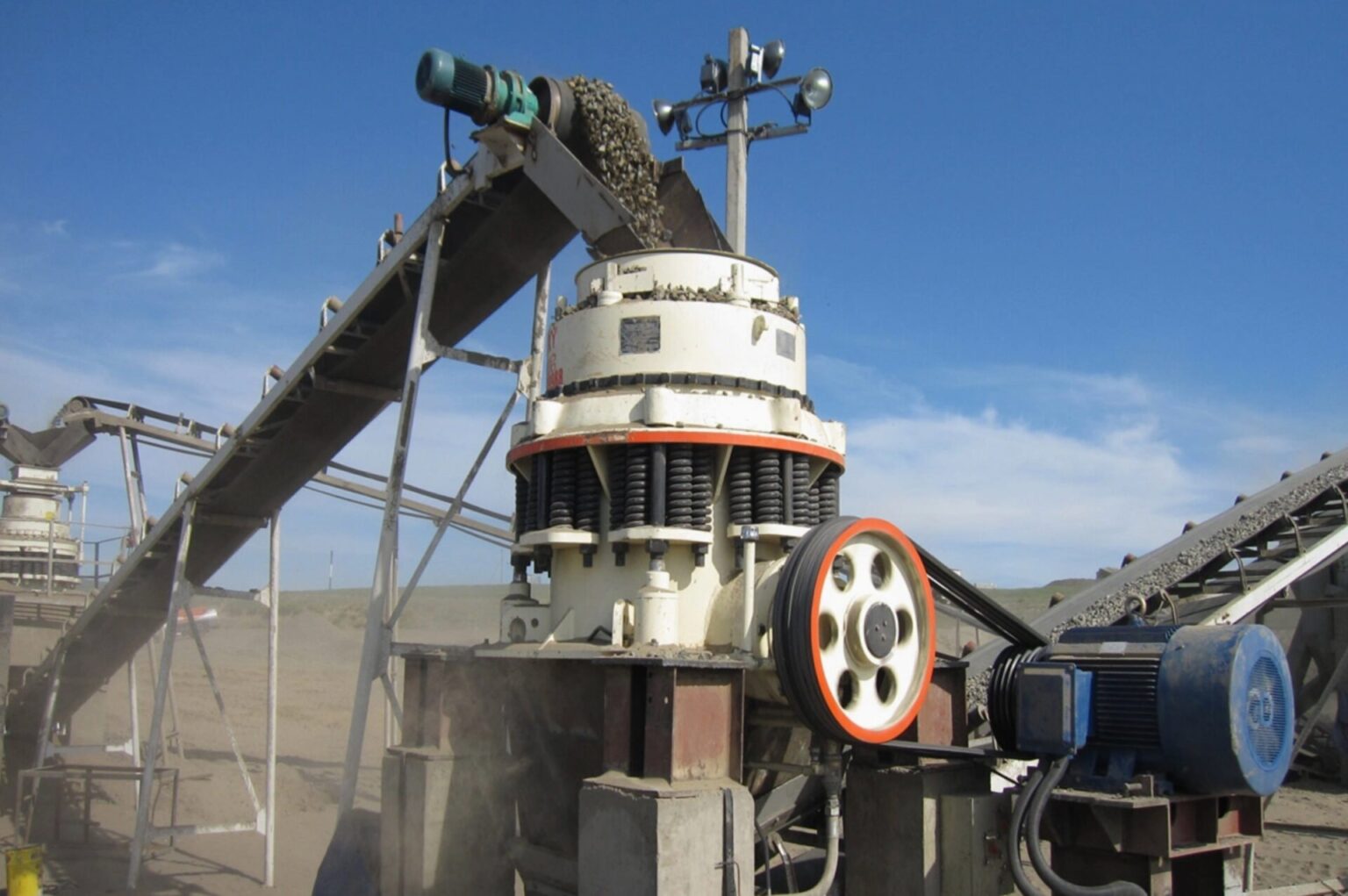
In the mining industry, crushers are essential to processing high volumes of material efficiently, yet their maintenance is both challenging and resource-intensive. Liner wear and equipment downtime are persistent issues, often resulting in unplanned maintenance, production delays, and increased operational costs. Scheduling maintenance for multiple crushers to minimize overlap and ensure availability is a complex task, as it requires balancing wear rates, resource constraints, and throughput demands. Human operators typically handle these decisions manually, monitoring equipment metrics, anticipating maintenance needs, and resolving conflicts in resource allocation. This reactive approach not only burdens maintenance teams but also limits operational flexibility and efficiency. High wear rates, resource conflicts, and the unpredictability of equipment failures create a continuous cycle of firefighting, impacting overall plant performance and increasing stress on human operators. The challenge is clear: how can mining operations achieve proactive, optimized crusher maintenance and performance management while reducing the manual workload on operators? Addressing this requires a system that can not only make routine maintenance decisions autonomously but also keep humans "on the loop" to allow for strategic oversight and critical interventions when necessary.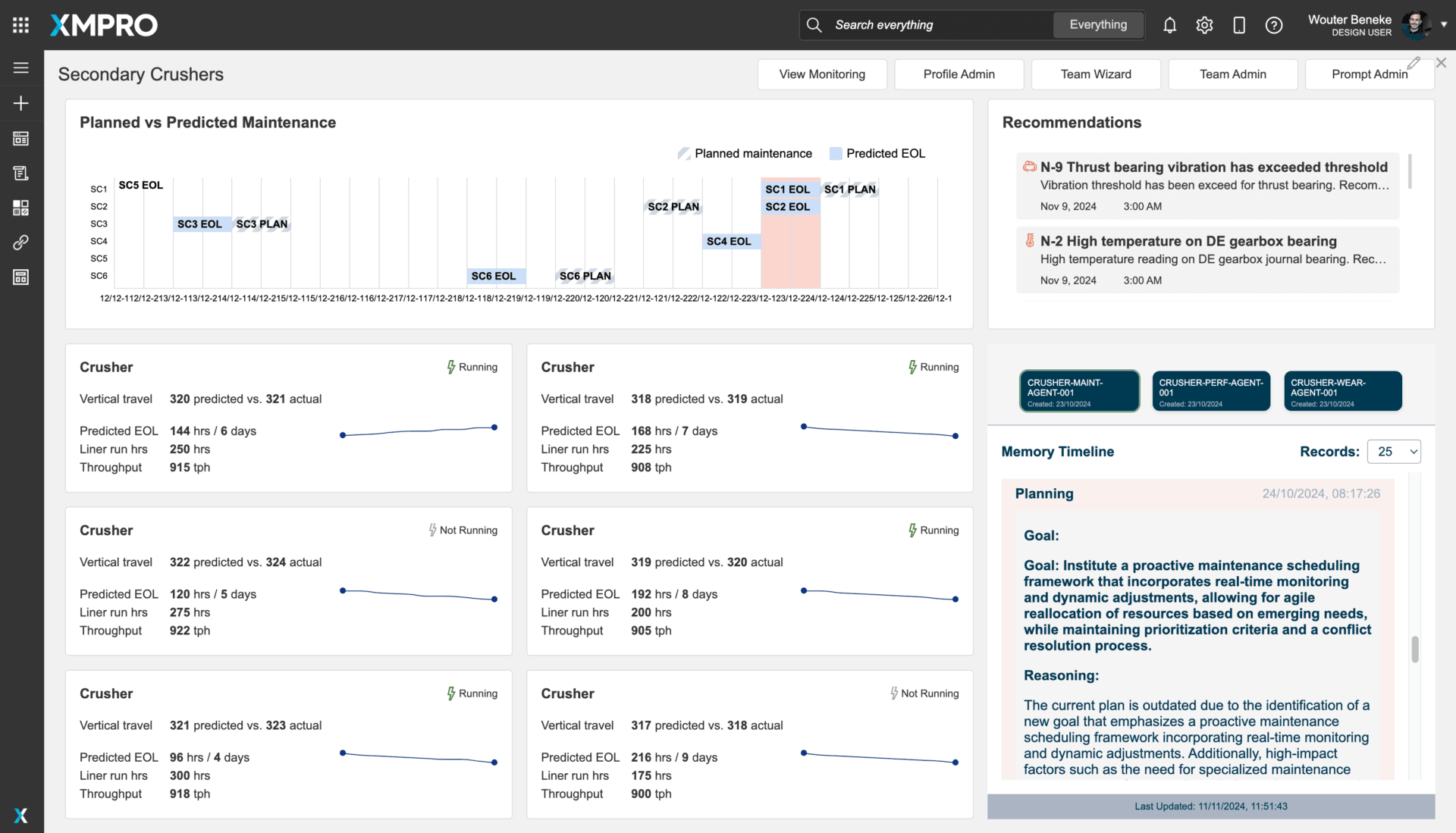
The Solution: XMPro MAGS for Liner Analysis and Scheduling in Mining
XMPro’s Multi-Agent Generative Systems MAGS leverage the modular capabilities of XMPro’s AO Platform to provide a comprehensive solution for liner analysis, maintenance scheduling, and crusher performance optimization in mining operations. By utilizing key AO Platform modules, XMPro MAGS creates an "Agentic Automation Team" capable of autonomous decision-making for routine tasks while keeping human operators “on the loop” for strategic oversight.
Key Features
XMPro MAGS collects and analyzes real-time data from various sensors and operational systems, converting it into actionable insights that support predictive maintenance and operational efficiency. Key agents within MAGS, each built using AO Platform components, autonomously manage different aspects of crusher operations:
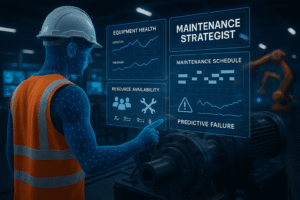
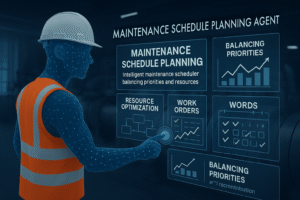
- Maintenance Coordination Agent: This agent, powered by AO Platform modules, dynamically schedules maintenance, mitigating overlaps and resource conflicts to enhance operational efficiency. Leveraging real-time data on equipment condition, it manages maintenance schedules to maintain a minimum of five operational crushers, minimizing the need for manual planning.
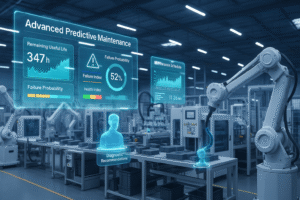
- Wear Rate Optimization Agent: Focused on managing liner wear, this agent utilizes AO Platform analytics modules to continuously monitor operating conditions, such as power draw and choke feeding. By optimizing wear rates through predictive adjustments, it prolongs liner life, minimizes unplanned downtimes, and reduces liner replacement frequency.
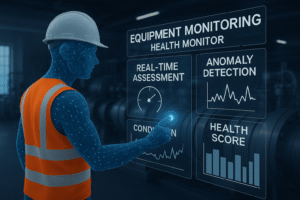
- Performance Monitoring Agent: This agent, built on XMPro’s data streaming and monitoring modules, ensures crushers meet throughput targets by continuously tracking deviations, unplanned downtimes, and operational stability. It provides alerts to human operators for significant variations, ensuring that crusher productivity remains consistent.
Step 1: Setting Up the Team Around the Business Problem – Teams
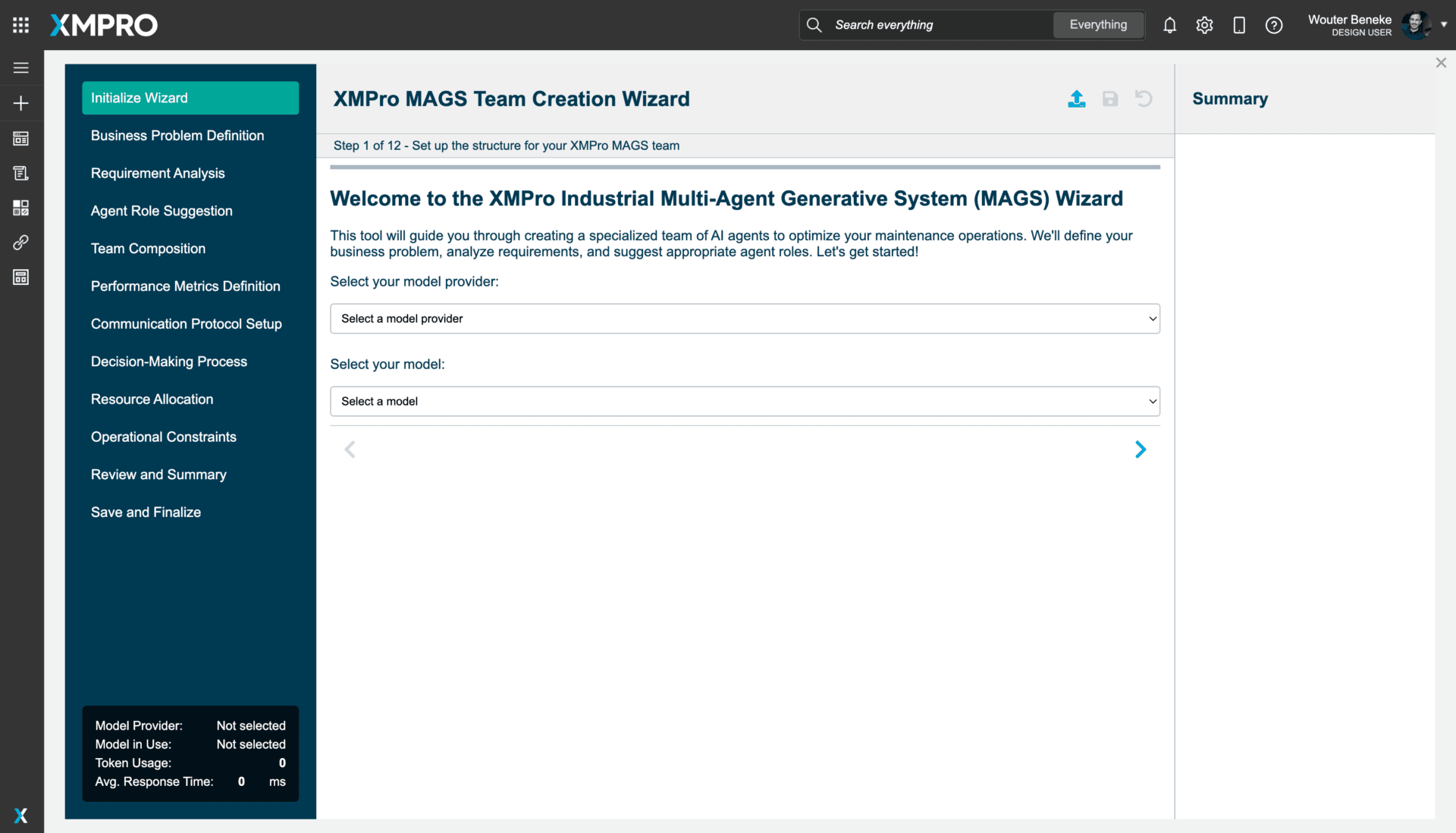
XMPro’s Team Wizard is used to create a specialized Agentic Automation Team dedicated to addressing the crusher maintenance challenge in mining. By setting up a team around the specific business problem, XMPro allows for aligning each agent’s goals and objectives with the broader operational priorities. Agents like the Maintenance Coordination Agent and the Wear Rate Optimization Agent are configured to work together, each contributing unique insights and actions towards optimizing crusher performance. This team-oriented approach ensures seamless collaboration among agents while keeping human operators “on the loop” for high-level oversight
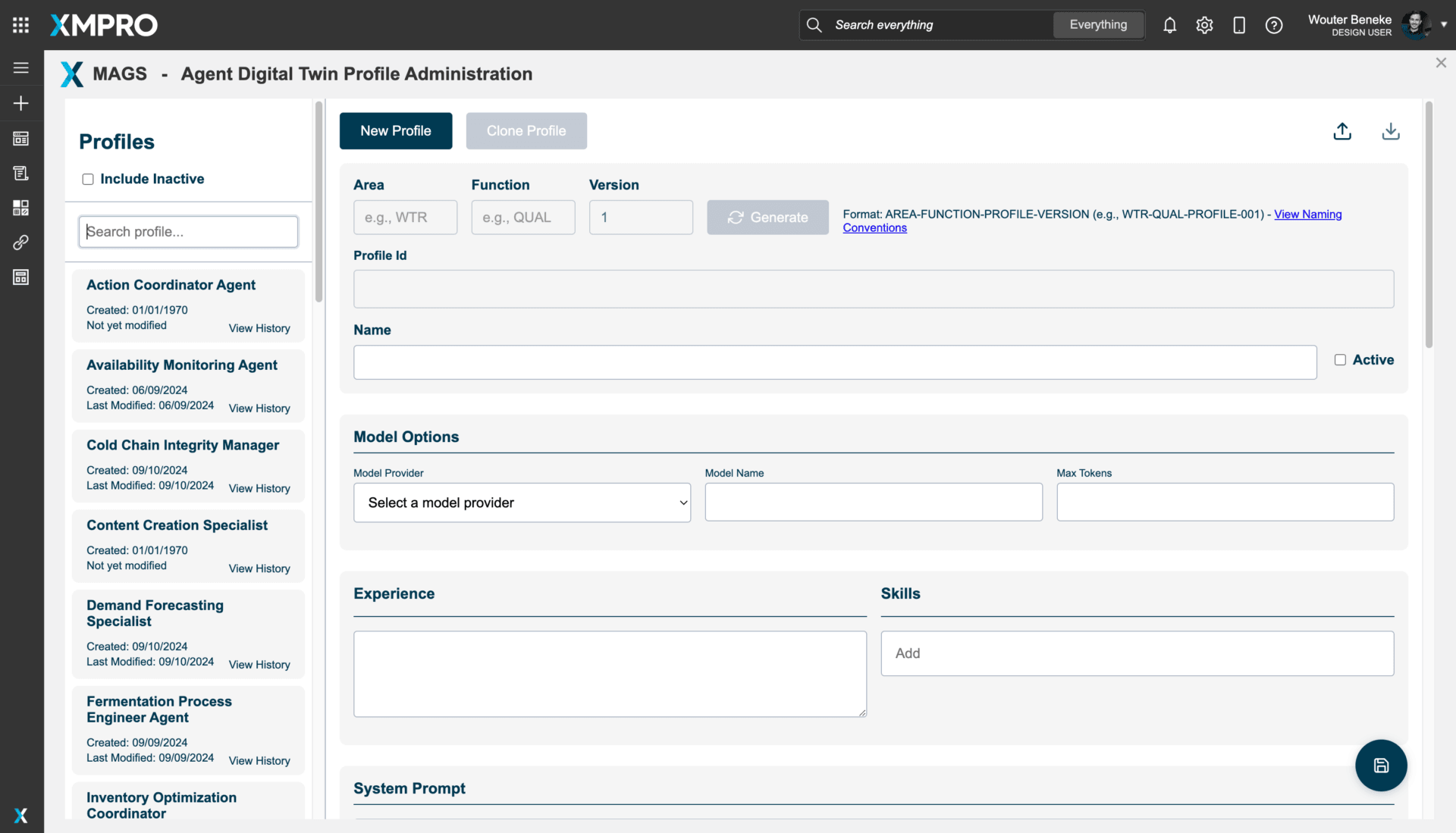
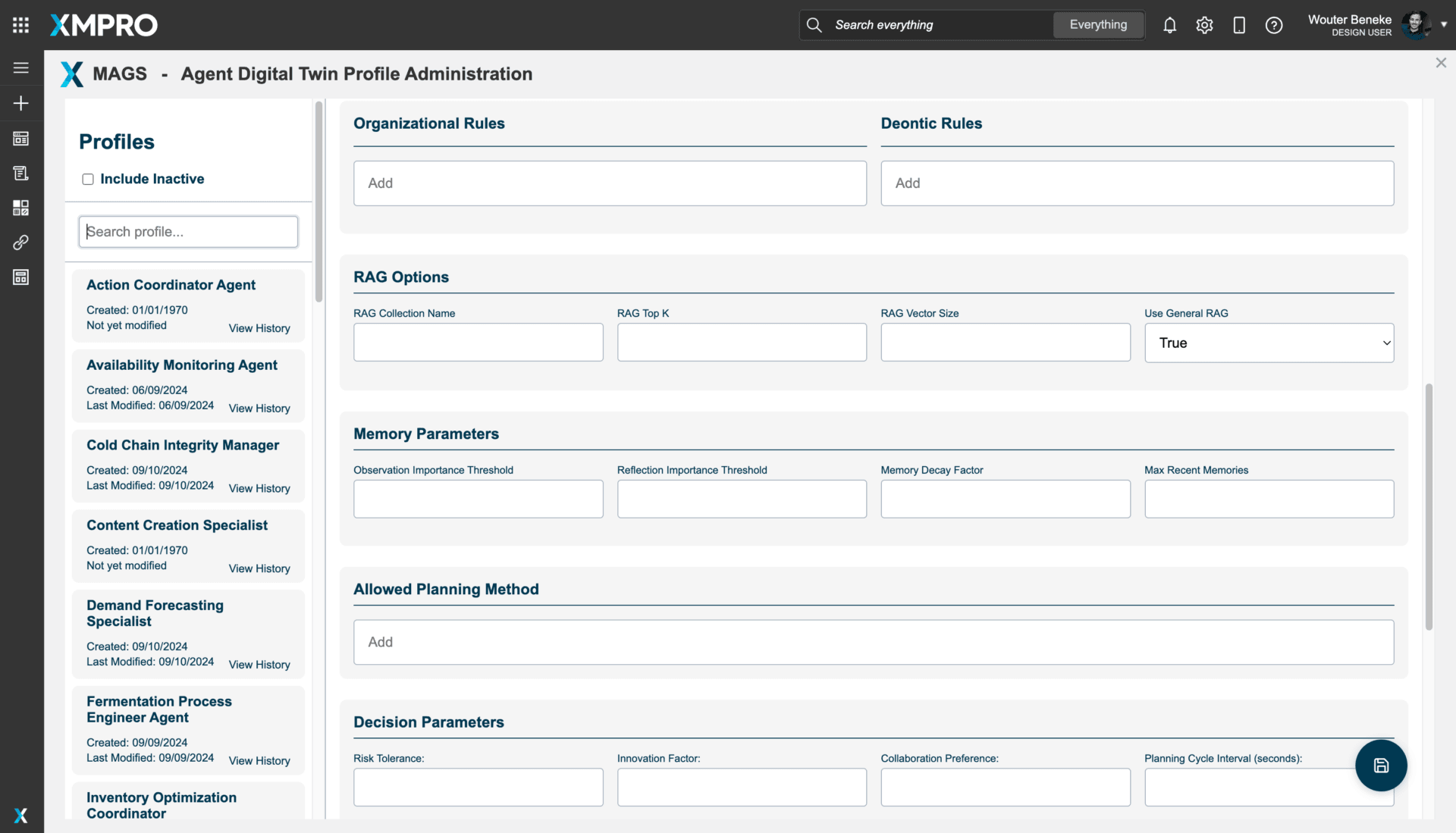
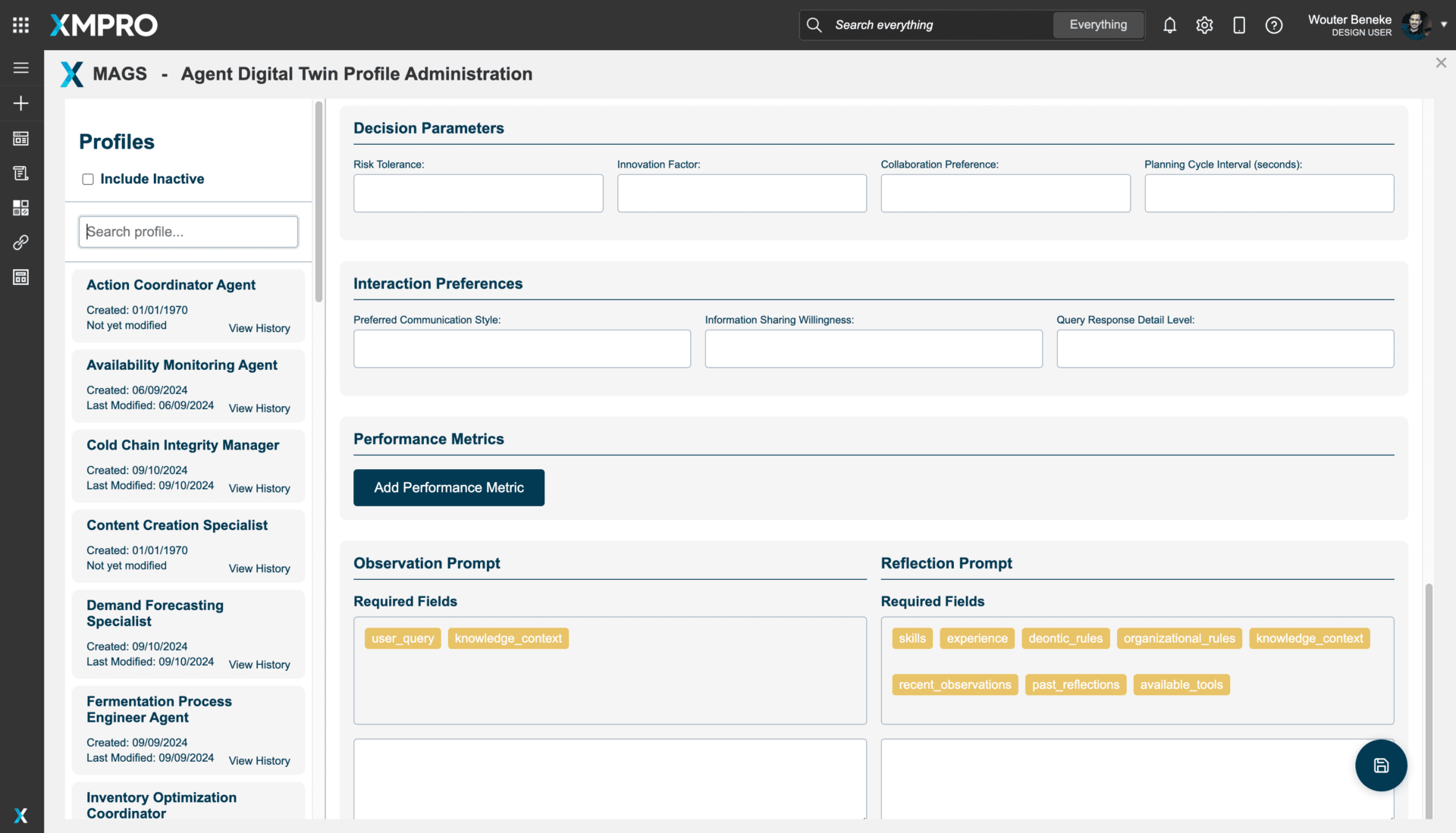
Step 2: Setting Up a Library of Agent Profiles – Skills
Next, XMPro AO Platform enables users to configure a library of agent profiles specifically tailored to the tasks within crusher management. Each agent is equipped with distinct skills and capabilities, such as monitoring wear rates, scheduling maintenance, or analyzing throughput data. This configuration ensures that agents have the necessary skills to handle their assigned functions autonomously. The Skills library allows for fine-tuning the expertise of each agent to ensure they act intelligently and adaptively within their designated roles, laying a strong foundation for automation across different crusher maintenance tasks.
Step 3: Connecting Agents with Real-Time Data – Connection
The StreamDesigner in XMPro plays a pivotal role in linking the agents with real-time data sources, including sensor data, operational logs, and performance metrics. This connection to live data streams enables agents to make informed, context-aware decisions continuously. For instance, the Performance Monitoring Agent can adjust actions based on live throughput or power draw data, while the Wear Rate Optimization Agent can anticipate maintenance needs by analyzing liner wear rates. This step ensures that agents operate with up-to-date information, improving their responsiveness and effectiveness in managing the crusher system.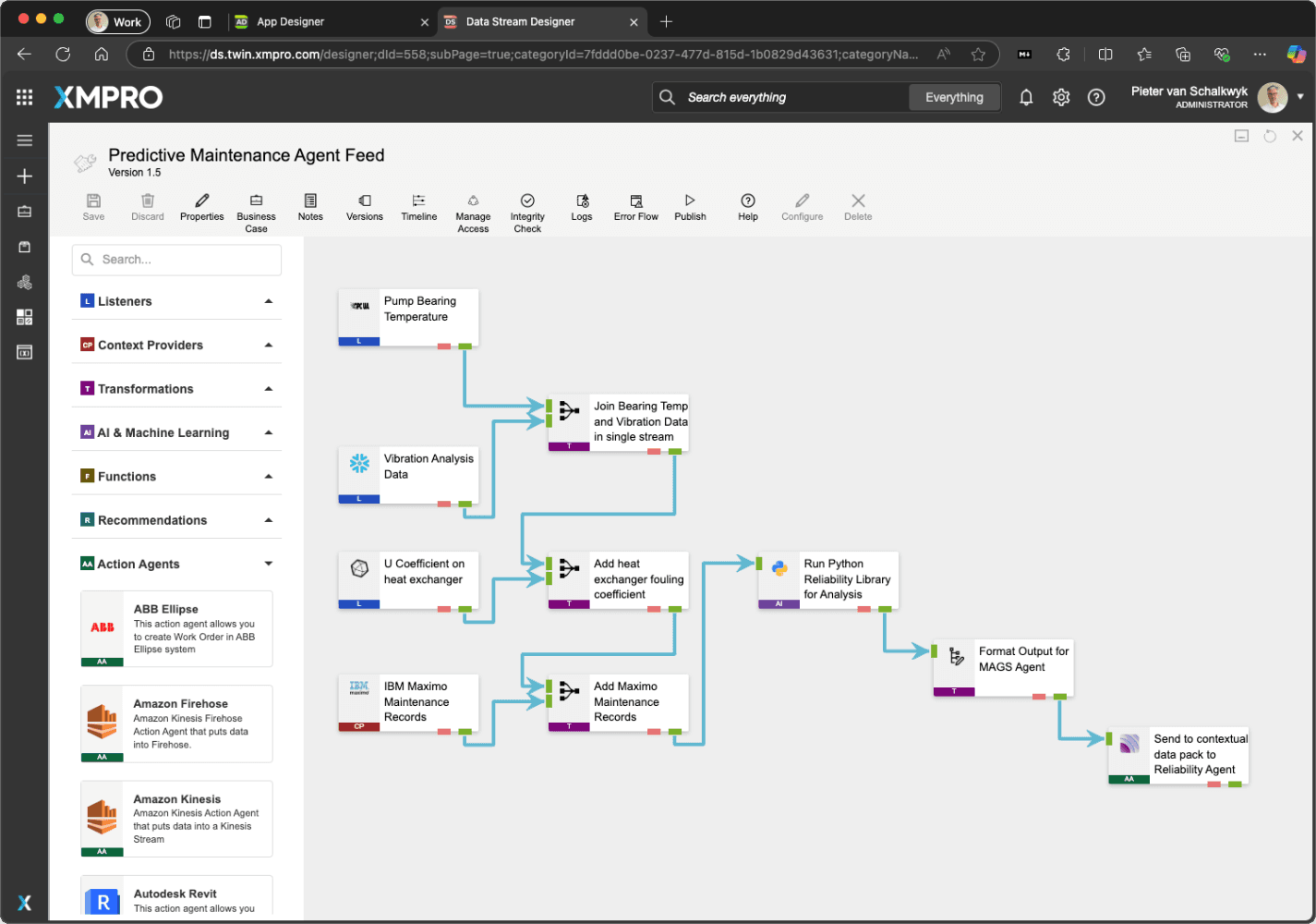
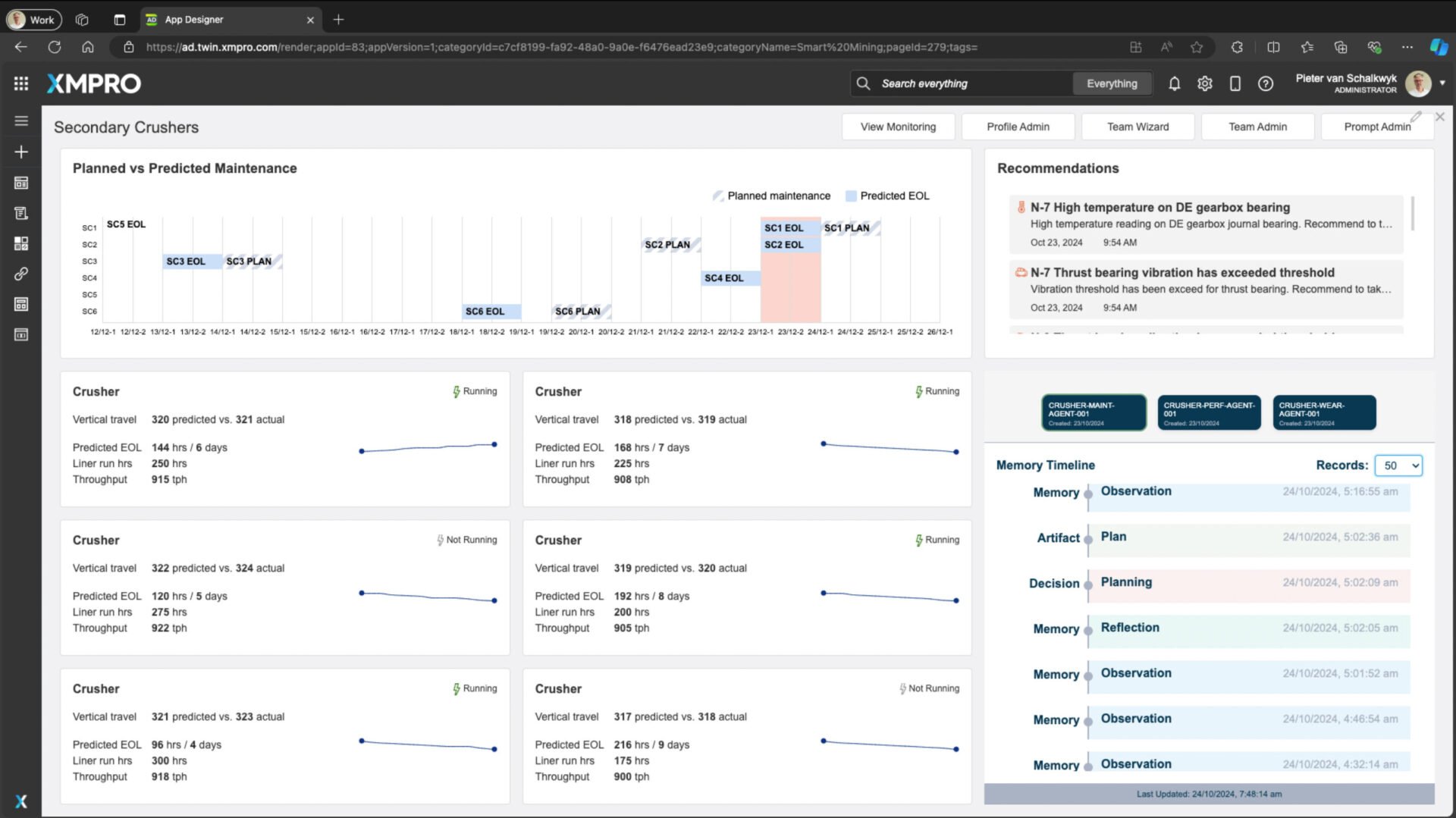
Step 4: Starting the Memory Cycle – Decisions
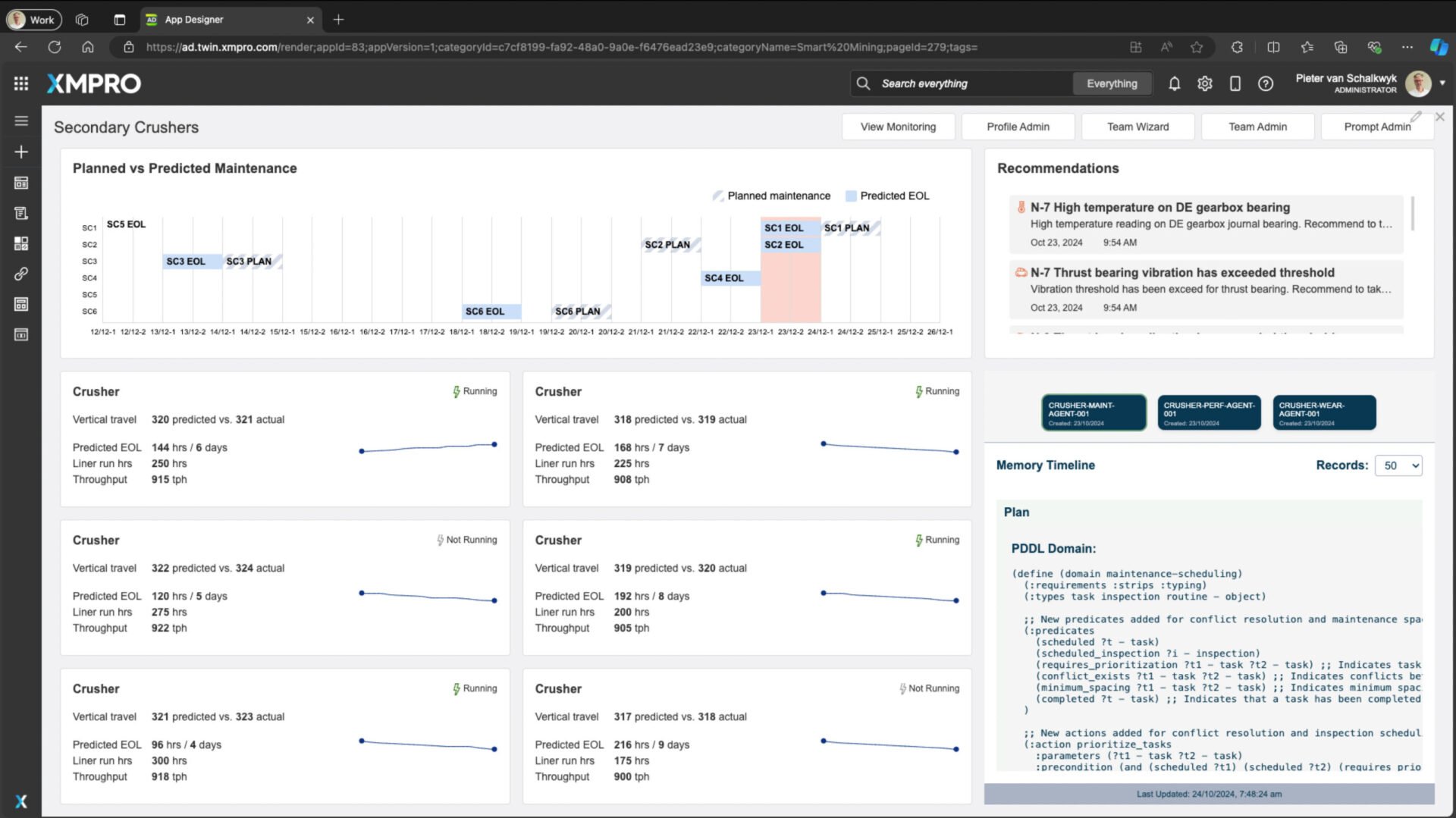
In this step, the agents initiate the Memory Cycle, a process that allows them to observe, reflect, plan, and act based on the data they receive and their previous decisions. By following this cycle, agents develop an evolving understanding of crusher operations, enabling them to adjust their actions dynamically. For example, the Maintenance Coordination Agent may observe maintenance overlap risks, reflect on resource availability, and adjust schedules accordingly. The memory cycle not only helps agents act autonomously but also makes their decision-making process transparent to human operators, reinforcing the “on the loop” model.Step 5: Executing Planned Actions
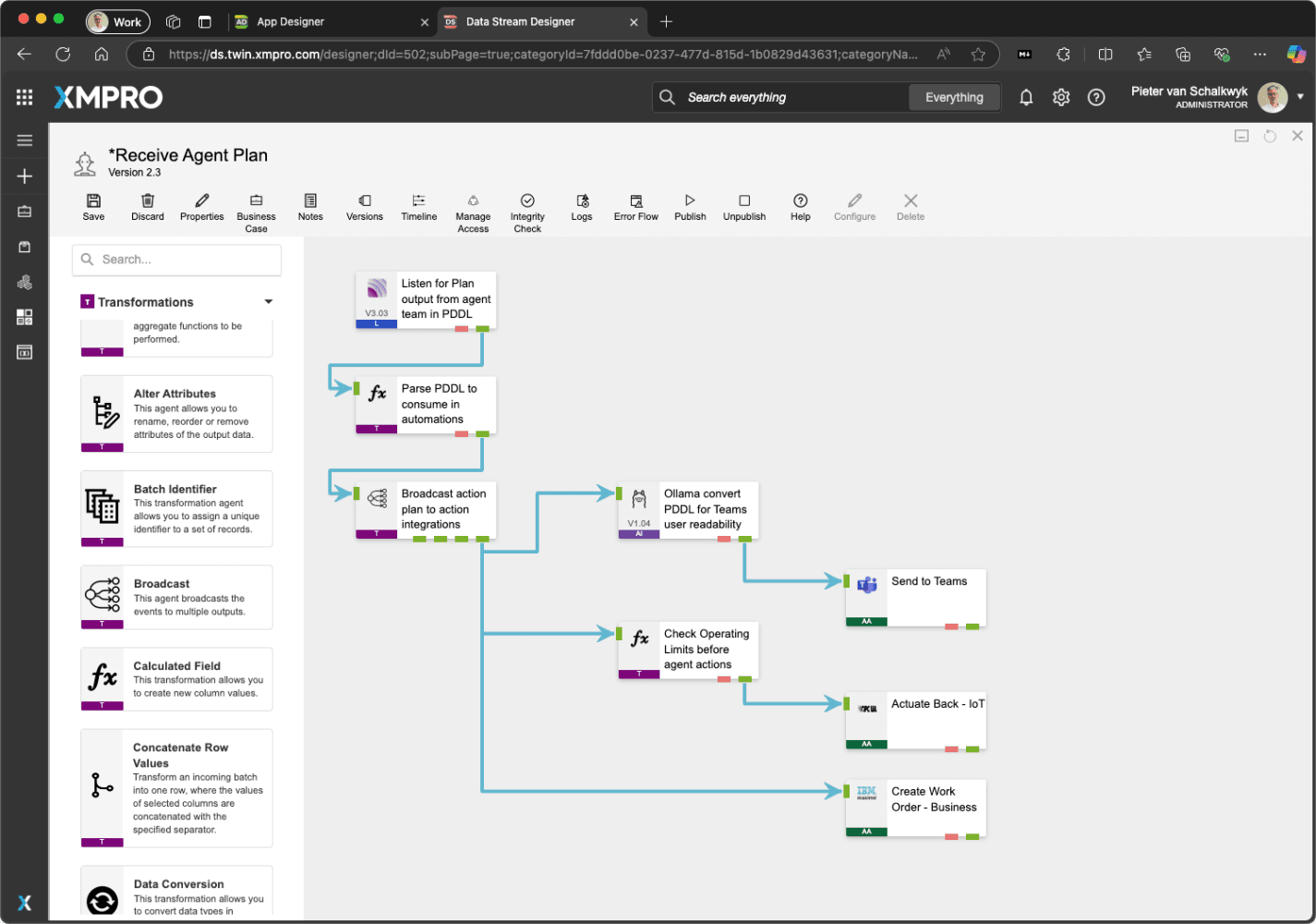
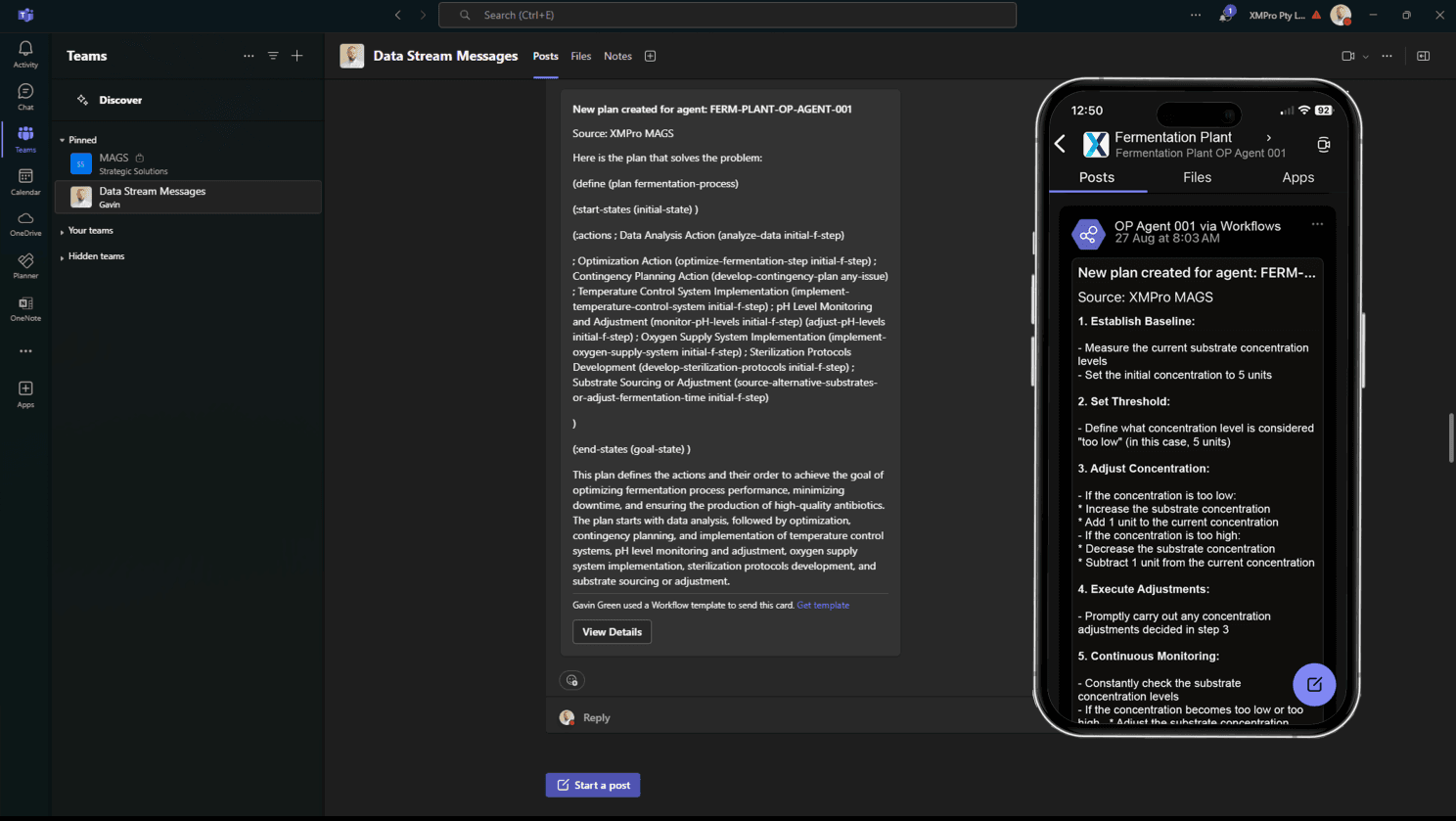
Once decisions are made, agents proceed to execute planned actions using XMPro’s data stream tools. This includes actions such as triggering maintenance work orders, sending alerts, or adjusting throughput targets to align with optimal performance goals. For example, if the Wear Rate Optimization Agent detects excessive wear, it can autonomously schedule a liner replacement to prevent downtime. The Actions step ensures that the entire cycle—from data intake to decision and execution—is closed, enabling XMPro’s MAGS to function autonomously while allowing operators to monitor and intervene if necessary.
Collaborative Agentic AI Teams For Mining With XMPro AO Platform
Autonomous, Reliable, Scalable - Now
Not Sure How To Get Started?
No matter where you are on your digital transformation journey, the expert team at XMPro can help guide you every step of the way - We have helped clients successfully implement and deploy projects with Over 10x ROI in only a matter of weeks!
Request a free online consultation for your business problem.
"*" indicates required fields